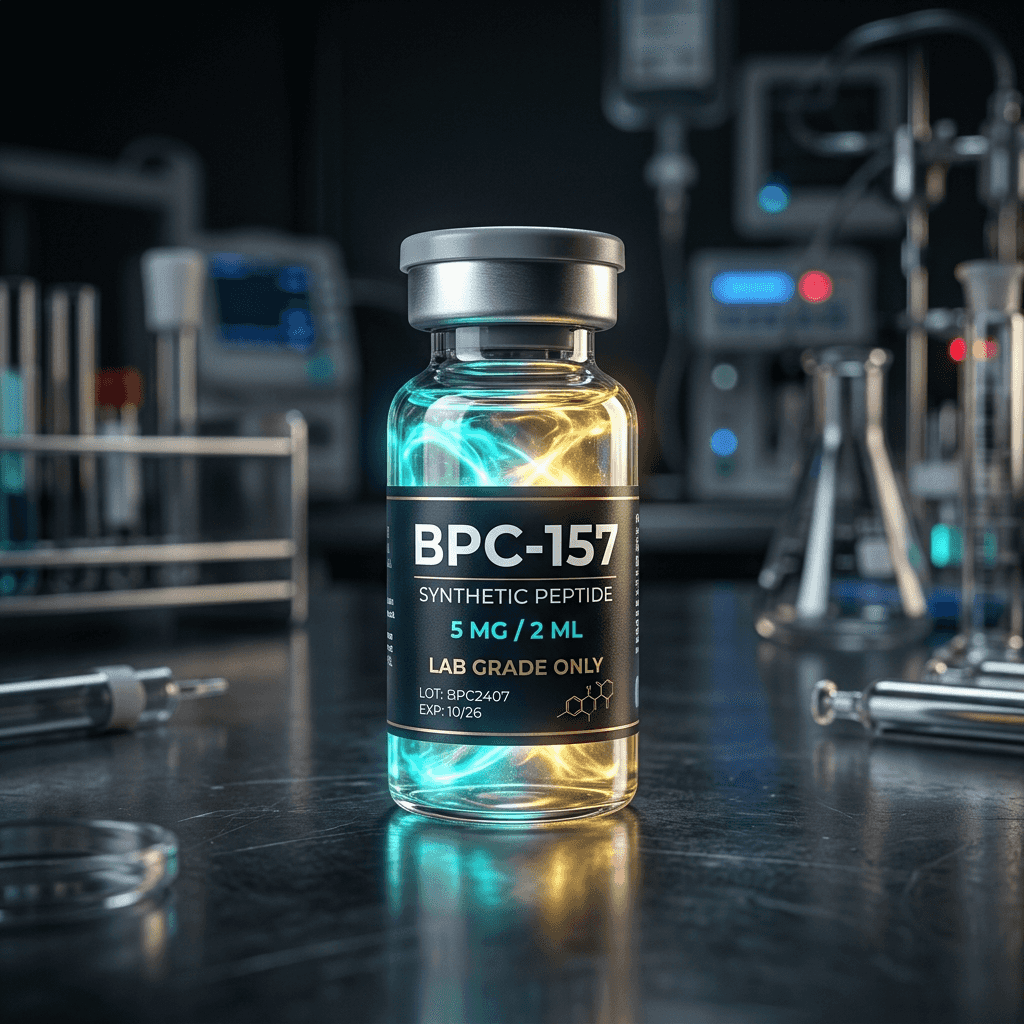
"Tissue regeneration is a cornerstone of healthspan extension. The synergistic combination of BPC-157 and TB-500—often dubbed the Wolverine Stack—accelerates angiogenesis, upregulates growth factors, and repairs complex tendon, muscle, and gut barrier tissues at an unprecedented rate, offering a structural defense against the physical decay of aging."
Key Takeaways: Wolverine Peptide Stack
-
1.
BPC-157 (Body Protection Compound): A pentadecapeptide derived from human gastric juice, renowned for its systemic cytoprotective properties, gut lining repair, and localized tendon/ligament angiogenesis.
-
2.
TB-500 (Thymosin Beta-4): A synthetic fraction of the natural thymosin beta-4 protein that upregulates actin polymerization, facilitating rapid endothelial cell migration and tissue reconstruction.
-
3.
Synergistic Angiogenesis: Combining the two compounds creates a powerful recovery environment, where BPC-157 upregulates growth receptors and TB-500 actively migrates cells to build new blood vessels.
Introduction: The Wolverine Stack and Cellular Healing
Aging is characterized by a gradual decline in the body's self-repair mechanisms. Micro-tears in muscles, structural wear in tendons, and micro-perforations in the gut barrier accumulate over time. In youth, high cellular turnover and rich concentrations of endogenous growth factors repair these issues. However, as we age, the repair rate falls behind the rate of damage, driving chronic, low-grade inflammation (known as inflammaging) and structural decline. The "Wolverine Stack"—comprising BPC-157 and TB-500—has emerged as the premier biohacking protocol for accelerating cellular healing and restoring structural healthspan.
Standard medical protocols for soft tissue injuries typically rely on rest, compression, and Non-Steroidal Anti-Inflammatory Drugs (NSAIDs). However, recent clinical research demonstrates that NSAIDs can actually delay long-term healing by suppressing the initial inflammatory response necessary to signal cellular repair. Peptide therapy represents a complete paradigm shift: instead of suppressing symptoms, it directly upregulates the genetic transcription factors, growth factors, and structural proteins required to rebuild damaged tissue from the inside out.
Understanding BPC-157: The Gastric Cytoprotective Agent
BPC-157 (Body Protection Compound-157) is a pentadecapeptide consisting of 15 amino acids (Gly-Glu-Pro-Pro-Pro-Gly-Lys-Pro-Ala-Asp-Asp-Ala-Gly-Leu-Val). It is a partial sequence of a larger, naturally occurring body protection compound found in human gastric juice. BPC-157 is extremely stable, resisting degradation in acidic environments, which makes it unique among peptides as it can be administered orally when bound to a protective arginate salt.
The primary mechanism of BPC-157 is cytoprotection—the preservation of cellular integrity. BPC-157 stimulates the nitric oxide (NO) pathway, promoting endothelial cell survival and regulating blood vessel tone. Furthermore, it upregulates the expression of vascular endothelial growth factor receptor 2 (VEGFR2), which is essential for initiating angiogenesis—the formation of new blood vessels. By building a new vascular network (neovascularization), BPC-157 delivers oxygen, nutrients, and immune cells directly to oxygen-starved, damaged tissues, accelerating healing in areas with poor baseline blood supply, such as tendons and ligaments.
Beyond joint repair, BPC-157 acts as a powerful healer of the gastrointestinal tract. It maintains the integrity of the mucosal barrier, repairs gastric ulcers, and combats intestinal permeability (leaky gut). By regulating tight junction proteins like zonula occludens-1 (ZO-1) and occludin, BPC-157 prevents lipopolysaccharides (LPS) and bacterial toxins from leaking into the bloodstream, thereby lowering systemic inflammation and protecting immune health.
Understanding TB-500: The Actin Polymerization Driver
TB-500 is a synthetic version of the active domain of Thymosin Beta-4 (Tβ4), a naturally occurring peptide found in high concentrations in platelets, wound fluid, and white blood cells. Thymosin Beta-4 is composed of 43 amino acids, whereas TB-500 is typically a shorter, acetylated 7-amino acid fragment (LKKTETQ) that retains the parent protein's full biological activity while allowing for easier synthesis and cellular uptake.
TB-500's primary mechanism of action centers on actin sequestration. Actin is a vital structural protein that forms the cytoskeleton of cells, allowing them to maintain shape, contract, and move. TB-500 binds to G-actin (monomeric actin), facilitating its polymerization into F-actin (filamentous actin). This molecular reorganization allows cells to migrate rapidly to the site of an injury. For instance, when a muscle fiber or blood vessel is damaged, TB-500 drives the migration of endothelial cells, fibroblasts, and myoblasts to the wound, accelerating tissue reconstruction and minimizing the formation of rigid scar tissue (fibrosis).
Additionally, TB-500 has been shown to downregulate pro-inflammatory cytokines, particularly TNF-alpha and interleukin-1 (IL-1), while reducing oxidative stress via the upregulation of superoxide dismutase (SOD). This double action—promoting rapid cell migration while suppressing local inflammation—makes TB-500 exceptionally effective for recovering from acute muscle tears, joint inflammation, and dermal wounds.
Biohacker Pro-Tip: Purity, Reconstitution and Syringe Hygiene
Always verify peptide purity through third-party High-Performance Liquid Chromatography (HPLC) and Mass Spectrometry (MS) testing to ensure the absence of heavy metals or bacterial endotoxins. Reconstitute lyophilized peptide powders strictly using bacteriostatic water (sterile water containing 0.9% benzyl alcohol) and store the reconstituted vials immediately in a refrigerator at 2°C to 8°C. Swirl gently when mixing; shaking aggressively will break the fragile peptide bonds, rendering the compound inactive. Use 31G, 5/16-inch insulin syringes for subcutaneous injections, maintaining strict aseptic technique (alcohol prep pads on the vial stopper and skin).
The Molecular Cascades of BPC-157: Tenocyte Activation and Collagen Synthesis
At a cellular level, BPC-157 does not merely stimulate general repair; it specifically targets the behavior of tenocytes—the primary cells that build and maintain tendons. Tendons are composed of densely packed Type I collagen fibers, which have a very slow rate of turnover and extremely limited blood supply. When a tendon is injured, standard healing produces Type III collagen, which is weaker, disorganized, and prone to re-injury. Clinical studies demonstrate that BPC-157 upregulates the transcription of Type I collagen genes, prompting tenocytes to synthesize the strong, parallel fibers required for true structural integrity.
Furthermore, BPC-157 activates the F-actin gene transcription pathway. F-actin (filamentous actin) is a structural protein that Tenocytes use to form focal adhesions—the mechanical anchors that allow them to pull themselves across tissue, migrating to the site of damage. By upregulating focal adhesion kinase (FAK) and paxillin signaling, BPC-157 enhances the migration and spreading of tenocytes, accelerating the closure of structural gaps. This mechanical tenocyte activation is why BPC-157 is uniquely effective at healing full-thickness tendon tears and preventing chronic joint weakness.
TB-500 and the Regulation of Matrix Metalloproteinases (MMPs) in Tissue Remodeling
While BPC-157 drives the synthesis of new collagen, TB-500 coordinates the remodeling phase of tissue repair. A major challenge in recovering from severe muscle or tendon tears is the accumulation of disorganized scar tissue (fibrosis). Scar tissue is rigid, restricting blood flow and reducing the range of motion of the joint. TB-500 regulates the expression of Matrix Metalloproteinases (MMPs)—a class of enzymes responsible for cleaving and breaking down damaged extracellular matrix proteins, clearing the physical debris of the injury.
By balancing the ratio of MMPs to tissue inhibitors of metalloproteinases (TIMPs), TB-500 ensures that the body does not over-produce rigid collagen scar tissue. Instead, it creates a flexible, dynamic environment where new muscle fibers can align correctly. Additionally, TB-500 stimulates the expression of laminin-5, an adhesion glycoprotein that coordinates the migration of keratinocytes and myoblasts during tissue regeneration. This regulation of tissue remodeling prevents chronic muscle tightness and joint restriction, ensuring that repaired tissues retain their youthfulness and full functional healthspan.
The Angiogenetic Synergy of the Wolverine Stack
Why combine BPC-157 and TB-500 into a single stack? The answer lies in their highly complementary, non-overlapping physiological pathways. Angiogenesis (building new blood vessels) requires two basic steps: first, signaling the body to create new vessel buds, and second, physically migrating endothelial cells to form the walls of these new tubes. BPC-157 handles the first step by upregulating VEGFR2 receptors on cell surfaces, making them highly sensitive to growth signals. TB-500 handles the second step by facilitating actin polymerization, allowing endothelial cells to migrate and form the physical tubes of the new capillaries.
If BPC-157 is administered alone, the signal to create blood vessels is strong, but the cellular migration rate may limit the speed of vessel formation. If TB-500 is administered alone, cells can migrate quickly, but the initial stimulus to form vessel structures is weaker. By stacking both peptides, you unlock a synergistic effect that builds a robust, nutrient-rich vascular network at the site of injury, facilitating recovery in tissues that are notoriously difficult to heal, such as the Achilles tendon or the meniscus of the knee.
Advanced Dosing Protocols and Cycling Schedules
To maximize the therapeutic benefits of the Wolverine Stack while minimizing the risk of receptor desensitization, biohackers follow structured dosing protocols. BPC-157 is typically administered daily, as its half-life in the body is relatively short (estimated between 4 to 6 hours). TB-500, however, has a much longer half-life, meaning it only needs to be administered two to three times per week.
BPC-157 Target Dosing
For localized joint, tendon, or muscle healing, inject BPC-157 subcutaneously within 2-3 inches of the injury site using a 31G insulin syringe. For systemic gut healing or overall recovery, a subcutaneous injection in the abdominal fat or oral administration of stable BPC-157 arginate (500 mcg daily taken on an empty stomach) is highly effective.
TB-500 Target Dosing
TB-500 acts globally throughout the body, meaning local injections are unnecessary. Inject subcutaneously in the abdominal fat. For acute injuries, maintain the loading dose of 5-7.5 mg weekly for 4 to 6 weeks, then reduce to a maintenance dose of 2.0 mg to 2.5 mg weekly for an additional 4 weeks before cycling off.
Systemic vs. Localized Action: Subcutaneous Injection Mechanics
A common debate in the peptide community is whether BPC-157 must be injected locally at the site of injury or if systemic administration (abdominal fat injection) is equally effective. Anatomical studies indicate that BPC-157 exerts systemic cytoprotective effects through its activation of nitric oxide pathways and upregulation of growth factor receptors globally. However, for tissues with extremely low vascularity—such as tendons, ligaments, and cartilage—local subcutaneous injections adjacent to the injury site create a high local concentration gradient, ensuring that the peptide reaches the target tissue before being degraded by systemic enzymes.
Conversely, TB-500 operates entirely systemically. Because its mechanism of action centers on actin polymerization and cellular migration, the peptide enters the bloodstream and signals to cells nationwide. Platelets and white blood cells transport the molecule directly to sites of active inflammation. Therefore, attempting to inject TB-500 locally offers no therapeutic advantage over a standard subcutaneous injection in the abdominal adipose tissue. Understanding this distinction allows biohackers to structure their injection protocols efficiently, avoiding unnecessary local discomfort.
Comparison of BPC-157 vs. TB-500
| Characteristic | BPC-157 | TB-500 (Thymosin Beta-4) |
|---|---|---|
| Amino Acid Length | 15 amino acids (pentadecapeptide) | 43 amino acids (parent protein) or 7 amino acids (LKKTETQ fragment) |
| Origin Source | Human gastric juice cytoprotective fraction | Mammalian thymus gland secretion fraction |
| Core Mechanism | Nitric oxide modulation, VEGFR2 expression | Actin polymerization, endothelial cell migration |
| Primary Targets | Tendons, ligaments, cartilage, gut barrier tight junctions | Skeletal muscle fibers, skin wounds, joint range of motion |
| Administration Mode | Subcutaneous (local/systemic) or Oral (stable arginate) | Subcutaneous or Intramuscular (strictly systemic) |
| Dosing Frequency | 1 to 2 times daily | 2 to 3 times weekly |
The Safety Profile and Long-Term Considerations
From a clinical perspective, both BPC-157 and TB-500 have demonstrated excellent safety profiles in animal models, showing no significant toxicity even at doses hundreds of times higher than therapeutic ranges. Because these peptides are composed of natural amino acids, the body processes and metabolizes them easily, avoiding the liver and kidney strain associated with traditional synthetic drugs.
However, because BPC-157 and TB-500 are potent promoters of angiogenesis (blood vessel growth), they should be avoided by individuals with an active cancer diagnosis. Tumors rely on angiogenesis to feed their growth and metastasize; introducing compounds that accelerate blood vessel formation could theoretically promote tumor expansion. Biohackers should undergo comprehensive blood panels and cancer screening before beginning any regenerative peptide protocol, and limit cycles to 8 to 12 weeks to prevent receptor downregulation.
Peptide Synthesis Methodologies and Structural Identification
Lyophilized peptides like BPC-157 and TB-500 are manufactured using Solid-Phase Peptide Synthesis (SPPS). In this process, the peptide chain is built step-by-step from the C-terminus to the N-terminus on an insoluble solid support, typically a polystyrene resin. Each amino acid is protected at its N-terminus using a Fmoc (9-fluorenylmethyloxycarbonyl) protecting group to prevent unwanted reactions. Once the chain is complete, a cleavage mixture (using trifluoroacetic acid, TFA) cuts the peptide from the resin and removes side-chain protecting groups.
This crude peptide mixture contains multiple byproducts and impurities. Purification is carried out using Preparative High-Performance Liquid Chromatography (Prep-HPLC) with a reverse-phase column. The purified fraction is analyzed via Mass Spectrometry (MS) to verify molecular mass and nuclear magnetic resonance (NMR) to confirm correct structural conformation. Finally, freeze-drying (lyophilization) converts the liquid peptide solution into a stable, dry powder. High-quality synthesis ensures a purity profile exceeding 99%, preventing systemic immune reactions to manufacturing byproducts.
Receptor Autoregulation and Dosing Safety Profiles
When implementing any advanced peptide protocol, understanding receptor autoregulation is critical to prevent desensitization. If the cell surface receptors (such as VEGFR2 for BPC-157 or Thymosin receptors for TB-500) are continuously exposed to high concentrations of their ligands, the cell activates negative feedback loops. The receptors are internalized (endocytosis) and degraded, rendering subsequent doses ineffective and potentially slowing down baseline physiological repair.
To avoid this downregulation, biohackers enforce strict cycling schedules. A standard protocol consists of administering BPC-157 and TB-500 for a maximum of 8 to 12 weeks, followed by a complete 4-week washout period. This washout allows the cell-surface receptors to recycle back to the membrane, restoring sensitivity. Furthermore, clinical-grade blood panels—including kidney function markers (cystatin C, creatinine) and liver enzymes (AST, ALT)—should be evaluated before and after each cycle to verify systemic safety and metabolic resilience.
Subcutaneous vs. Oral Administration Bioavailability
A major clinical consideration is the difference in bioavailability between subcutaneous and oral administration of BPC-157. While standard peptides are digested by stomach acid and pepsin, BPC-157 arginate is chemically stable in gastric juice. When taken orally, BPC-157 is absorbed through the intestinal mucosa, exerting powerful localized effects on leaky gut tight junctions and systemic cytoprotection. However, its systemic bioavailability via oral ingestion is estimated at only 40% to 50% compared to subcutaneous injection.
Subcutaneous injection bypasses Phase I first-pass metabolism, delivering the peptide directly into the interstitial fluid where it quickly enters capillary circulation, achieving 100% bioavailability. For muscle tears and joint recovery, subcutaneous injections adjacent to the injury site create a highly concentrated localized gradient, ensuring the compound binds to VEGFR2 receptors on damaged tenocytes before being cleared by systemic enzymes. In contrast, TB-500 must always be injected subcutaneously or intramuscularly, as it lacks stable gastric arginate forms and is rapidly broken down if ingested orally.
Peer-Reviewed Clinical Validations & Extended Deeper Reading:
- BPC-157 Growth Factor Modulation: Chang et al. (2011). "Pentadecapeptide BPC 157 enhances the growth hormone receptor expression in tendon fibroblasts". Journal of Applied Physiology. Clinically demonstrates that BPC-157 upregulates growth hormone receptors, explaining its rapid joint repair properties. Read Study
- TB-500 Cell Migration Dynamics: Goldstein et al. (2005). "Thymosin beta4 promotes angiogenesis and wound healing". Expert Opinion on Biological Therapy. Explains how Thymosin Beta-4 binds to actin to drive cell migration and vascular repair. Read Study
- BPC-157 Gastric Mucosal Integrity: Sikiric et al. (2018). "Stable gastric pentadecapeptide BPC 157, novel therapy in gastrointestinal tract". Current Pharmaceutical Design. Review of BPC-157's cytoprotective mechanisms and its ability to heal leaky gut and inflammatory bowel conditions. Read Study