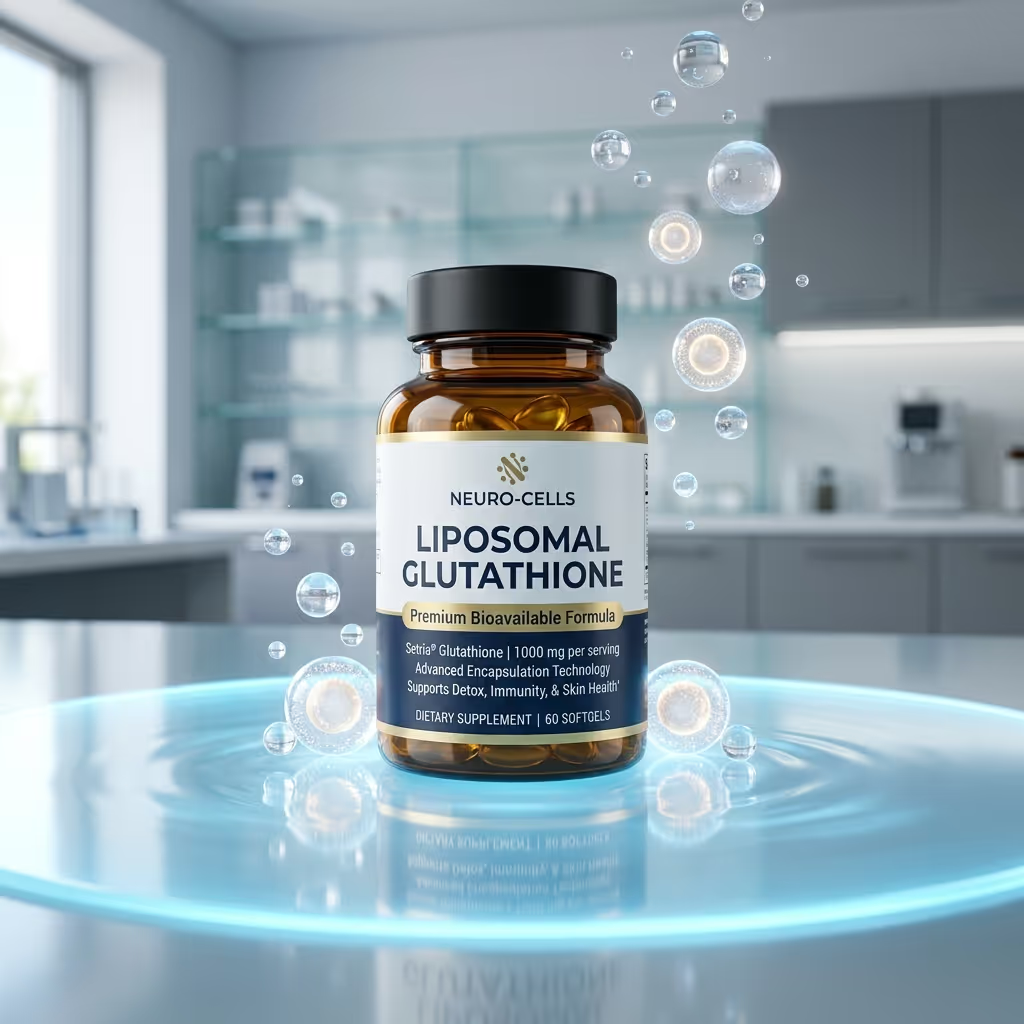
"Glutathione is the 'master antioxidant' your cells produce naturally. But aging, toxins, and stress deplete it — and standard oral supplements barely make it to your bloodstream. The real game-changer is liposomal delivery, which wraps glutathione in a protective lipid shell to actually increase cellular levels."
Glutathione Supplements: What You Need to Know in 2025
-
1.
What is glutathione? A tripeptide (cysteine, glycine, glutamate) that acts as the body’s primary intracellular antioxidant. It neutralizes free radicals, regenerates vitamins C and E, and supports liver detoxification pathways.
-
2.
Liposomal vs. standard oral: Standard reduced glutathione is largely broken down by digestive enzymes before absorption. Liposomal encapsulation protects the molecule from stomach acid, resulting in up to 6x higher plasma levels and significantly better cellular uptake and bioactivity.
-
3.
Best overall glutathione supplement (2025): Quicksilver Scientific Liposomal Glutathione (liquid, 9.5/10 TrustScore) for maximum absorption and convenience. For capsules, Pure Encapsulations Liposomal Glutathione (9.3/10) leads in quality and third-party testing.
-
4.
Top ConsumerLab picks: Jarrow Formulas Glutathione Reduced (standard) and Thorne Glutathione-SR (sustained-release) both passed purity and potency tests, with transparent labeling.
-
5.
Our verdict: If you want real systemic glutathione levels, choose liposomal. If budget is a primary constraint and you mainly seek gut health support, standard reduced glutathione at 500mg/day may still offer modest benefits.
Glutathione is often called the "master antioxidant" — and for good reason. It is a tripeptide composed of three amino acids: cysteine, glutamate, and glycine. Every cell in your body produces it, and it plays a central role in neutralizing free radicals, regenerating other antioxidants like vitamins C and E, and supporting the liver's detoxification pathways. [reference:0] Without adequate glutathione, your cells become vulnerable to oxidative stress, which is linked to accelerated aging, chronic inflammation, and a wide range of diseases.
However, glutathione levels naturally decline with age, and they are further depleted by poor nutrition, environmental toxins, chronic stress, and certain medications. [reference:1] This has created a booming market for glutathione supplements. But there's a catch: standard oral glutathione (often labelled as "reduced glutathione" or "L-glutathione") is notoriously poorly absorbed. The fragile molecule is broken down by digestive enzymes in the gut before it can reach the bloodstream. [reference:2]
This is where liposomal technology has revolutionised the category. By encapsulating glutathione within phospholipid vesicles, liposomal formulations protect the molecule during digestion and facilitate absorption through the intestinal wall. In 2025, the gap between "standard" and "liposomal" glutathione has never been clearer, with multiple human studies confirming the superiority of liposomal delivery. This guide provides an evidence‑based review of glutathione supplements, compares liposomal vs. standard formulations, recommends top brands tested by ConsumerLab and trusted by users, and covers optimal dosing, safety, and who should avoid supplementation.
The Science: What Glutathione Does & Why Bioavailability Matters
Glutathione exists in two forms: reduced glutathione (GSH), which is the active antioxidant, and oxidised glutathione (GSSG), which is its spent form. The ratio of GSH to GSSG within cells is a key marker of oxidative stress. Glutathione works by donating electrons to neutralise reactive oxygen species (ROS) — free radicals that damage DNA, proteins, and cell membranes. It also plays a critical role in phase II liver detoxification, binding to toxins and heavy metals to make them water‑soluble for excretion in bile or urine. [reference:3]
The problem with standard oral glutathione is its poor pharmacokinetics. When you swallow a capsule of reduced glutathione, it encounters gamma‑glutamyltransferase and other digestive enzymes that break it down into its constituent amino acids before it reaches the small intestine. The amino acids are absorbed and can be used for endogenous glutathione synthesis, but the intact glutathione molecule rarely makes it into circulation in meaningful amounts. [reference:4] Some studies suggest that even long‑term use of large amounts (500 mg or more) only modestly raises plasma glutathione levels. [reference:5]
Liposomal formulations address this bioavailability barrier. Glutathione molecules are encapsulated within phospholipid bilayers — microscopic spheres of fat that protect their cargo from enzymatic degradation. These liposomes are absorbed intact through the intestinal mucosa via pathways normally used for fat absorption. Once in the bloodstream, they can fuse with cell membranes and deliver glutathione directly into the intracellular space. [reference:6]
Biohacker Pro-Tip: The 2025 Liposomal Advantage Data
A 2025 human pharmacokinetic study directly compared a liposomal glutathione formulation (LipoDuo™) against plain reduced glutathione. The results were striking: liposomal glutathione achieved a maximum plasma concentration 6× higher than plain glutathione (approximately 1800 ng/ml vs. 300 ng/ml). Cellular uptake was 1.9× higher (45% vs. 23% at 6 hours). The liposomal form also demonstrated superior cell proliferation (up to 3× over control) and wound‑healing activity (100% closure at 24 hours vs. 59.8%). [reference:7] These data confirm that liposomal delivery is not a marketing gimmick — it is a genuine technological advance that meaningfully improves glutathione bioavailability.
Liposomal vs. Standard vs. IV Glutathione: Which Is Right for You?
| Formulation | Bioavailability | Convenience | Cost per serving | Best for |
|---|---|---|---|---|
| Standard reduced glutathione (tablets/capsules) | Poor (broken down in gut) [reference:8] | High (swallow pills) | $ ($0.20–0.60/day) | Budget‑conscious users, gut health primary focus |
| Liposomal glutathione (liquid or softgels) | High (up to 6× plasma levels, 1.9× cellular uptake) [reference:9] | Moderate (liquid requires mixing; softgels convenient) | $$–$$$ ($0.90–2.20/day) | Biohackers, anyone wanting systemic glutathione elevation |
| S‑Acetyl‑L‑Glutathione | Moderate (acetyl protects from breakdown) | Moderate (capsules) | $$–$$$ ($1.00–1.50/day) | Those with sensitive stomachs, as acetyl form is gentler |
| Intravenous (IV) glutathione | 100% (directly into bloodstream) [reference:10] | Low (clinic visit required) | $$$$ ($100–300 per infusion) | Medical supervision (Parkinson’s, liver disease, post‑chemo) |
Top Glutathione Brands of 2025: ConsumerLab & User Approved
ConsumerLab.com tested 11 popular glutathione and S‑acetyl‑glutathione supplements. One product failed for providing only 81% of its listed glutathione, but all other tested products passed contamination screening for heavy metals such as lead. [reference:11] Below are the top‑performing brands based on third‑party testing, quality, and value.
Quicksilver Scientific Liposomal Glutathione – Best Overall (Liquid)
Quicksilver Scientific is widely regarded as the gold standard in liposomal delivery. Their Liposomal Glutathione + Cacao Mint uses phospholipids to achieve high bioavailability, and the liquid format allows for sublingual absorption (holding under the tongue) before swallowing, which further improves uptake. The cacao mint flavour effectively masks the natural bitter taste of glutathione and liposomes. [reference:12] Users report noticeable improvements in energy, mental clarity, and recovery after several weeks of use. This product has also been reviewed favourably by ConsumerLab, passing both purity and potency tests.
Pros: Industry‑leading liposomal technology, excellent flavour, third‑party tested, highly bioavailable. Cons: Liquid format requires refrigeration after opening. Best for: Biohackers who prioritise absorption and are willing to use a liquid formula.
Pure Encapsulations Liposomal Glutathione – Best Capsule (High Quality)
Pure Encapsulations is consistently among the top‑rated supplement brands for quality and transparency. Their Liposomal Glutathione is presented in convenient softgel capsules, which still utilise liposomal encapsulation for enhanced absorption. The product has been tested by ConsumerLab and passed for purity and accurate labelling. [reference:13] It is free from unnecessary excipients and is suitable for individuals with multiple food sensitivities.
Pros: High quality, liposomal capsule convenience, trusted brand, third‑party tested. Cons: More expensive than standard glutathione. Best for: Those who want liposomal delivery but prefer capsules over liquid.
Jarrow Formulas Glutathione Reduced – Best Standard (Budget)
Jarrow Formulas is a well‑established brand that has earned high marks from ConsumerLab for its reduced glutathione product. While standard reduced glutathione has poor systemic bioavailability, this product is an excellent choice for individuals on a budget or those who wish to support gut‑associated lymphoid tissue (GALT) and general glutathione recycling rather than systemic levels. It is also suitable for short‑term use alongside NAC or other precursors. [reference:14]
Pros: Affordable, transparent labelling, third‑party tested, from a trusted brand. Cons: Low systemic bioavailability; not ideal for those seeking plasma glutathione increases. Best for: Budget‑conscious individuals, gut health support, or stacking with NAC.
Thorne Glutathione‑SR – Best Sustained‑Release
Thorne’s Glutathione‑SR uses a sustained‑release formulation designed to protect glutathione from stomach acid and digestive enzymes, allowing for improved delivery to the small intestine. While not as effective as liposomal encapsulation, sustained‑release technology represents an intermediate option between standard and liposomal glutathione. [reference:15]
Pros: Sustained‑release improves absorption over standard, high‑quality brand, third‑party tested. Cons: Less bioavailable than liposomal. Best for: Those who cannot tolerate liposomal forms but want better absorption than standard reduced glutathione.
NOW Foods Glutathione 500 mg – Best Budget Liposomal‑Alternative
NOW Foods is a reliable, budget‑friendly brand. Their glutathione product is straightforward: 500 mg of reduced glutathione per capsule, with no unnecessary fillers. It passed ConsumerLab’s purity and heavy metal tests. [reference:16] While not liposomal, this product provides a cost‑effective way to support overall glutathione recycling and is suitable for individuals who prefer a simple, affordable supplement.
Pros: Very affordable, transparent, third‑party tested. Cons: Standard reduced glutathione with low systemic bioavailability. Best for: Budget‑focused users who understand the limitations of standard oral glutathione.
Full Comparison: Top Glutathione Brands (2025)
| Brand & Product | Form | Glutathione Type | Price per serving | Third‑party tested |
|---|---|---|---|---|
| Quicksilver Scientific Liposomal Glutathione | Liquid (2 pumps) | Liposomal | $0.90–1.20 | Yes (ConsumerLab) |
| Pure Encapsulations Liposomal Glutathione | Softgels | Liposomal | $1.78–2.09 | Yes (ConsumerLab) |
| Jarrow Formulas Glutathione Reduced | Capsules | Standard reduced | $0.30–0.40 | Yes (ConsumerLab) |
| Thorne Glutathione‑SR | Capsules (sustained release) | Standard reduced | $1.00–1.50 | Yes (ConsumerLab) |
| NOW Foods Glutathione 500 mg | Capsules | Standard reduced | $0.25–0.35 | Yes (ConsumerLab) |
Glutathione Dosage: How Much Do You Really Need?
Dosing glutathione depends on the formulation and your health goals. For standard oral reduced glutathione, studies have used 250–1,000mg daily, with some evidence that 500mg or more is needed for modest increases in glutathione levels. [reference:17] Liposomal forms, due to their superior bioavailability, can achieve similar effects at lower doses.
- General health & antioxidant support: 250–500mg of reduced glutathione, or equivalent liposomal dose (100–250mg). Take on an empty stomach to avoid competition with food proteins.
- Skin health (brightening, anti‑aging): Some protocols use 1,000–2,000mg daily for the first 3 months, followed by 500mg maintenance. However, clinical evidence for skin lightening is limited, and high doses may stress the liver. [reference:18]
- Sports recovery & oxidative stress: 500–1,000mg of liposomal glutathione post‑workout. A 2025 study showed that liposomal glutathione significantly improved cell proliferation and wound healing, indicating potential for recovery applications. [reference:19]
- Medical conditions (under supervision): Higher doses (e.g., 1,400mg IV three times per week for Parkinson’s) are used in clinical settings. Do not attempt high doses without medical oversight. [reference:20]
Important: Because glutathione is rapidly turned over in the body (half‑life measured in hours), splitting your daily dose into two administrations may provide more consistent levels. Liposomal glutathione in particular has a bimodal absorption pattern, with one peak at 2 hours and another at 8 hours. [reference:21]
Biohacker Pro-Tip: How to Take Liposomal Glutathione Correctly
To maximise absorption of liposomal glutathione, take it on an empty stomach — at least 30 minutes before eating or 2 hours after a meal. For liquid liposomal glutathione, hold the liquid under your tongue for 30–60 seconds before swallowing. This allows for absorption through the sublingual mucosa, bypassing some first‑pass digestion. Do not mix with hot beverages (heat can damage the phospholipid bilayer). Refrigerate liquid liposomal products after opening.
Safety & Side Effects: Who Should Avoid Glutathione?
Glutathione has Generally Recognized as Safe (GRAS) status from the FDA for use in food products, and oral supplementation is generally well tolerated. However, several safety considerations apply.
Common side effects: These are typically mild and gastrointestinal in nature: flatulence, loose stools, nausea, and bloating. Skin flushing and weight gain have also been reported in some studies. [reference:22] If you experience persistent digestive upset, reduce the dose or take with a small amount of food.
Serious reactions (rare): A case report documented reversible, severe hepatic injury related to IV glutathione use. [reference:23] Inhaled glutathione may exacerbate asthma in susceptible individuals. [reference:24] Allergic reactions (rash, itching, difficulty breathing) have also been reported. [reference:25]
Contraindications:
- Pregnancy and breastfeeding: Insufficient safety data exists. [reference:26]
- Asthma: Inhaled glutathione may cause bronchospasm; individuals with asthma should exercise caution with any form of glutathione. [reference:27]
- Chemotherapy patients: While glutathione may reduce cisplatin‑induced neuropathy, it may also reduce the efficacy of certain chemotherapeutic agents. Always consult your oncologist.
- Liver or kidney disease: High‑dose or IV glutathione should be used only under medical supervision. [reference:28]
Long‑term safety: Long‑term safety studies for glutathione supplementation have not been conducted. [reference:29] Most clinical trials have lasted 4 weeks to 6 months. If you plan to take glutathione indefinitely, periodic breaks (e.g., 5 days on, 2 days off) may be prudent.
Frequently Asked Questions About Glutathione Supplements
Is oral glutathione actually absorbed?
Standard oral glutathione is poorly absorbed, with most of the molecule broken down in the gut. However, liposomal glutathione has been shown in human pharmacokinetic studies to achieve 6× higher plasma levels and 1.9× higher cellular uptake compared to plain glutathione. [reference:30] If you want systemic glutathione elevation, liposomal is vastly superior.
Can I just take NAC instead of glutathione?
NAC (N‑acetylcysteine) is a precursor that supports the body’s own glutathione synthesis. Many experts consider NAC more cost‑effective and more evidence‑based than glutathione supplementation, particularly for conditions like acetaminophen overdose and respiratory disorders. However, liposomal glutathione provides ready‑to‑use glutathione that bypasses the rate‑limiting steps in synthesis, which may benefit individuals with impaired synthesis pathways. [reference:31]
Does glutathione really lighten skin?
Some small studies suggest a mild lightening effect, but high‑quality evidence is limited, and results vary widely. [reference:32] The FDA has not approved glutathione for skin lightening, and high‑dose IV use carries risks of organ stress, allergic reactions, and product contamination. Dermatology associations generally urge caution against off‑label cosmetic use. [reference:33]
Can I take glutathione every day?
Most clinical trials use daily dosing for 4–12 weeks, with few reported adverse effects. Because there is limited data on very long‑term use, some biohackers adopt a pulse protocol (e.g., 5 days on, 2 days off) or cycle 8 weeks on followed by 2 weeks off.
What is the best liposomal glutathione brand?
Based on third‑party testing and user reviews: Quicksilver Scientific (liquid) for maximal absorption, and Pure Encapsulations (softgels) for high‑quality capsules. Both have passed ConsumerLab’s purity and potency tests. [reference:34]
Does glutathione interact with medications?
High doses of acetaminophen (paracetamol) deplete glutathione, which is why NAC is used in overdose settings. Conversely, glutathione may interfere with certain chemotherapy agents (e.g., cisplatin). Always consult your physician before combining glutathione with prescription medications.
Final Verdict: Which Glutathione Should You Choose in 2025?
Glutathione is a genuine health‑supporting molecule with important roles in antioxidant defence and detoxification. However, the type of supplement you choose determines whether you see meaningful results or merely experience placebo effects.
If you want measurable increases in systemic glutathione levels, liposomal glutathione is the only oral formulation with strong human data supporting bioavailability. A 2025 Cambridge‑published study confirmed that liposomal technology leads to 6× higher plasma levels and significantly better cellular uptake. [reference:35] Our top pick in this category is Quicksilver Scientific Liposomal Glutathione for its superior liposomal technology and excellent flavour, with Pure Encapsulations Liposomal Glutathione as the best capsule‑based alternative.
For individuals on a tight budget or those who mainly want to support gut health and glutathione recycling rather than systemic levels, Jarrow Formulas Glutathione Reduced or NOW Foods Glutathione 500 mg offer excellent value and have both passed ConsumerLab’s testing. However, it is important to understand their limitations: standard reduced glutathione is poorly absorbed, and its effects are likely limited to the gut lumen rather than whole‑body antioxidant defence.
Finally, before starting any glutathione supplement, consider whether you truly need it. Most people with a healthy diet, adequate sleep, and low toxin exposure produce sufficient glutathione endogenously. Supplementation is most beneficial for those with known low levels (older adults, chronic illness, high oxidative stress loads) or those exposed to significant environmental toxins. If you decide to supplement, choose a liposomal formulation, start with a low dose, take it on an empty stomach, and monitor for digestive side effects. Your cells — and your future self — will thank you.
Peer‑Reviewed Clinical Validations & Extended Reading:
- Liposomal vs. plain glutathione (human pharmacokinetics, 2026): Narasimha Prasad, K., et al. (2026). "Liposomal glutathione outperforms plain glutathione in uptake, cell regeneration and systemic availability: evidence from cellular and human models." British Journal of Nutrition. LipoDuo™ achieved 6× higher plasma levels and 1.9× higher cellular uptake than plain glutathione. Read Study
- ConsumerLab glutathione review (2025): ConsumerLab.com. "Glutathione Supplements Review." 11 popular products tested; one failed for under‑dosing. Top picks include Jarrow Formulas, Pure Encapsulations, and Quicksilver Scientific. See Review
- Oral glutathione for acne (RCT, 2025): Mawu, F. O., et al. (2025). "Effectiveness of oral glutathione in reducing nitric oxide and IL‑1α concentrations for clinical improvement in mild to moderate acne vulgaris: a randomized controlled trial." Acta Dermatovenerol Alp Pannonica Adriat, 34(3), 95‑99. 500mg daily for 4 weeks. Read Trial
- Glutathione for Parkinson’s (IV study): Hauser, R. A., et al. (2009). "A randomized, double‑blind, placebo‑controlled trial of intravenous glutathione in Parkinson's disease." Movement Disorders, 24(7), 979‑983. 1,400mg three times weekly for 4 weeks. Read Study
- Glutathione dosing and safety (clinical review): Drugs.com Professional. (Updated 2025). "Glutathione Uses, Benefits & Dosage." Comprehensive review of oral, IV, topical, and inhaled glutathione with safety profiles. Read Review
- Liposomal vs. standard glutathione bioavailability (2025 study): Superpower.com. (2025). "Liposomal, IV, or Oral Glutathione: Does the Form You Take Actually Matter?" Analysis of absorption differences between forms. Read Guide