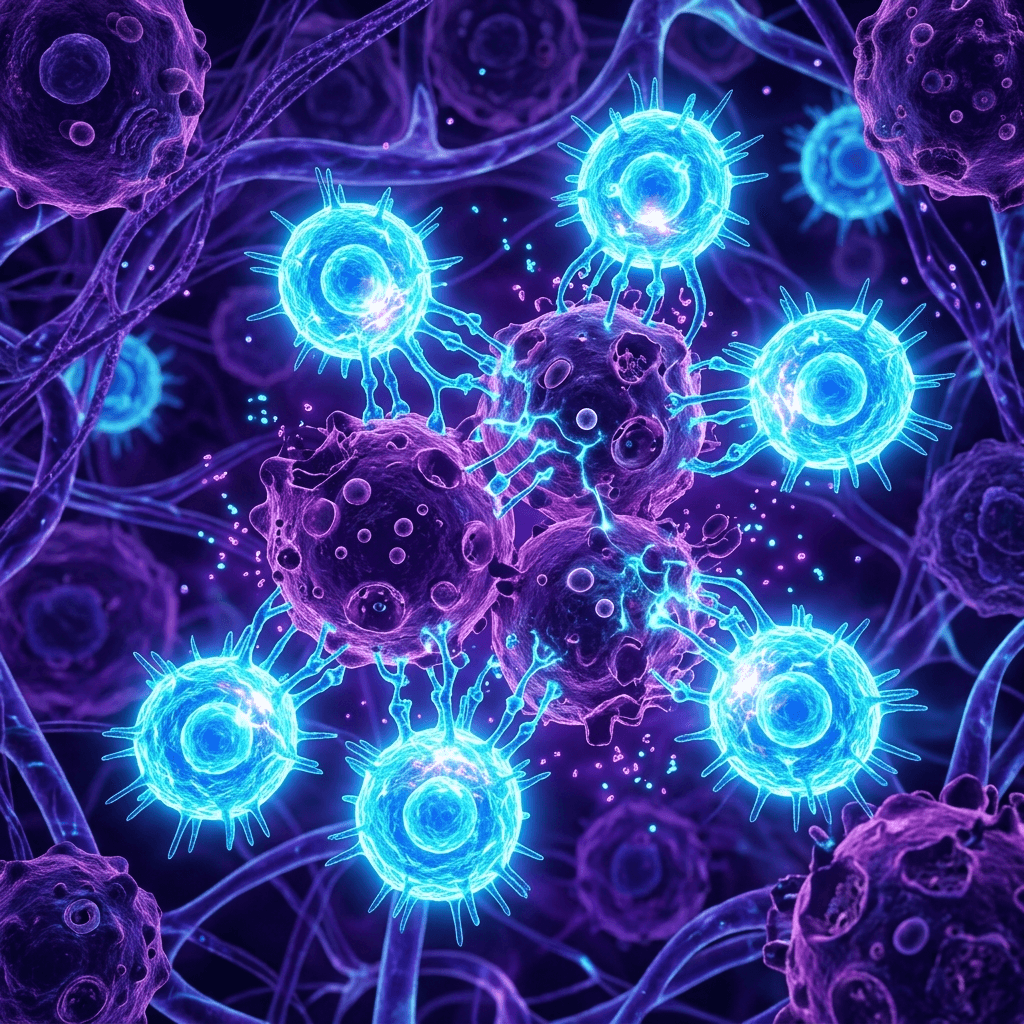
"Your immune system dictates your rate of systemic aging. Immunosenescence—the accumulation of senescent, dysfunctional T-cells alongside thymic involution—drives chronic systemic inflammation, accelerating all-cause biological aging. Reversing immune age is a primary target for extending human healthspan and maintaining cellular defense networks."
Key Takeaways: Reversing Immune Age
-
1.
Thymic Involution: The progressive shrinkage of the thymus gland after puberty, replacing functional immune tissue with fat and restricting new T-cell production.
-
2.
SASP (Senescence-Associated Secretory Phenotype): Zombie immune cells secrete highly inflammatory cytokines (IL-6, TNF-alpha) that spread tissue damage systemically.
-
3.
Rejuvenation Protocols: Combining senolytics (like Fisetin) to clear old cells with thymic regenerators (growth hormone/DHEA) represents the cutting edge of immune reset.
Introduction: The Immunological Clock of Aging
Why do older adults become increasingly vulnerable to infections, develop chronic inflammatory diseases, and exhibit a rising incidence of cancer? The root cause is a systemic decay of the immune system known as immunosenescence. Your immune system is not just a defense network against external pathogens; it is your body's primary surveillance and maintenance crew. It is responsible for identifying and clearing mutated cells, repairing damaged tissue, and keeping internal inflammation under control. When this network ages, the entire organism suffers.
Immunosenescence is characterized by a profound shift in immune cell populations: the pool of naive T-cells (cells that have not yet encountered a pathogen and are ready to fight new threats) shrinks, while the pool of highly specialized, exhausted memory T-cells grows. Many of these memory T-cells become senescent, entering a "zombie-like" state where they refuse to die and instead secrete toxic inflammatory molecules. To extend healthspan, biohackers must implement targeted strategies to clear these senescent cells, regenerate the thymus gland, and reset their biological immune age.
The Biology of Immunosenescence: Clonal Exhaustion & CD28- T-Cells
To understand how the immune system decays, we must look at the cellular level, specifically T-helper (CD4+) and cytotoxic (CD8+) T-cells. T-cells are produced in the bone marrow and migrate to the thymus gland, where they mature and learn to distinguish "self" from "non-self." During youth, the body possesses a vast library of naive T-cells, enabling the immune system to recognize and attack novel pathogens or emerging cancer cells.
Over a lifetime of exposure to common viruses—particularly cytomegalovirus (CMV)—the body repeatedly recruits and replicates specific T-cells. This constant replication leads to "clonal exhaustion." After cell division limits are reached (the Hayflick limit), T-cells lose critical cell-surface receptors, most notably CD28, a co-stimulatory molecule required for T-cell activation. These CD28- T-cells enter a state of cellular senescence. They lose their ability to divide or fight infections, but they remain metabolically active, resistant to apoptosis (programmed cell death), and occupy valuable space in our lymphatic tissues, blocking the body's ability to maintain a diverse immune defense.
Thymic Involution: The Shrinking conductor of Immunity
The primary driver of immunosenescence is the progressive degeneration of the thymus, the specialized organ located behind the breastbone where T-cells mature. This process, known as thymic involution, begins at puberty and continues throughout life. Each year, the active, lymphoid tissue of the thymus shrinks by approximately 3%, being progressively replaced by adipose (fat) tissue. By age 50, less than 15% of the thymus remains functional; by age 70, new T-cell production has virtually ceased.
Without a functional thymus, the body cannot produce new naive T-cells. The immune system is forced to rely on the replication of its existing pool of memory cells, driving clonal exhaustion and CD28- accumulation. Furthermore, the thymus gland secretes hormones like thymulin and thymosin, which coordinate immune cell activation. As the thymus shrinks, circulating levels of these hormones drop, causing immune signaling to become uncoordinated and dysfunctional, leading to elevated rates of autoimmune reactions where the body's cells are mistakenly targeted.
The SASP Pathway: How Zombie Cells Drive Inflammaging
Senescent T-cells do not simply sit idle; they active damage surrounding tissue. They do this by secreting the Senescence-Associated Secretory Phenotype (SASP)—a toxic cocktail of pro-inflammatory cytokines (such as interleukin-6 (IL-6) and tumor necrosis factor-alpha (TNF-alpha)), chemokines, and matrix metalloproteinases (MMPs). The continuous secretion of these molecules triggers a state of persistent, low-grade systemic inflammation known as **inflammaging**.
Inflammaging is highly destructive. Systemic IL-6 and TNF-alpha damage the endothelial lining of blood vessels, driving arterial stiffness and cardiovascular disease. These cytokines also cross the blood-brain barrier, activating microglia and driving neuroinflammation, which impairs cognitive function. In metabolic tissues, chronic SASP exposure desensitizes insulin receptors, leading to insulin resistance. Crucially, the SASP is contagious: the secreted cytokines act on neighboring healthy immune cells, forcing them to also enter senescence, accelerating the aging of the entire immune network.
Biohacker Pro-Tip: Zinc, Copper, and Thymulin Activation
To support remaining thymic function, supplement with Zinc (coupled with a copper balance, e.g., 15 mg of zinc to 1 mg of copper) daily. Zinc is a mandatory co-factor for **thymulin**, a hormone secreted by thymic epithelial cells that drives T-cell differentiation. Deficiency in zinc directly accelerates thymic involution, and maintaining optimal serum zinc levels is a simple, cost-effective baseline defense against early immunosenescence.
Thymic Involution Dynamics
| Age Group | Thymus Composition | Naive T-Cell Output | Inflammatory Marker Output |
|---|---|---|---|
| Children & Teens | Active lymphoid epithelial tissue | Maximum capacity | Minimal |
| Adults (20-40) | Gradual fatty infiltration (adipose replacement) | Moderate (declining 3% per year) | Low-grade baseline |
| Seniors (50+) | >85% adipose fatty tissue | Extremely restricted | High (clonally exhausted senescent pool) |
Clinical Protocols to Clear Senescent T-Cells and Reset Immune Age
To reset your biological immune age, a protocol must execute three distinct phases: first, selectively kill and clear existing senescent immune cells; second, stimulate the thymus to regrow functional tissue; and third, support T-cell differentiation via targeted peptide signaling.
Targeted Senolytics (High-Dose Fisetin)
Fisetin is a natural flavonoid that selectively induces apoptosis in senescent cells by inhibiting key pro-survival networks (including the BCL-2 and AKT pathways). Because senescent immune cells rely on these networks to resist death, high-dose Fisetin therapy selectively clears "zombie" T-cells from the spleen, lymph nodes, and bone marrow, lowering systemic IL-6 and TNF-alpha, and making room for new, functional immune cells to grow.
Thymic Regeneration (The TRIIM Protocol)
Pioneered by immunologist Dr. Greg Fahy, the Thymic Regeneration, Immunorestitution, and Insulin Mitigation (TRIIM) trial was the first clinical trial to successfully reverse epigenetic age in humans. The protocol utilized a combination of recombinant human Growth Hormone (rhGH, to stimulate thymic tissue growth), DHEA (an adrenal steroid that blocks growth hormone's cortisol-elevating properties), and Metformin (an AMPK activator that prevents insulin resistance, a side effect of growth hormone).
After 12 months, MRI scans of the participants demonstrated a significant replacement of thymic fat tissue with healthy, active lymphoid tissue, alongside a rise in the naive-to-memory T-cell ratio and an average epigenetic age reversal of 1.5 years, proving that thymic involution is not an irreversible process.
Peptide Signaling (Thymosin Alpha-1)
Thymosin Alpha-1 (Tα1) is a 28-amino acid peptide naturally secreted by thymic epithelial cells. It acts as an immune system modulator, promoting the differentiation of naive T-cells into active T-helper (CD4+) and cytotoxic (CD8+) cells. Tα1 also stimulates the activity of natural killer (NK) cells and balances the Th1/Th2 helper cell ratio, promoting a clean, targeted immune response while suppressing autoimmune inflammation.
In the longevity space, cycling Thymosin Alpha-1 (e.g., 1.5 mg injected subcutaneously two times per week for 4 to 6 weeks) supports the maturation of new T-cells, ensuring that the fresh immune cells produced by thymic regeneration are properly trained to protect the body.
The CD28- T-Cell Signaling Defect and Clonal Exhaustion
To understand why senescent T-cells are so dysfunctional, we must examine their intracellular signaling cascades. Naive T-cells require two signals to activate: first, the binding of their T-cell receptor (TCR) to an antigen, and second, the binding of their surface receptor **CD28** to CD80 or CD86 on an antigen-presenting cell. When CD28 is engaged, it recruits phosphoinositide 3-kinase (PI3K) and activates the AKT pathway, promoting cell survival, proliferation, and cytokine production.
During aging and repetitive division (clonal exhaustion), T-cells lose their CD28 expression, becoming CD28- T-cells. Without CD28, the co-stimulatory signaling pathway is permanently disabled. When these cells encounter antigens, they cannot activate PI3K or AKT, resulting in a failure to secrete IL-2 and an inability to proliferate. Instead of fighting pathogens, they upregulate the cell-cycle inhibitors p16INK4a and p21CIP1/WAF1, entering permanent growth arrest. Despite this arrest, they remain highly metabolic, consuming glucose and secreting SASP factors, which degrades the local cellular microenvironment and exhausts surrounding healthy immune cells.
Mechanisms of t-cell Senescence Clearance by Fisetin and Dasatinib
How do senolytics selectively kill senescent immune cells without harming healthy cells? Senescent T-cells are resistant to apoptosis because they upregulate Senescent Cell Anti-Apoptotic Pathways (SCAPs). These pathways utilize pro-survival protein networks—such as the BCL-2, BCL-xL, and PI3K/AKT networks—to block caspase activation, which is the cell's natural death switch. Healthy cells do not rely on these SCAPs to survive, creating a biological target for senotherapeutic intervention.
The senolytic combination of Dasatinib (a tyrosine kinase inhibitor) and Quercetin (a natural flavonoid), commonly referred to as D+Q, works by inhibiting these networks simultaneously. Dasatinib blocks the EFNB1 receptor kinase, while Quercetin inhibits the BCL-xL and PI3K pathways. Fisetin operates via a similar mechanism, inhibiting the AKT/mTOR pathway and downregulating BCL-2. When these networks are blocked, the senescent cell is no longer able to suppress pro-apoptotic signals. Caspase-3 and caspase-9 are activated, leading to the rapid, selective clearance of the "zombie" cells by local macrophages, lower systemic inflammation and restoring tissue function.
Nutritional and Metabolic Anchors of Immune Resilience
While advanced senolytics and peptide therapies are highly effective, they must sit on a foundation of metabolic health. Insulin resistance is a major accelerant of immunosenescence. High blood sugar and chronic insulin levels drive the non-enzymatic glycation of proteins, forming Advanced Glycation End-products (AGEs). These AGEs bind to receptors (RAGE) on immune cells, triggering intracellular inflammatory pathways (NF-kB) and accelerating the rate at which T-cells enter senescence.
To support immune longevity, biohackers incorporate key nutrient co-factors: Vitamin D3 (which regulates the expression of anti-inflammatory genes in immune cells), Vitamin C (which accumulates in white blood cells to support their migration to sites of infection), and molecularly distilled omega-3 fatty acids (which resolve acute inflammation). Restricting your eating window (Intermittent Fasting) triggers autophagy—the process by which cells clear out damaged proteins and organelles—lowering the baseline cellular stress on your immune cells and helping to maintain a youthful immune response.
Conclusion: Rebuilding the Body's Shield
Immunosenescence is not an inevitable consequence of aging. It is a biological process governed by specific, modifiable pathways: thymic involution, clonal exhaustion, and the inflammatory SASP cascade. By selectively clearing senescent zombie cells with senolytics, regenerating thymic tissue through metabolic coordination, and supporting cell maturity with peptide signaling, you can actively reset your immune age.
Rejuvenating your immune system is the ultimate health insurance policy, protecting your brain, heart, and metabolic tissues from the slow, systemic decay of inflammaging, and keeping your body's shield strong for a long, active healthspan.
Cytomegalovirus (CMV) and the Clonal Dominance of Exhausted T-Cells
A major accelerant of immunosenescence is the lifelong latency of Cytomegalovirus (CMV), a common betaherpesvirus present in up to 80% of the adult population. CMV is rarely symptomatic in healthy individuals, but it is never cleared from the body. Instead, it enters a latent state in myeloid cells, requiring continuous surveillance by the immune system. This constant vigilance places a massive, lifelong burden on the T-cell pool.
Over decades, the immune system dedicates an increasingly large fraction of its T-cells to monitoring CMV. In older adults, up to 30% of the total CD8+ cytotoxic T-cell pool can be CMV-specific. This clonal dominance of CMV-specific cells crowds out other naive and memory T-cells, drastically reducing the diversity of the TCR (T-Cell Receptor) repertoire. These CMV-specific T-cells eventually undergo clonal exhaustion, losing their CD28 receptors and secreting SASP factors. For this reason, managing CMV viral load and clearing exhausted CD28- T-cells are primary goals of advanced immunogerontology.
Telomere Shortening and the DNA Damage Response (DDR) in T-Cells
The ultimate driver of cellular senescence in T-lymphocytes is telomere shortening. Telomeres are repetitive nucleotide sequences (TTAGGG) located at the ends of chromosomes, protecting genetic data during cell division. Each time a T-cell divides to fight an infection, its telomeres shorten slightly. While T-helper cells express the enzyme telomerase (which rebuilds telomeres), this expression is downregulated during chronic activation, leading to rapid telomere attrition.
When telomeres reach a critically short length, they trigger the DNA Damage Response (DDR). The cell recognizes the exposed chromosome ends as double-strand breaks, activating the ATM (Ataxia Telangiectasia Mutated) kinase pathway. ATM phosphorylates the tumor suppressor p53, which upregulates the transcription of p21, halting the cell cycle. This permanent cell-cycle arrest is accompanied by chromatin modifications that trigger the SASP secretory pathway, converting a once-helpful immune cell into an inflammatory driver of systemic aging.
Macrophage Polarization and Immune Surveillance in Longevity
As immunosenescence progresses, it impairs the polarization and coordination of macrophages—the phagocytic cells responsible for engulfing cellular debris, pathogens, and senescent zombie cells. Macrophages exist on a functional spectrum from the M1 phenotype (pro-inflammatory, active during acute infections) to the M2 phenotype (anti-inflammatory, responsible for tissue repair and resolution of inflammation). In the aged immune system, macrophages become chronically locked in the M1 state, driving inflammaging.
This M1 polarization bias reduces the macrophage's phagocytic capacity, preventing the clearance of senescent cells and apoptotic debris in tissues. Consequently, senescent T-cells and damaged cells remain in the organs, continuously secreting SASP factors and spreading senescence to neighboring healthy tissues. Restoring macrophage balance (promoting M2 polarization during the resolution phase of repair) is a primary goal of advanced longevity therapy, ensuring that your body's cellular cleanup crew remains highly efficient and functional as you age.
Peer-Reviewed Clinical Validations & Extended Deeper Reading:
- Thymic Reversal Trial (TRIIM): Fahy et al. (2019). "Reversal of epigenetic aging and immunosenescent trends in humans". Aging Cell. The landmark clinical study demonstrating that growth hormone and DHEA can regenerate the human thymus and reverse biological age. Read Study
- Senotherapeutic Efficacy of Fisetin: Yousefzadeh et al. (2021). "Fisetin is a senotherapeutic that extends healthspan and lifespan". EBioMedicine. Details the cellular mechanisms of selective senescent cell clearance using natural flavonoids. Read Study
- Immunosenescence Mechanisms & Inflammaging: Franceschi et al. (2018). "Inflammaging: a new immune-metabolic viewpoint for age-related diseases". Nature Reviews Endocrinology. Review of the molecular pathways linking immunosenescence, senescent cell secretions, and chronic systemic tissue decay. Read Study
By systematically clearing these cellular bottlenecks and replenishing the active T-lymphocyte pool, biohackers can maintain immune vigilance, protect tissue health, and support a long and healthy life.
Furthermore, ongoing research in immunogerontology is exploring the use of chimeric antigen receptor (CAR) T-cell therapy to target and eliminate senescent cells in vivo. By engineering immune cells to recognize specific senescent cell-surface markers (such as uPAR or CD9), clinicians hope to establish a permanent, self-regulating clearance system that prevents the age-related accumulation of cellular damage, keeping the biological immune age persistently youthful and resilient over a lifespan.