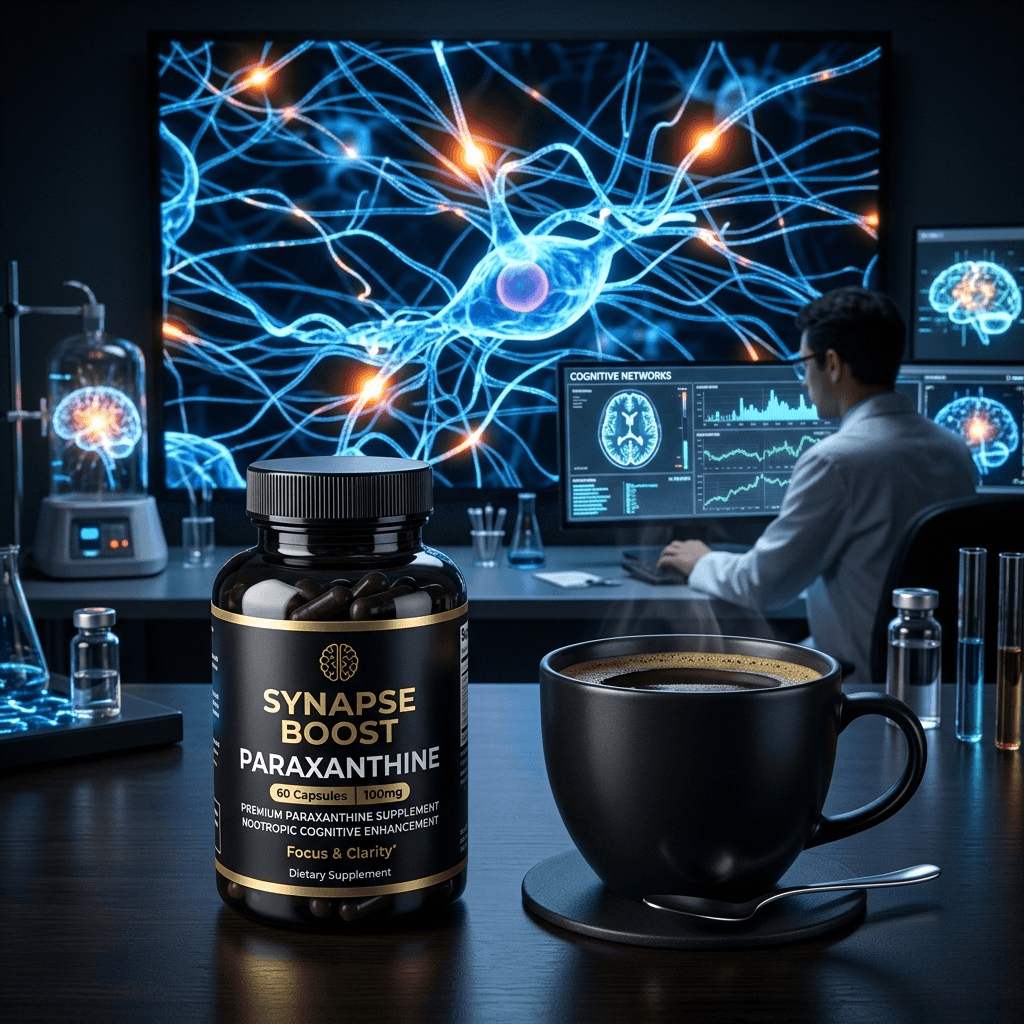
"Paraxanthine is what your liver turns caffeine into. And by skipping the middleman, you get all the focus, none of the jitters, and a significantly higher safety ceiling. It's the smarter caffeine for the modern biohacker."
Paraxanthine: What You Need to Know in 2026
-
1.
What is paraxanthine? 1,7-dimethylxanthine, the primary metabolite of caffeine in humans (70–80% of an ingested caffeine dose is converted into it). It's now being isolated and added directly to supplements as a "cleaner" stimulant alternative with a shorter half-life and fewer side effects.
-
2.
Key benefits vs. caffeine: Superior cognitive enhancement (greater BDNF increases, faster reaction times), 2.3-fold higher safety threshold in animal models, shorter half-life (3.1h vs. 4.1h), no observed tolerance buildup, and significantly reduced cardiovascular side effects and anxiety.
-
3.
Best paraxanthine supplement brands 2026: enfinity® (the patented pure compound, used in Mindvalley States, BrainMD Peak Energy); Update Energy Drink (Kim Kardashian-backed caffeine-free energy drink); Illegal Nutrition's Pre-Workout V2; and standalone paraxanthine capsules.
-
4.
Dosing & applications: 100–300 mg per serving, comparable to caffeine. Research shows 200 mg increases energy expenditure, reduces hunger, and boosts lipolysis without affecting heart rate or blood pressure. Studies on ADHD and cognitive improvement are ongoing.
-
5.
Our verdict: Early evidence strongly supports paraxanthine as a safer, cleaner, and more effective alternative to caffeine for sustained focus, physical performance, and metabolic support. While more long-term human studies are needed, the toxicology data is robust, and user experiences confirm fewer jitters and crashes.
Over the past two years, a new buzzword has been quietly taking over the worlds of nootropics, functional beverages, and sports supplements: paraxanthine. Touted as the cleaner, smarter, and safer alternative to caffeine, it's now the star ingredient in everything from focus pouches backed by Kim Kardashian to high-performance pre‑workout formulas used by elite athletes[reference:0]. But what exactly is paraxanthine, and does the science live up to the hype?
At its core, paraxanthine (scientifically known as 1,7‑dimethylxanthine) is not a novel compound. It's the primary metabolite your liver creates when you drink coffee or any caffeinated beverage. After ingestion, roughly 84% of caffeine is broken down into paraxanthine by the hepatic cytochrome P450 enzyme system[reference:1][reference:2]. "Think of paraxanthine as caffeine's sequel," says registered dietitian Stevie Smith. "When you drink coffee, your liver breaks caffeine down into three compounds, and paraxanthine is the most abundant, accounting for about 80% of caffeine's breakdown in humans"[reference:3].
So why supplement with paraxanthine directly instead of just drinking coffee? Because when you take pure paraxanthine, you bypass the formation of other methylxanthines — theobromine and theophylline — which are responsible for many of caffeine's unwanted side effects, including the dreaded jitters, anxiety, and energy crashes[reference:4]. This guide provides a comprehensive, evidence‑based review of paraxanthine: how it works, its proven benefits over caffeine, top supplement brands in 2025/2026, safety data, optimal dosing, and how it stacks up against traditional stimulants. If you're tired of the caffeine rollercoaster, paraxanthine might just be the upgrade you've been looking for.
The Science: How Paraxanthine Works in the Body
Paraxanthine is the main active compound in your body after you consume caffeine. When caffeine enters the liver, the cytochrome P450 1A2 (CYP1A2) enzyme — a protein whose activity varies based on genetics — demethylates caffeine into three dimethylxanthines: paraxanthine (~80%), theobromine (~12%), and theophylline (~4%)[reference:5][reference:6]. Paraxanthine is the most abundant and the primary driver of caffeine's stimulant effects. Its half‑life is approximately 3.1 hours, which is notably shorter than caffeine's 4.1 hours, theophylline's 6.2 hours, and theobromine's 7.2 hours[reference:7]. This means it's cleared from the body faster, reducing the risk of sleep disruption and evening anxiety.
Pharmacologically, paraxanthine is an adenosine receptor antagonist, similar to caffeine. By blocking adenosine — the neurotransmitter that builds up during wakefulness and signals sleepiness — paraxanthine promotes alertness, focus, and sustained attention[reference:8]. However, research suggests paraxanthine binds more potently to adenosine A1 and A2a receptors while inhibiting PDE9, a phosphodiesterase enzyme, which enhances nitric oxide and dopamine pathways for cleaner energy and focus without the overstimulation associated with caffeine[reference:9].
Crucially, paraxanthine does not produce the same degree of cardiovascular strain as caffeine. In a 2024 dose‑response study on 21 adults, heart rate decreased slightly in the 100 mg group, blood pressure remained unchanged, and lipolysis markers (free fatty acid release) increased. This suggests paraxanthine can deliver metabolic and cognitive benefits without triggering the cardiovascular anxiety that makes some people feel panicked after drinking coffee[reference:10].
Biohacker Pro-Tip: Why CYP1A2 Genetics Matter for Caffeine (But Not for Paraxanthine)
Some individuals carry a homozygous A allele of the CYP1A2 gene, making them "fast metabolizers" of caffeine. Others are slow metabolizers, experiencing prolonged jitters and insomnia from even moderate coffee intake. Studies show that the metabolic products of caffeine — mainly paraxanthine — are the actual active ingredients driving the stimulant effect[reference:11]. By taking paraxanthine directly, you bypass the variable CYP1A2 metabolism entirely. This means everyone, regardless of genetic makeup, can experience a consistent, predictable energy boost without the wide variability in side effects. If you are a slow caffeine metabolizer, direct paraxanthine supplementation is likely a superior choice.
Key Benefits of Paraxanthine: What the Studies Actually Show
Cognitive Enhancement & BDNF Activation – Superior to Caffeine
In a landmark 2025 study published in Experimental Brain Research, scientists directly compared paraxanthine (PXN) to caffeine (CAF) in young and aged rats. The results were striking: both PXN and CAF improved escape latency in the Morris water maze (a test of learning and memory), but PXN HIGH significantly outperformed CAF HIGH in both young and old animals (P < 0.001 and P = 0.003, respectively)[reference:12]. Brain‑derived neurotrophic factor (BDNF) — a protein critical for neuroplasticity, learning, and long‑term memory — increased across all active groups, but PXN HIGH raised BDNF to a greater extent than CAF HIGH (P = 0.03)[reference:13]. The authors concluded that "PXN showed greater improvements in cognition and BDNF levels compared to CAF, further substantiating PXN as a nootropic with greater benefits compared to CAF"[reference:14].
Human translation: In a double‑blind, randomized crossover trial, a single 200 mg dose of paraxanthine improved short‑term memory, sustained attention, and reaction speed. Participants performed better on the Berg‑Wisconsin Card Sorting Test, Go/No‑Go tasks, Sternberg memory tests, and Psychomotor Vigilance Task (PVT), maintaining high accuracy for several hours[reference:15]. Paraxanthine also improved cognitive function more effectively than caffeine after a 10‑km run, making it a prime candidate for athletic nootropic use[reference:16].
Metabolic Support: Energy Expenditure & Fat Oxidation
A 2024 randomized, double‑blind, placebo‑controlled crossover study examined the metabolic effects of paraxanthine in 21 healthy adults (13 males, 8 females). Participants consumed placebo (PLA), 100 mg, 200 mg, and 300 mg of enfinity® (paraxanthine). The 200 mg dose (PX200) significantly increased energy expenditure compared to placebo (all P < 0.05) and tended to increase fat oxidation rates at 90 and 120 minutes (P = 0.056 and P = 0.066, respectively). Hunger ratings increased in the placebo group over time, while the PX200 group experienced significantly less hunger at 30, 60, 90, and 180 minutes (P values ranged from 0.02 to 0.05)[reference:17].
Takeaway: Paraxanthine supports metabolic rate, promotes fat utilization, and suppresses appetite — without the cardiovascular overdrive (heart rate and blood pressure remained stable). For those combining stimulants with thermogenic goals, paraxanthine offers a cleaner pathway than caffeine.
Safety Profile: Less Toxic, No Mutagenicity, Higher LD50
A comprehensive toxicology assessment conducted in accordance with international guidelines evaluated paraxanthine's safety. There was no evidence of mutagenicity in bacterial reverse mutation tests, in vitro mammalian chromosomal aberration tests, or in vivo mammalian erythrocyte micronucleus tests[reference:18]. An acute oral toxicity test established an LD50 of 1601 mg/kg body weight per day[reference:19]. In a 90‑day subchronic oral toxicity study, paraxanthine did not cause mortality or toxic effects at daily doses up to 300 mg/kg bw/day, with a No Observed Adverse Effect Level (NOAEL) of ≥300 mg/kg — the highest dose tested[reference:20].
A separate 2023 comparison study in rats found that paraxanthine had a higher safety threshold: no adverse effects were observed at 185 mg/kg body weight of paraxanthine, versus 150 mg/kg for caffeine. Two rats in the high‑dose caffeine group died during the study, while none died in the paraxanthine groups. The LD50 of paraxanthine was 2.3‑fold higher than caffeine's reported LD50[reference:21]. The authors concluded that paraxanthine "could be a safer alternative to caffeine in humans"[reference:22].
Caffeine vs. Paraxanthine: Head‑to‑Head Comparison
| Property | Caffeine (CAF) | Paraxanthine (PXN) | Advantage |
|---|---|---|---|
| Half‑life | 4.1 hours | 3.1 hours | PXN (faster clearance) |
| Plasma clearance | 2.07 mL/min/kg | 2.20 mL/min/kg | PXN (10% faster) |
| Metabolic breakdown products | Paraxanthine, theobromine, theophylline | None (administered directly) | PXN (cleaner) |
| NOAEL in rats (90 days) | 150 mg/kg | 185–300 mg/kg | PXN (higher safety threshold) |
| Effect on heart rate | Generally increases | No increase (decrease in some studies) | PXN (cardiovascular friendly) |
| BDNF increase (animal study) | Moderate | Greater than CAF (P=0.03) | PXN (superior neuroplasticity) |
Top Paraxanthine Supplements & Energy Drinks (2025–2026)
Paraxanthine is now available in several patented formulations, primarily under the brand name enfinity® (distributed by TSI Group). Here are the highest‑quality products on the market, based on ingredient transparency, third‑party testing, and user feedback.
enfinity® (Patented Paraxanthine) – The Gold Standard Ingredient
enfinity® is the commercially available form of paraxanthine used in most reputable supplements. It has been extensively studied in multiple human and animal trials, including the metabolic dose‑response study, the cognitive enhancement trial, and the 90‑day toxicology assessment[reference:23]. Many brands now list "enfinity® (paraxanthine)" on their labels. If a product does not specify the source or purity of its paraxanthine, consider it suspect.
Form: Pure powder, encapsulated in final products. Best for: Anyone seeking a verified, research‑backed source of paraxanthine.
Mindvalley States – BLISS (100mg) & FOCUS (300mg)
Mindvalley States has launched a full line of mental performance supplements featuring enfinity®. BLISS combines 100mg of paraxanthine with mood‑supporting botanicals for calm yet sustained energy. FOCUS delivers a potent 300mg of enfinity® alongside PEAK ATP® (a patented ATP‑boosting molecule), L‑tyrosine, and alpha‑GPC for intense mental and physical stamina[reference:24][reference:25]. Both products are designed to avoid the caffeine crash and have received positive early reviews for clean, sustained energy.
Best for: Biohackers seeking targeted nootropic stacks for mood enhancement or deep focus work.
BrainMD Peak Energy – Clean, Caffeine‑Free Energy
BrainMD, founded by Dr. Daniel Amen, has launched Peak Energy as a caffeine‑free alternative to traditional energy drinks. Each serving delivers 200mg of enfinity® paraxanthine combined with PEAK ATP® to support both cognitive and physical stamina[reference:26][reference:27]. The formula is designed for individuals who are sensitive to caffeine but still need a reliable productivity boost.
Best for: Caffeine‑sensitive individuals, students, and professionals needing afternoon focus without sleep disruption.
Update Energy Drink – Mainstream Caffeine‑Free Beverage
In February 2025, Kim Kardashian announced she was co‑founding a "caffeine‑free energy drink" called Update. The drink's website claims it delivers "smooth, steady energy without the spike or crash" using paraxanthine as the primary stimulant. Kardashian has stated that she can drink it at night and "go right to bed, like an hour later," highlighting the compound's shorter half‑life and reduced sleep disruption[reference:28]. While this product is new and long‑term data are unavailable, it represents the first major mainstream push for paraxanthine beverages.
Best for: General consumers seeking an alternative to traditional energy drinks like Celsius or Alani Nu.
Top Paraxanthine Products: Features & Dosage
| Product | Paraxanthine per serving | Other key ingredients | Form | Intended use |
|---|---|---|---|---|
| Mindvalley BLISS | 100 mg | Saffron, Zembrin® | Capsules | Mood + calm focus |
| Mindvalley FOCUS | 300 mg | PEAK ATP®, L‑tyrosine, alpha‑GPC | Capsules | Deep work + physical stamina |
| BrainMD Peak Energy | 200 mg | PEAK ATP® | Capsules | Clean energy, caffeine‑free |
| Update Energy Drink | (proprietary) | Zero sugar, natural flavors | Ready‑to‑drink beverage | Everyday energy (mainstream) |
| Illegal Nutrition Pre‑Workout V2 | (proprietary) | Pre‑workout blend | Powder | High‑stimulant athletic performance |
Paraxanthine Dosage: How Much Should You Take?
Based on clinical trials, the effective dose range for paraxanthine is 100–300 mg per serving, which is comparable to standard caffeine dosing. The 2024 metabolic study tested 100 mg, 200 mg, and 300 mg, with the 200 mg dose consistently producing the strongest combination of energy expenditure increase, hunger reduction, and fat oxidation support without cardiovascular side effects[reference:29].
- General cognitive focus (work, study): 100–200 mg. A single 200 mg dose improved short‑term memory, sustained attention, and reaction speed in a clinical trial[reference:30]. Start with 100 mg if you are stimulant‑sensitive.
- Physical performance & pre‑workout: 200–300 mg. Many pre‑workout formulas now include 300 mg of enfinity® alongside ATP boosters for enhanced physical stamina and focus without the cardiovascular strain of high‑dose caffeine[reference:31].
- Metabolic support & weight management: 200 mg. This dose increased energy expenditure and suppressed hunger ratings across 180 minutes in the placebo‑controlled trial[reference:32].
- ADHD & cognitive deficits (investigational): 2025 clinical trials are currently evaluating the combination of L‑theanine (100–200 mg) with paraxanthine (dose not yet published) for adults with ADHD and autism spectrum disorder[reference:33]. No established dose yet; consult a physician.
Due to the shorter half‑life (3.1 hours), many users can take paraxanthine as late as early evening without disrupting sleep, as evidenced by Kim Kardashian's claim that she can drink Update and go to bed an hour later. However, individual sensitivity varies. If you plan to use it for late‑night productivity, start with a low dose.
Biohacker Pro-Tip: Stack Paraxanthine with L‑Theanine for Precision Focus
While paraxanthine alone produces fewer jitters than caffeine, stacking it with L‑theanine (100–200 mg) further smooths the energy curve and reduces any residual overstimulation. L‑theanine increases alpha brain waves and GABA, promoting a state of "calm focus." This combination is currently being investigated in clinical trials for ADHD and ASD[reference:34]. For best results, take paraxanthine in the morning on an empty stomach for rapid absorption, or 30–60 minutes before a workout. Avoid stacking with other stimulants (e.g., high‑dose caffeine) until you have established your baseline tolerance.
Special Application: ADHD & Cognitive Enhancement (2025 Clinical Trials)
One of the most exciting emerging applications for paraxanthine is in the management of attention deficits in adults with ADHD and autism spectrum disorder (ASD). In 2025, a pilot clinical trial was initiated (NCT07189442) to test whether combining L‑theanine and paraxanthine improves sustained attention, inhibitory control, and overall cognition in adults with ADHD and ASD[reference:35][reference:36].
The trial design includes neuropsychological testing, fMRI scanning, and self‑report measures to evaluate changes in cognitive function compared to placebo. Researchers hypothesize that the combination may reduce "mind‑wandering" while engaging in cognitively demanding tasks, and paraxanthine's predictable metabolism (bypassing CYP1A2 variability) makes it a more consistent tool than caffeine[reference:37].
While results are not yet published, the rationale is sound: many individuals with ADHD self‑medicate with caffeine to improve focus, but caffeine's side effects (anxiety, insomnia, cardiovascular strain) are poorly tolerated. Paraxanthine offers a potentially cleaner alternative with fewer downsides. For now, the use of paraxanthine for ADHD should be considered experimental and discussed with a healthcare provider.
Paraxanthine Safety & Side Effects: What the Toxicology Data Show
The overall safety profile of paraxanthine appears superior to that of caffeine, though long‑term human data are still limited. Key toxicological findings include:
- No mutagenicity or genotoxicity: Paraxanthine showed no evidence of causing DNA mutations or chromosomal aberrations in multiple in vitro and in vivo tests[reference:38].
- Acute LD50 (rodent): 1601 mg/kg body weight, indicating very low acute toxicity[reference:39].
- 90‑day NOAEL: ≥300 mg/kg/day — the highest dose tested, with no adverse effects observed[reference:40].
- Head‑to‑head comparison with caffeine: Paraxanthine had a higher NOAEL (185 mg/kg vs. 150 mg/kg), and two rats died in the high‑dose caffeine group, while none died in the paraxanthine groups[reference:41]. The LD50 of paraxanthine was 2.3‑fold higher than caffeine[reference:42].
Reported side effects in human studies are minimal and primarily gastrointestinal: mild nausea, diarrhea, or bloating at high doses. Unlike caffeine, paraxanthine does not raise heart rate or blood pressure in most subjects at doses up to 300 mg[reference:43]. However, as with any stimulant, individuals with seizure disorders, cardiac arrhythmias, or severe anxiety should consult a physician before use. Paraxanthine is also reported to be less potent as a teratogen than caffeine, but it should still be avoided during pregnancy unless medically supervised[reference:44].
| Safety parameter | Paraxanthine finding | Comparison to caffeine |
|---|---|---|
| Mutagenicity / genotoxicity | None detected (multiple assays) | Similar (caffeine also safe) |
| Acute LD50 (rat) | 1601 mg/kg | ~2.3× higher than caffeine |
| 90‑day NOAEL | ≥300 mg/kg | Higher than caffeine (185 mg/kg NOAEL) |
| Effect on heart rate (human) | No increase / slight decrease | Caffeine increases HR |
| Mortality at high dose (animal) | None observed | Two deaths in high‑dose caffeine group |
Frequently Asked Questions About Paraxanthine
Is paraxanthine legal and safe?
Yes. Paraxanthine is legally sold as a dietary supplement ingredient in the United States and Europe. Multiple toxicology studies have confirmed it is safe, with a higher safety threshold than caffeine. However, it has not yet received "Generally Recognized as Safe" (GRAS) status from the FDA for widespread addition to foods and beverages, though applications are pending[reference:45].
Will paraxanthine show up on a drug test?
Paraxanthine is not typically tested on standard employment drug panels (which screen for amphetamines, opioids, cocaine, etc.). However, it will appear as a methylxanthine metabolite in advanced screens. If you are subject to athletic anti‑doping testing, note that paraxanthine is not a banned substance, but it may be flagged as an analogue of caffeine. Most products using enfinity® are tested for contaminants and are considered safe for athletes[reference:46].
Does paraxanthine build tolerance like caffeine?
Early evidence and user reports suggest that paraxanthine produces less tolerance buildup than caffeine. One manufacturer claims "no tolerance buildup" is observed with continued use[reference:47]. However, systematic human studies on tolerance have not yet been published. As with any stimulant, cycling (e.g., 5 days on, 2 days off) is recommended to maintain sensitivity.
Can I take paraxanthine with caffeine?
Yes, but it is not necessary and may increase side effects. A 2024 study examined the combination and found that paraxanthine alone boosted cognitive function better than caffeine alone and better than the combination of the two[reference:48]. If you are trying to reduce caffeine intake, replacing it entirely with paraxanthine is likely the most effective approach.
How long does paraxanthine stay in your system?
The half‑life is approximately 3.1 hours, which means it is largely cleared from the blood within 12–15 hours. This makes it significantly less likely to disrupt sleep compared to caffeine (half‑life ~4.1 hours) or theobromine (7.2 hours)[reference:49]. Most users can take paraxanthine in the early evening without sleep issues.
Is paraxanthine the same as theacrine or dynamine?
No. Theacrine (1,3,7,9‑tetramethyluric acid) and dynamine (methylliberine) are synthetic or naturally occurring methylxanthine derivatives with different pharmacological profiles. Paraxanthine is the direct metabolite of caffeine and is structurally distinct. Some users find theacrine provides even longer‑lasting energy with fewer side effects, but the research base for paraxanthine is currently larger and more robust.
Cost‑Benefit: Is Paraxanthine Worth the Switch from Caffeine?
Paraxanthine supplements are generally more expensive than bulk caffeine powder but comparable to premium pre‑workouts or nootropic stacks. A 200 mg serving of enfinity® costs approximately $0.80–$1.20 per use, depending on the product. By comparison, a cup of high‑quality coffee costs $0.30–$0.60, and bulk caffeine powder is even cheaper. However, for individuals who experience significant jitters, anxiety, insomnia, or digestive distress from caffeine, the price premium may be justified by the improved quality of life and cognitive performance.
If you are a "slow metabolizer" of caffeine (carrying the CYP1A2*1F variant), switching to paraxanthine could eliminate hours of unwanted stimulation and evening sleep disruption. For competitive athletes, paraxanthine's lack of cardiovascular strain and ability to improve cognitive function after exercise makes it a compelling choice[reference:50].
Final Verdict: Should You Switch to Paraxanthine?
Paraxanthine is not a marketing gimmick. It is a scientifically distinct, naturally occurring methylxanthine that your body already produces every time you drink coffee. The preclinical and early human data are compelling: paraxanthine offers superior cognitive enhancement (greater BDNF increases, faster reaction times), significantly higher safety thresholds, faster clearance (shorter half‑life), reduced cardiovascular strain, and less anxiety compared to caffeine. Unlike caffeine, which can produce wildly variable effects depending on your CYP1A2 genetics, paraxanthine works predictably and consistently across the population.
Our top recommendation for most biohackers is to try a 200 mg dose of a high‑quality enfinity®‑based product (such as Mindvalley FOCUS or BrainMD Peak Energy) on an empty stomach in the morning. If you respond well — experiencing clean, sustained focus without jitters or crash — consider replacing your morning coffee entirely or keeping paraxanthine for afternoon use when caffeine would interfere with sleep. For athletes, paraxanthine pre‑workout is a game‑changer: improved mental stamina without raising heart rate into uncomfortable zones.
However, paraxanthine is not without limitations. Long‑term human safety data beyond 90 days are still sparse, though the animal NOAEL data are reassuring. The cost is higher than basic caffeine. And while the initial evidence for ADHD and metabolic support is exciting, confirmatory human trials are still pending. If you are a fast caffeine metabolizer who loves coffee and experiences no side effects, you may not need to switch. But if you have ever said, "I wish caffeine gave me focus without the anxiety," paraxanthine is the compound you have been waiting for.
Peer‑Reviewed Clinical Validations & Extended Reading:
- Paraxanthine vs. Caffeine memory & BDNF (rat study, 2025): Jäger, R., et al. (2025). "Paraxanthine enhances memory and neuroplasticity more than caffeine in rats." Experimental Brain Research, 243:8. Read Study
- Paraxanthine safety assessment (2023): Jäger, R., et al. (2023). "Paraxanthine safety and comparison to caffeine." Frontiers in Toxicology, 5:1117729. Read Paper
- Paraxanthine toxicology battery (2021): Jäger, R., et al. (2021). "An assessment of mutagenicity, genotoxicity, acute-, subacute and subchronic oral toxicity of paraxanthine." Food and Chemical Toxicology, 158:112579. Read Study
- Dose‑response metabolic study (2024): Gross, K. N., et al. (2024). "A Dose‑Response Study to Examine Paraxanthine's Impact on Energy Expenditure, Hunger, Appetite, and Lipolysis." Journal of Dietary Supplements. Read Paper
- Paraxanthine for post‑run cognitive function (2024): Journal of the International Society of Sports Nutrition. "Paraxanthine provides greater improvement in cognitive function than caffeine after performing a 10‑km run." Read Study
- L‑theanine + Paraxanthine for ADHD (ongoing trial, 2025): Dhanasekara, S., et al. "L‑theanine and Paraxanthine for Cognitive Improvement in Adults With ADHD and ASD." ClinicalTrials.gov NCT07189442. Read Protocol