"A single teaspoon of properly prepared broccoli sprouts contains more cancer-fighting, longevity-promoting sulforaphane than two pounds of mature broccoli. The difference is not in the plant, but in the activation of a dormant chemical weapon that you can unlock with surgical precision in your own kitchen."
Sulforaphane Mastery: 2026 Core Pillars
-
1.
Glucoraphanin to Sulforaphane: Broccoli seeds and sprouts contain glucoraphanin, a stable precursor. it's converted to the active compound sulforaphane only when the plant is damaged and the enzyme myrosinase is activated.
-
2.
The Nrf2 Master Switch: Sulforaphane is the most potent naturally occurring activator of the Nrf2 pathway, which upregulates over 200 genes involved in antioxidant defense, detoxification, and cellular protection.
-
3.
The Heat-Shock Hack (10x Potency): Heating broccoli sprouts to exactly 70°C (158°F) for 10 minutes deactivates the epithiospecifier protein (ESP), which otherwise diverts glucoraphanin away from sulforaphane production, resulting in a 3-10x increase in yield.
-
4.
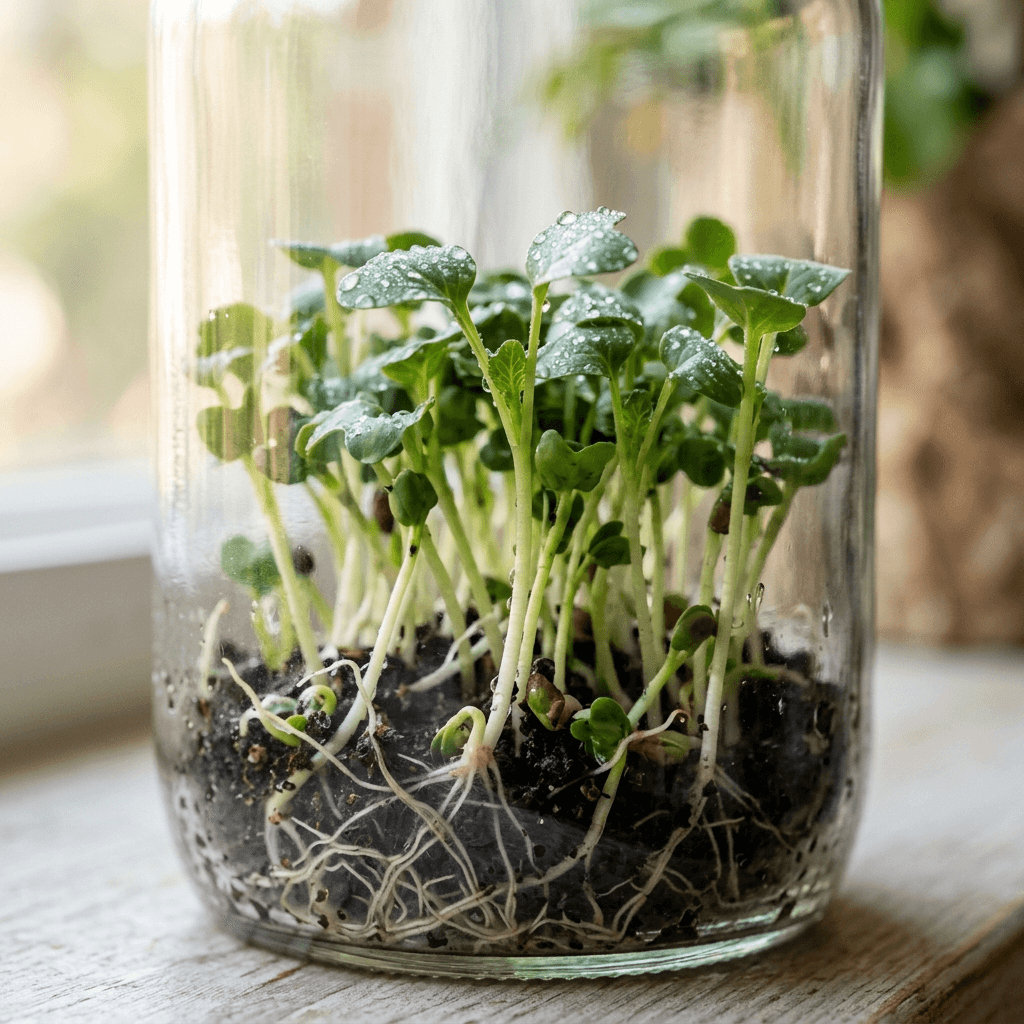
Optimal Harvest Window (Day 3-5): Sulforaphane potential peaks when sprouts are 3-5 days old, just as the first true leaves begin to emerge. Older sprouts have declining glucoraphanin concentrations.
-
5.
Synergy with Myrosinase Sources: Adding a small amount of raw mustard seed powder, daikon radish, or wasabi to cooked broccoli provides an external source of myrosinase, rescuing sulforaphane formation in cooked vegetables.
In the vast and often confusing landscape of nutritional Biohacking, few compounds have amassed as robust and compelling an evidence base for longevity, cancer prevention, and cellular detoxification as Sulforaphane. This humble isothiocyanate, derived almost exclusively from cruciferous vegetables like broccoli, kale, and Brussels sprouts, has been shown in hundreds of peer-reviewed studies to activate the body's master antioxidant and detoxification pathway, Nrf2, to suppress inflammation, enhance Phase II liver detoxification, and even exhibit direct anti-cancer and neuroprotective effects. Yet, despite its profound potential, the vast majority of individuals consuming broccoli in the form of steamed florets or raw salads are obtaining only a fraction, often less than 10%, of the sulforaphane they could be unlocking.
The secret lies not in the quantity of broccoli consumed, but in the precise manipulation of the plant's own chemical defense system. Sulforaphane doesn't exist pre-formed in the intact plant. it's generated only when the plant's cells are ruptured (by chewing, chopping, or blending), allowing the enzyme Myrosinase to come into contact with and hydrolyze the stable precursor molecule Glucoraphanin. However, a competing enzyme, the Epithiospecifier Protein (ESP), can divert this reaction, producing an inert nitrile instead of the desired sulforaphane. In 2026, the advanced biohacker understands how to manipulate temperature, time, and synergistic ingredients to silence ESP, maximize myrosinase activity, and achieve a 10-fold or greater increase in bioavailable sulforaphane. This definitive guide provides the complete, evidence-based protocol for cultivating, harvesting, and preparing the most potent sulforaphane source on Earth: home-grown broccoli sprouts.
THE BOTANICAL ARMS RACE: GLUCORAPHANIN, MYROSINASE, AND THE ESP SABOTEUR
To master sulforaphane production, one must first appreciate the elegant, yet volatile, chemical warfare system that cruciferous plants have evolved over millions of years. The precursor molecule, Glucoraphanin, is a glucosinolate, a sulfur-rich, stable compound sequestered within the vacuoles of plant cells. The hydrolytic enzyme, Myrosinase, is physically separated from glucoraphanin, stored in specialized myrosin cells. When the plant tissue is damaged, by an insect bite, a fungal attack, or the blade of your chef's knife, these cellular compartments rupture, bringing glucoraphanin and myrosinase into explosive contact. Myrosinase rapidly cleaves the glucose moiety from glucoraphanin, yielding an unstable aglycone intermediate, which spontaneously rearranges to form Sulforaphane. This pungent, reactive isothiocyanate is the plant's primary chemical defense, deterring generalist herbivores and pathogens.
However, evolution has also produced a molecular saboteur. Many cruciferous varieties, including standard broccoli, contain significant amounts of the Epithiospecifier Protein (ESP). ESP is a heat-labile enzyme that competes for the unstable aglycone intermediate. Instead of allowing it to rearrange into sulforaphane, ESP diverts the reaction, forming an Inert Nitrile, which possesses negligible bioactivity in humans. This is the critical biochemical bottleneck. The ratio of active myrosinase to active ESP, and the thermal history of the plant tissue, are the primary determinants of how much glucoraphanin is ultimately converted into the desired sulforaphane, versus the useless nitrile. The goal of the 2026 sprouting protocol is to create conditions that favor myrosinase and silence ESP.
Biohacker Pro-Tip: Why Broccoli Sprouts Are Superior
Three-day-old broccoli sprouts contain 20 to 50 times the concentration of glucoraphanin compared to mature broccoli florets. Plus, the ratio of myrosinase to ESP is often more favorable in young sprouts, and the specific broccoli seed variety (e.g., 'Calabrese') can be selected for high glucoraphanin content. This makes home-sprouting not just a cost-effective hobby, but the single most impactful strategy for obtaining therapeutic doses of sulforaphane.
THE 10X HEAT-SHOCK HACK: SILENCING ESP WITH PRECISION TEMPERATURE
The single most important and actionable discovery in sulforaphane science is the differential thermal stability of myrosinase and ESP. Myrosinase is a relatively robust enzyme, retaining significant activity even after moderate heating. ESP, however, is exquisitely heat-labile. By subjecting freshly harvested broccoli sprouts to a precise thermal treatment, specifically heating them to 70°C (158°F) for exactly 10 minutes, ESP is irreversibly denatured and inactivated, while the majority of the myrosinase remains functional. This elegant intervention effectively removes the molecular saboteur, ensuring that when the sprouts are subsequently chewed or blended, the glucoraphanin is channeled almost exclusively down the sulforaphane pathway.
Peer-reviewed research has quantified the impact of this heat-shock protocol. Compared to consuming raw, unheated sprouts, the 70°C/10-minute treatment consistently increases the yield of bioavailable sulforaphane by a factor of 3 to 10 times, depending on the specific broccoli variety and sprout age. it's crucial to adhere precisely to the temperature and time parameters. Exceeding 70°C or prolonging the heating beyond 10 minutes will begin to denature myrosinase as well, reducing overall sulforaphane formation. Under-heating will fail to fully inactivate ESP. This requires a degree of precision: a simple food thermometer placed in the water bath is essential. don't guess.
| Preparation Method | Myrosinase Status | ESP Status | Relative Sulforaphane Yield |
|---|---|---|---|
| Raw, Unheated Sprouts | Active | Active (Sabotage) | ~10-30% of potential |
| 70°C / 10 min Heat-Shock | Mostly Active | Inactivated | ~100% of potential (3-10x raw) |
| Boiled / Steamed (>80°C, >2 min) | Inactivated | Inactivated | ~0-5% of potential |
| Frozen, then Thawed | Cell disruption activates myrosinase; freezing may slightly reduce activity | Mostly Active | Moderate (~40-60% yield) |
PRECISION HEAT-SHOCK PROTOCOL (FOR MAXIMUM YIELD)
- Harvest fresh 3-5 day old broccoli sprouts. Rinse thoroughly to remove seed hulls.
- Fill a large bowl or pot with water heated to precisely 70°C (158°F). Use an accurate digital thermometer to verify.
- Submerge the sprouts completely in the heated water. Ensure they are loose and water circulates freely.
- Maintain the temperature as close to 70°C as possible for exactly 10 minutes. Stir gently once or twice.
- Immediately drain the sprouts and rinse with cold water to halt the heating process.
- Consume immediately, or store in the refrigerator for up to 2-3 days. The heat-shocked sprouts can be added to smoothies, salads, or eaten plain.
Note: don't heat sprouts in a microwave, as this results in uneven heating and unpredictable enzyme inactivation.
THE Nrf2 PATHWAY: SULFORAPHANE'S MASTER SWITCH FOR longevity
The reason sulforaphane has garnered such intense scientific interest is its unique and potent ability to activate the Nuclear factor erythroid 2-related factor 2 (Nrf2) signaling pathway. Nrf2 is a transcription factor that acts as the body's master regulator of the antioxidant and cytoprotective response. Under basal conditions, Nrf2 is sequestered in the cytoplasm by its inhibitory chaperone, Keap1 (Kelch-like ECH-associated protein 1). Keap1 constantly targets Nrf2 for ubiquitination and proteasomal degradation.
Sulforaphane is an electrophilic molecule that reacts covalently with critical cysteine residues on Keap1. This modification alters the conformation of Keap1, releasing Nrf2 from its inhibitory grip. Liberated Nrf2 then translocates to the nucleus, where it binds to the Antioxidant Response Element (ARE) in the promoter regions of over 200 genes. This coordinated transcriptional program upregulates a vast array of protective enzymes, including:
- Glutathione S-transferases (GSTs): Conjugate glutathione to toxins and carcinogens, facilitating their excretion.
- NAD(P)H:Quinone Oxidoreductase 1 (NQO1): Detoxifies quinones and prevents redox cycling.
- Heme Oxygenase-1 (HO-1): Degrades pro-oxidant heme into the protective molecules biliverdin and carbon monoxide.
- Glutathione Peroxidase and Catalase: Directly neutralize reactive oxygen species (ROS).
- Subunits of Glutamate-Cysteine Ligase (GCL): Rate-limiting enzyme for the synthesis of glutathione, the body's master endogenous antioxidant.
By activating Nrf2, sulforaphane doesn't merely act as a direct antioxidant; it fundamentally upgrades the cell's intrinsic capacity to defend itself against oxidative stress, inflammation, and toxic insults. This is a primary mechanism by which it exerts its anti-cancer, neuroprotective, and longevity-promoting effects.
Biohacker Pro-Tip: The Biphasic Dose-Response
Sulforaphane, like many hormetic compounds, exhibits a biphasic dose-response. Extremely high, supraphysiological doses can be cytotoxic and pro-oxidant, while moderate, physiological doses activate Nrf2 and are profoundly protective. The "sweet spot" for daily consumption is estimated to be equivalent to the sulforaphane derived from 30-100 grams (about 1-3 ounces) of fresh, properly prepared broccoli sprouts. More is not always better; consistency over time is key to maintaining elevated Nrf2 activity.
THE COMPLETE HOME SPROUTING PROTOCOL (2026 EDITION)
Growing your own broccoli sprouts is remarkably simple, inexpensive, and requires minimal equipment. The following protocol ensures a consistent, high-quality supply of glucoraphanin-rich sprouts.
Equipment and Supplies
- Organic Broccoli Seeds (High-Glucoraphanin Variety): Source seeds specifically labeled for sprouting. 'Calabrese' is a reliable, high-yielding variety. don't use seeds intended for garden planting, as they may be treated with fungicides.
- Wide-Mouth Quart Mason Jars: Two or three jars allow for staggered harvesting.
- Sprouting Lids: Stainless steel or plastic mesh lids that fit standard mason jars, allowing for drainage and airflow.
- Filtered Water: Chlorine and chloramine in tap water can inhibit germination and microbial balance. Use filtered or spring water.
Step-by-Step Sprouting Guide
Day 1 (Morning): Soak
Place 2-3 tablespoons of broccoli seeds in a quart jar. Fill with filtered water, covering seeds by 2 inches. Secure sprouting lid. Soak for 8-12 hours (overnight).
Day 1 (Evening): Rinse and Drain
Drain the soak water completely. Rinse seeds thoroughly with fresh filtered water, then drain again. Invert the jar at a 45-degree angle in a bowl or dish rack to allow complete drainage and airflow. Keep in a dark or dimly lit location (e.g., a cabinet).
Days 2-4: Rinse Twice Daily
Every morning and evening, rinse the sprouts thoroughly with fresh filtered water, drain completely, and return to the inverted position. This prevents mold and bacterial overgrowth.
Day 4 (Evening) or Day 5 (Morning): Greening
Once sprouts have developed small yellow leaves (cotyledons), place the jar in indirect sunlight for 4-8 hours. This triggers chlorophyll production, turning the leaves green and slightly increasing glucoraphanin content. Avoid direct, hot sun, which can wilt sprouts.
Harvest and Storage
Harvest when sprouts are 1-2 inches long, typically on Day 4 or 5. Rinse a final time, remove as many seed hulls as possible (floating in water helps), and dry gently with a salad spinner or paper towels. Store in a sealed container in the refrigerator for up to 5-7 days. Apply the 70°C/10 min heat-shock immediately before consumption for maximum sulforaphane yield.
RESCUING COOKED BROCCOLI: THE MYROSINASE DONOR STRATEGY
What if you want to obtain sulforaphane from mature broccoli or other cruciferous vegetables that have been cooked (e.g., steamed, roasted, stir-fried), thereby inactivating their endogenous myrosinase? The solution is elegant: provide an external source of active myrosinase. By adding a small amount of a raw, myrosinase-rich food to the cooked broccoli immediately before or during consumption, the exogenous enzyme will act on the cooked vegetable's abundant glucoraphanin, catalyzing the formation of sulforaphane directly in the stomach or upper intestine.
The most potent and convenient myrosinase donors include:
- Mustard Seed Powder (Ground Yellow or Brown Mustard): Exceptionally high in myrosinase. Just 1/4 to 1/2 teaspoon added to a serving of cooked broccoli can significantly restore sulforaphane formation.
- Daikon Radish (Grated Raw): A classic accompaniment in Japanese cuisine, and a rich source of myrosinase.
- Wasabi or Horseradish (Freshly Grated): Also potent sources, though their pungency can be intense.
- Raw Broccoli Sprouts (Unheated): Adding a small amount of raw sprouts to cooked broccoli serves a dual purpose: providing both glucoraphanin and active myrosinase.
This strategy is particularly valuable for individuals who find the taste of raw or heat-shocked sprouts unpalatable. You can enjoy the culinary familiarity of steamed broccoli while still reaping a significant portion of the sulforaphane benefits by simply sprinkling it with mustard powder.
Sulforaphane Supplementation: A Caveat
While sulforaphane supplements (typically as glucoraphanin capsules with or without added myrosinase) are available, they are notoriously unreliable. Many products have been shown to contain little to no active myrosinase, resulting in negligible sulforaphane conversion in the gut. Plus, the cost per bioavailable dose is astronomically higher than home-sprouting. For the 2026 biohacker, home-grown, properly prepared broccoli sprouts remain the unequivocal gold standard for potency, purity, and cost-effectiveness.
SAFETY, DOSING, AND POTENTIAL SIDE EFFECTS
Broccoli sprouts are a food, not a drug, and are remarkably safe for the vast majority of the population. However, a few considerations are warranted.
- Gastrointestinal Tolerance: Sulforaphane is a potent antimicrobial and can alter the gut microbiome. Some individuals, particularly those with pre-existing SIBO or sensitive digestion, may experience initial bloating, gas, or mild GI discomfort when introducing large amounts of raw or heat-shocked sprouts. Start with a small serving (e.g., 20-30 grams) and gradually increase over 1-2 weeks.
- Thyroid Function (Goitrogens): Cruciferous vegetables contain goitrogens (glucosinolates) that can, in very high, prolonged, and iodine-deficient contexts, interfere with thyroid hormone synthesis. For individuals with adequate iodine intake and normal thyroid function, moderate consumption of broccoli sprouts (up to 100 grams daily) poses no clinically significant risk. Those with pre-existing hypothyroidism or on thyroid medication should consult their physician and ensure adequate dietary iodine.
- Food Safety (Sprout Contamination): The warm, humid conditions ideal for sprouting are also ideal for bacterial pathogens like Salmonella and E. coli. This risk is minimized by using high-quality, organic sprouting seeds, maintaining rigorous hygiene (clean jars and lids), rinsing twice daily, and refrigerating harvested sprouts promptly. If you are immunocompromised, pregnant, or elderly, you may wish to apply the 70°C heat-shock treatment, which effectively pasteurizes the sprouts without destroying the myrosinase needed for sulforaphane formation.
Conclusion: Cultivating Cellular Resilience, One Sprout at a Time
In the sophisticated and data-driven world of 2026 Biohacking, it's easy to overlook the profound power of simple, ancient practices. The cultivation and precise preparation of broccoli sprouts is one such practice. It reconnects us with the fundamental biology of plant defense and empowers us to consciously manipulate a botanical chemical reaction to our profound advantage. The difference between a serving of raw sprouts and a serving that has undergone the 70°C heat-shock is not subtle; it's a 3- to 10-fold increase in the bioavailable dose of one of nature's most potent Nrf2 activators.
By integrating this simple, cost-effective ritual into your weekly routine, you are not merely "eating your greens." You are deliberately upregulating over 200 genes dedicated to cellular protection, detoxification, and longevity. You are building a deeper, more resilient layer of defense against the oxidative stress, inflammation, and environmental toxins that drive the aging process.
The jar, the seeds, the water, and the precise 10-minute water bath at 70°C are your tools. Master this protocol, and you unlock a level of cellular sovereignty that transcends expensive supplements and complex regimens. The power to activate your body's own innate healing and protective machinery is, quite literally, waiting to sprout on your kitchen counter.
Peer-Reviewed Clinical Validations & Extended Foundational Reading:
- Sulforaphane Bioavailability and the ESP Saboteur: Fahey, J. W., Holtzclaw, W. D., Wehage, S. L., et al. (2015). "Sulforaphane Bioavailability from Glucoraphanin-Rich Broccoli: Control by Active Endogenous Myrosinase." PLoS One, 10(11), e0140963. Read Study
- Heat-Shock Optimization (70°C for 10 min): Matusheski, N. V., Juvik, J. A., & Jeffery, E. H. (2004). "Heating decreases epithiospecifier protein activity and increases sulforaphane formation in broccoli." Phytochemistry, 65(9), 1273-1281. The foundational paper on thermal ESP inactivation. Read Study
- Sulforaphane and Nrf2 Activation: Kensler, T. W., Egner, P. A., Agyeman, A. S., et al. (2013). "Keap1-Nrf2 Signaling: A Target for Cancer Prevention by Sulforaphane." Topics in Current Chemistry, 329, 163-177. Read Review
- Broccoli Sprout Glucoraphanin Concentration: Fahey, J. W., Zhang, Y., & Talalay, P. (1997). "Broccoli sprouts: an exceptionally rich source of inducers of enzymes that protect against chemical carcinogens." Proceedings of the National Academy of Sciences, 94(19), 10367-10372. The classic paper establishing the superiority of sprouts. Read Study
- Myrosinase Donor Strategy (Mustard Seed): Okunade, O., Niranjan, K., Ghawi, S. K., et al. (2019). "Supplementation of Cooked Broccoli with Mustard Seeds Enhances Formation of the Anticarcinogenic Isothiocyanate Sulforaphane." Molecular nutrition & Food Research, 63(14), e1801160. Read Study