"Bile acids are not just detergents for fat digestion. Tauroursodeoxycholic acid is a chemical chaperone that reduces cellular stress, protects mitochondria, and may help treat everything from liver disease to multiple sclerosis. The science is promising, but the hype is outpacing the evidence — especially for neurodegenerative conditions."
TUDCA: What You Need to Know in 2025
-
1.
What is TUDCA? Tauroursodeoxycholic acid is a hydrophilic bile acid formed in the liver by conjugating ursodeoxycholic acid (UDCA) with taurine. At standard doses, it acts as a chemical chaperone, reducing endoplasmic reticulum (ER) stress, preventing mitochondrial apoptosis, and exerting cytoprotective effects across multiple organ systems.
-
2.
Best evidence (2025): TUDCA has shown safety and efficacy in liver disease (reduces ALT/AST by 40–51% in cholestatic patients), ulcerative colitis (phase I trial with significant clinical improvement), and early multiple sclerosis (2g/day safe with measurable biological effects). The insulin-sensitivity benefit (30% improvement in 4 weeks) has only one human study.
-
3.
Neurodegenerative claims: Despite promising preclinical data in Alzheimer’s, Parkinson’s, and Huntington’s animal models, there are no published RCTs showing clinical benefit in humans. The PEGASUS trial (sodium phenylbutyrate + TUDCA for Alzheimer’s) failed to meet primary endpoints. The TUDCA-ALS phase III trial did not meet its primary endpoint.
-
4.
Dosing & safety: Clinical trials use 250–2,000 mg/day. Most liver protocols use 500–1,500 mg/day. TUDCA appears well tolerated with mild, rare GI side effects (diarrhea, nausea). Absolute contraindications: pregnancy, lactation, active peptic ulcer. Potential interactions with insulin sensitizers and bile acid sequestrants.
-
5.
TUDCA vs UDCA: TUDCA is more water‑soluble and bioavailable than UDCA. In a head‑to‑head liver cirrhosis trial, TUDCA appeared more effective at improving biochemical markers. TUDCA regulates 463 genes vs 31 for UDCA. However, most approved medical indications still use UDCA due to longer safety history.
Tauroursodeoxycholic acid has emerged from relative obscurity to become one of the most discussed supplements in biohacking and longevity circles. Originally used as a liver support agent and gallstone dissolver in parts of Europe, TUDCA is now being investigated for conditions ranging from insulin resistance and ulcerative colitis to multiple sclerosis, Alzheimer’s, and Parkinson’s. Proponents claim it reduces endoplasmic reticulum stress, protects mitochondria, and prevents cell death across virtually every organ system. But where is the evidence actually strong, and where is it still speculative?
This guide provides a rigorous, evidence‑based review of TUDCA: what it is, how it works, the conditions where human data exist versus where it remains preclinical, dosing protocols from clinical trials, safety and contraindications, a head‑to‑head comparison with UDCA, and a buyer’s guide for supplement quality. We also take a brief but important detour to evaluate a related category — beef organ supplements (liver, heart, kidney) — which have gained popularity alongside TUDCA as “ancestral” nutrient sources. By the end, you will know exactly where TUDCA fits in the evidence hierarchy and whether it belongs in your supplement regimen.
How TUDCA Works: ER Stress, Mitochondria & Chemical Chaperones
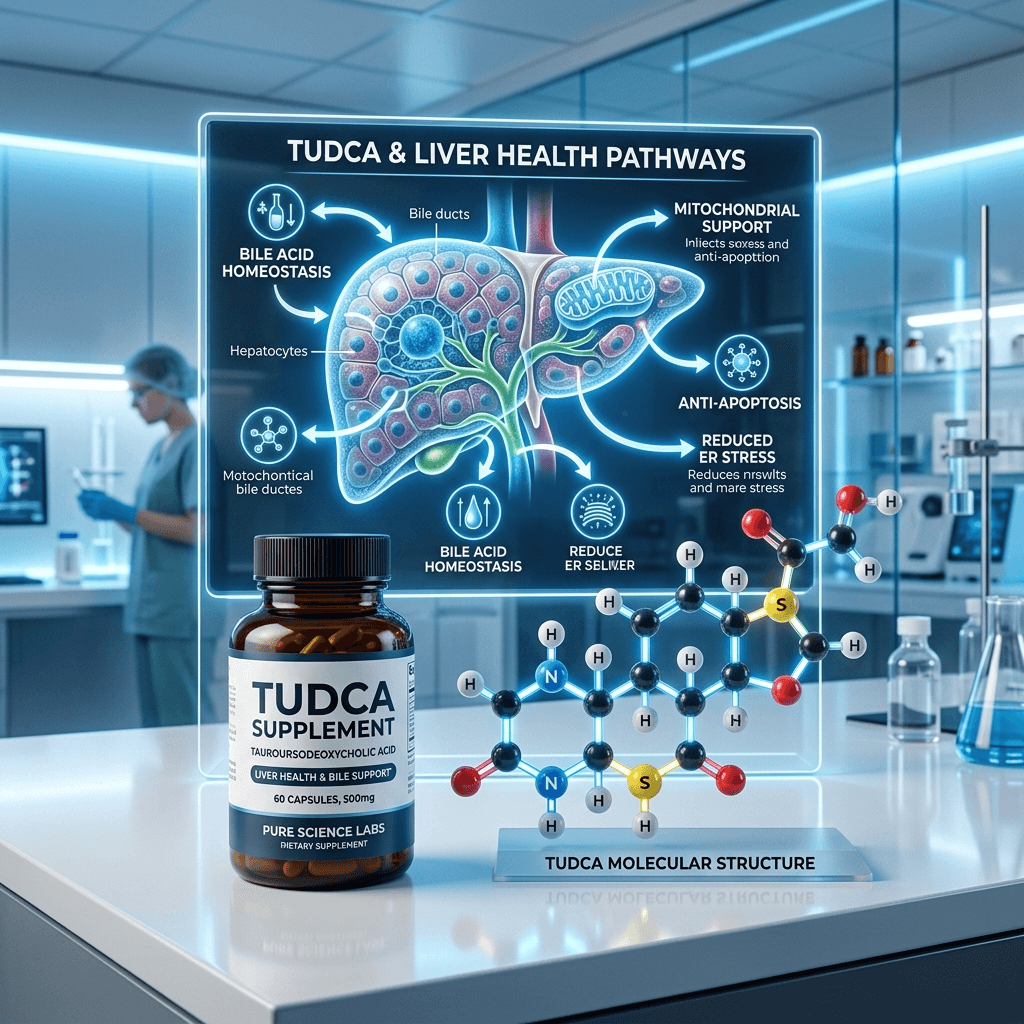
TUDCA is not a typical “bile acid supplement.” While bile acids primarily act as detergents to emulsify dietary fats, TUDCA belongs to a subclass known as hydrophilic bile acids that have distinct cytoprotective properties. It is formed in the liver by conjugating ursodeoxycholic acid with the amino acid taurine, which dramatically improves its water solubility and bioavailability compared to unconjugated UDCA[reference:0].
The primary mechanism of action is the reduction of endoplasmic reticulum (ER) stress. The ER is the organelle responsible for protein folding and lipid synthesis. When cells are exposed to toxins, inflammation, or metabolic overload, misfolded proteins accumulate, triggering the unfolded protein response (UPR). Persistent UPR leads to inflammation, fibrosis, and ultimately apoptosis. TUDCA acts as a chemical chaperone, stabilizing protein folding and reducing the burden on the ER[reference:1]. In cell and animal models, TUDCA reduces apoptosis by preventing the translocation of the pro‑apoptotic protein Bax to mitochondria, thereby preserving mitochondrial membrane potential and cellular energy production[reference:2].
This dual mechanism — reducing ER stress while stabilizing mitochondria — gives TUDCA a broad therapeutic potential that extends beyond the liver to the gut, pancreas, and nervous system. However, the translation from bench to bedside has been slower than expected, and for many claimed benefits, human data are still preliminary or entirely absent.
What the Science Says: TUDCA Benefits by Condition
Liver Disease & Cirrhosis – Strongest Human Evidence
The most mature human data for TUDCA concern liver disease. In patients with cholestatic liver disease, TUDCA supplementation has reduced liver enzyme markers ALT and AST by 40–51%[reference:3]. A double‑blind, randomized controlled trial in patients with liver cirrhosis compared TUDCA (750 mg/day for six months) to UDCA. Serum ALT, AST, and alkaline phosphatase levels were significantly reduced in the TUDCA group compared to baseline. Only one patient in the TUDCA group had significant histological relief, and both treatments were well tolerated with no reported side effects. The authors concluded that TUDCA is safe and appears more effective than UDCA in improving biochemical markers of liver disease[reference:4].
Takeaway: TUDCA has legitimate clinical utility for certain liver conditions, particularly cholestatic disease and cirrhosis, with multiple small human trials showing benefit. However, all trials have small sample sizes (<50 patients), and larger confirmatory studies are needed. Patients with established liver disease should consult a hepatologist before supplementing.
Insulin Sensitivity & Metabolic Health – One Clinical Study
A small clinical study published in Science demonstrated that TUDCA supplementation improved insulin sensitivity by approximately 30% in obese, insulin‑resistant subjects after just four weeks at 1,750 mg per day[reference:5]. The mechanism is likely related to reduced ER stress in the liver and adipose tissue, which improves insulin receptor signaling. However, this was a single study with a small number of participants (n < 20), and no confirmatory trials have been published. Examine.com notes that the evidence for TUDCA improving insulin resistance is limited to a single clinical study[reference:6].
Takeaway: Promising but preliminary. TUDCA may improve insulin sensitivity in insulin‑resistant individuals, but much larger and longer studies are needed before this can be considered a reliable clinical recommendation.
Ulcerative Colitis – Promising Phase I Data (2025)
A 2025 phase I open‑label trial investigated TUDCA in patients with active ulcerative colitis. After six weeks of oral TUDCA treatment, patients experienced significant reductions in ER stress and inflammation, along with increased markers of epithelial restitution. Mayo scores improved from 9 to 4.5. Importantly, TUDCA was well tolerated with no grade 3 or higher adverse events and no serious adverse events. The authors concluded that TUDCA is safe and associated with significant clinical improvement in a majority of patients with moderate to severely active UC and that a randomized controlled trial is warranted[reference:7].
Takeaway: Exciting early data, but these are preliminary results from a small open‑label study without a placebo control. An RCT is needed to confirm efficacy. Not yet ready for clinical use as a standalone UC therapy.
Neurodegenerative Disease (Alzheimer’s, ALS) – Weak Human Evidence
TUDCA has been extensively studied in preclinical models of Alzheimer’s, Parkinson’s, Huntington’s, and ALS, with consistent evidence of neuroprotection via ER stress reduction and mitochondrial stabilization. However, human trials have been disappointing. The PEGASUS trial tested sodium phenylbutyrate combined with TUDCA in Alzheimer’s disease and found no benefit on primary clinical efficacy outcomes when using an intention‑to‑treat analysis[reference:8]. The phase III TUDCA‑ALS trial, which investigated TUDCA in combination with riluzole over 18 months, did not meet its primary endpoint[reference:9].
A 2024 systematic review noted that while preclinical evidence for TUDCA in neurodegenerative diseases is promising, “there are no published randomized controlled trials that examine TUDCA’s clinical efficacy on Parkinson’s disease or Huntington’s disease,” and current evidence does not support concluding a therapeutic benefit in humans[reference:10].
Takeaway: The gap between compelling animal data and negative human trials is wide. Enthusiasts who claim TUDCA “treats Alzheimer’s” are extrapolating beyond the evidence. For now, TUDCA cannot be recommended for neurodegenerative disease outside of clinical trials.
TUDCA Evidence Summary: Human Clinical Trials
| Condition | Evidence strength | Key studies | Overall verdict |
|---|---|---|---|
| Cholestatic liver disease / cirrhosis | Moderate (multiple small RCTs) | Pan et al. (2013), 750 mg/day for 6 months | Clinically useful, well tolerated |
| Insulin resistance | Low (single study) | 1,750 mg/day, 4 weeks, n<20 | Promising but unconfirmed |
| Ulcerative colitis | Low (phase I open label) | 2025 trial, Mayo score 9 → 4.5 | RCT needed |
| Multiple sclerosis (progressive) | Low–moderate (safe, exploratory biomarkers) | Ladakis et al. 2024, 2 g/day, 16 weeks | Safe but efficacy unknown |
| Alzheimer’s disease | Weak (negative phase II) | PEGASUS trial (combined therapy) | No clinical benefit shown |
| ALS (amyotrophic lateral sclerosis) | Weak (failed phase III) | TUDCA-ALS trial, 18 months | Did not meet primary endpoint |
TUDCA Dosage: What Clinical Trials Actually Used
Dosing TUDCA is not a one‑size‑fits‑all matter. Most clinical studies have used fixed daily doses ranging from 250 mg to 2,000 mg, typically divided into one or two administrations[reference:11]. Below are the dosages used in published human trials for specific conditions.
- Chronic hepatitis / liver disease: In a dose‑response study, patients received 250 mg, 500 mg, or 1,000 mg daily for six months. Doses of at least 500 mg daily were recommended for meaningful biochemical improvement[reference:12].
- Liver cirrhosis: 750 mg/day for six months, divided as 250 mg three times daily[reference:13].
- Insulin resistance: 1,750 mg/day (single daily dose) for four weeks[reference:14].
- Ulcerative colitis (phase I): Dosing not fully detailed in the abstract, but treatment lasted six weeks[reference:15].
- Progressive multiple sclerosis: 2 g/day (1 g twice daily) for 16 weeks[reference:16].
- ALS (phase III): 1 g twice daily (2 g/day total) for up to 54 weeks[reference:17].
The optimal dose for TUDCA remains unknown. Based on pharmacokinetic data, the most effective dose for beneficial partitioning of bile salts may be 15–20 mg/kg body weight[reference:18]. For a 70 kg adult, this translates to 1,050–1,400 mg per day, which aligns with the middle of the clinical trial range. Most users begin at 500 mg/day and titrate up as tolerated. Because TUDCA is not typically taken with food in most studies[reference:19], taking it on an empty stomach may maximize absorption, though food may reduce GI side effects.
Biohacker Pro-Tip: Start Low & Watch for GI Upset
The most common side effects of TUDCA are gastrointestinal: diarrhea, nausea, flatulence, and mild abdominal discomfort. These are generally rare and mild. To minimize risk, start with 250 mg/day for the first week, then increase to 500 mg/day, and only then consider higher doses if needed for a specific clinical indication. Most healthy biohackers using TUDCA off‑label for general metabolic health do not need more than 500–750 mg/day. If you experience persistent diarrhea or abdominal pain, reduce the dose or discontinue. As with any supplement, consult a physician before use, especially if you have known liver or gallbladder disease.
Safety, Side Effects & Contraindications
TUDCA has a favorable safety profile in human trials. In studies lasting up to 18 months, adverse events were not significantly different from placebo, and no major safety concerns have been identified[reference:20]. However, the “safety profile” is limited by small sample sizes and a lack of long‑term data beyond 18 months[reference:21].
Reported side effects: Primarily gastrointestinal: diarrhea, nausea, flatulence, and mild abdominal discomfort. These are rare and mild in most clinical reports[reference:22]. Many clinical studies fail to report whether any side effects occurred, so the true incidence is uncertain[reference:23].
Contraindications:
- Pregnancy and lactation: TUDCA should be avoided due to lack of safety data. Although UDCA has been used safely in pregnancy, no specific safety studies exist for TUDCA itself[reference:24].
- Active peptic ulcer disease: One source lists active digestive ulcer as a contraindication[reference:25].
- Bile acid hypersensitivity: Avoid if allergic to bile acids[reference:26].
- Frequent biliary colic, acute biliary infection, severe pancreatitis, post‑intestinal resection (may affect absorption): Relative contraindications[reference:27].
Drug interactions: TUDCA may interact with insulin analogs and insulin sensitizers by binding to the insulin receptor[reference:28]. Bile acid sequestrants (cholestyramine, colestipol, colesevelam) reduce the absorption of bile acids and may therefore reduce TUDCA absorption[reference:29]. Doxycycline interactions have been proposed but clinical relevance is unclear[reference:30].
TUDCA vs UDCA: Which Is More Effective?
UDCA (ursodeoxycholic acid, also known as ursodiol) is an FDA‑approved medication for dissolving cholesterol gallstones and treating primary biliary cholangitis. TUDCA is the taurine‑conjugated form of UDCA, which is more water‑soluble and has higher bioavailability[reference:31]. After oral administration, TUDCA appears to be more effective than UDCA at raising bile concentrations of UDCA and reducing liver enzyme levels[reference:32].
In a head‑to‑head double‑blind RCT in patients with liver cirrhosis, TUDCA was safe and appeared more effective than UDCA in improving biochemical markers of liver function, with greater reductions in ALT and AST and better gallbladder outcomes. However, both drugs had no significant effect on serum markers of liver fibrosis during the six‑month treatment period[reference:33].
At the molecular level, TUDCA regulates 463 genes, whereas UDCA regulates only 31 genes in vitro[reference:34]. This suggests TUDCA has a broader range of biological effects, though whether this translates to superior clinical outcomes remains to be proven in large comparative trials. For approved medical indications (gallstones, PBC), UDCA remains the standard of care due to its longer safety history and regulatory approval. For off‑label use, many biohackers and clinicians prefer TUDCA for its superior bioavailability and broader cytoprotective effects.
Best TUDCA Supplements: Buyer’s Guide (2025)
The TUDCA supplement market is unregulated, and product quality varies significantly. Many products are underdosed, untested, or overhyped[reference:35]. Here are criteria and recommendations for selecting a quality TUDCA product.
- Seek third‑party testing: Look for brands that publish Certificates of Analysis (COAs) from independent labs verifying potency and purity. ConsumerLab.com has not yet tested TUDCA products broadly, but some brands (Double Wood, Bulk Supplements) are third‑party tested and considered reliable[reference:36].
- Check for fillers and additives: Avoid products with unnecessary excipients, flow agents (silicon dioxide), or magnesium stearate when possible.
- Compare cost per milligram: TUDCA is expensive. Expect to pay roughly $1–3 per day depending on dose and brand. Powder forms are usually more cost‑effective than capsules.
- Beware of fake or low‑quality products on Amazon: There are reports of counterfeit TUDCA supplements. Purchase directly from brand websites or trusted third‑party retailers[reference:37].
Top recommended brands (2025):
| Brand | Form | Strength per serving | Third‑party tested | Cost (approx.) |
|---|---|---|---|---|
| Vinatura | Capsules | 500 mg TUDCA + milk thistle | Likely | $$$ (premium) |
| Double Wood | Capsules / powder | 250 mg per capsule | Yes | $$ (mid‑range) |
| Bulk Supplements | Powder | Customizable | Yes | $ (best value) |
| BodyBio | Capsules | 500 mg | Likely | $$$ (premium) |
| Nutricost | Capsules | 250 mg | Limited | $$ |
Bonus: Beef Organ Supplements — Pros and Cons
Beef organ supplements have grown in popularity alongside TUDCA, often marketed under the “ancestral nutrition” or “nose‑to‑tail” umbrella. These products typically consist of freeze‑dried or desiccated beef liver, heart, kidney, pancreas, and sometimes spleen, encapsulated for convenient consumption[reference:38]. Proponents argue that organ meats provide a concentrated, whole‑food source of bioavailable vitamins and minerals not found in muscle meat.
Potential benefits (what the evidence actually supports):
- High nutrient density: Beef liver is one of the most nutrient‑dense foods on the planet. A 3‑ounce serving provides approximately 4,200 mcg of preformed vitamin A (retinol), 70 mcg of vitamin B12, 4 mg of heme iron, 12 mg of copper, and meaningful amounts of folate, riboflavin, and choline[reference:39].
- Bioavailability: Nutrients in whole‑food liver have superior absorption compared to many synthetic multivitamins. Heme iron is absorbed at 15–35%, compared to 2–20% for non‑heme iron. Vitamin B12 exists as active methylcobalamin, and retinol requires no conversion[reference:40].
- Potential for deficiency correction: In individuals with iron deficiency anemia, low B12, or low vitamin A status, liver supplementation may raise ferritin and B12 levels within weeks to months[reference:41]. Organ meats are also high in zinc, which supports immune function[reference:42].
Risks and downsides:
- Vitamin A toxicity (hypervitaminosis A): Preformed vitamin A accumulates in the liver and is teratogenic at high doses. Chronic intake exceeding 10,000 IU per day can cause liver damage, bone loss, and birth defects. A single 3‑ounce serving of fresh liver contains approximately 30,000–40,000 IU of retinol. Supplement labels often do not disclose vitamin A content per capsule, making dosing dangerous. Pregnant women should avoid liver supplements entirely due to teratogenicity risk[reference:43].
- Iron overload (hemochromatosis): Individuals with hereditary hemochromatosis or unexplained elevated ferritin should avoid liver supplementation, as heme iron bypasses normal absorption regulation and accelerates iron accumulation in tissues[reference:44].
- Gout and purines: Organ meats are high in purines, which metabolize to uric acid. In susceptible individuals, this can precipitate or worsen gout attacks[reference:45].
- High cholesterol: Liver and heart contain high levels of dietary cholesterol, which may raise LDL cholesterol in hyper‑responders[reference:46].
- Prion disease risk (theoretical): Supplements containing bovine brain, spleen, or other neural tissue carry a very low but non‑zero theoretical risk of bovine spongiform encephalopathy (mad cow disease) if sourced from contaminated herds. Reputable brands source from BSE‑free countries[reference:47].
- Lack of clinical evidence: While nutrient content is well established, there are no high‑quality randomized controlled trials showing that beef organ supplements improve health outcomes in healthy adults beyond correcting specific deficiencies[reference:48].
Verdict: Beef organ supplements are not “better” than a balanced diet, but they may be useful for individuals with diagnosed deficiencies, those on restrictive diets (carnivore, paleo), or people who cannot tolerate the taste of fresh organ meat. For healthy adults eating a varied diet, they are generally unnecessary. If you choose to use them, select products from grass‑fed, pasture‑raised sources, rotate organ types to avoid vitamin A overload, and never exceed the manufacturer’s recommended dose. Most importantly, check with a physician before supplementing, especially if pregnant, have hemochromatosis, or gout.
Frequently Asked Questions About TUDCA
Is TUDCA better than UDCA?
For oral supplementation, TUDCA appears to have higher bioavailability and may be more effective at raising UDCA levels and reducing liver enzymes. In a head‑to‑head trial in liver cirrhosis, TUDCA was more effective than UDCA at improving biochemical markers. However, UDCA remains FDA‑approved for specific indications (gallstones, PBC) with a longer safety history. Most biohackers choose TUDCA for off‑label use due to superior pharmacokinetics.
Does TUDCA cause cancer?
No published human data suggest TUDCA causes cancer. TUDCA is a naturally occurring bile acid, and at therapeutic doses it reduces ER stress and apoptosis, which theoretically could lower cancer risk. However, bile acids in very high concentrations or in the setting of cholestasis can have toxic effects. The long‑term safety of TUDCA beyond 18 months is unknown.
Can I take TUDCA if I have no gallbladder?
Yes. TUDCA is a bile acid that is typically supplemented exogenously; it does not depend on gallbladder storage. Individuals post‑cholecystectomy often have altered bile flow and may theoretically benefit from TUDCA’s cytoprotective effects on the bile duct epithelium. However, clinical data in this specific population are lacking. Start with a low dose (250 mg) and monitor for digestive side effects.
Does TUDCA help with weight loss?
There is no direct human evidence that TUDCA causes weight loss. The insulin‑sensitivity study showed improved metabolic parameters without weight loss. Some users report reduced appetite or increased energy, but these are subjective and not supported by clinical trials. TUDCA is not a weight loss supplement.
How long does TUDCA take to work?
Biochemical improvements (e.g., reduced liver enzymes) can be seen within 4–8 weeks. Subjective effects vary. Some users report improved energy or reduced brain fog within 2–4 weeks, but these are anecdotal. For conditions like ulcerative colitis, the phase I trial observed improvements at 6 weeks.
Can I take TUDCA with other supplements or medications?
TUDCA may interact with insulin sensitizers (metformin, berberine) and bile acid sequestrants (cholestyramine). Avoid concomitant administration with sequestrants. If you take prescription medications, especially for diabetes or cholesterol, consult a physician before starting TUDCA. Do not combine with other bile acid supplements without medical supervision.
Final Verdict: Where Does TUDCA Belong in Your Stack?
TUDCA is a legitimate, clinically studied bile acid with real effects on ER stress, mitochondrial integrity, and apoptosis. The strongest human evidence supports its use in liver disease (cholestasis, cirrhosis), where it has reduced liver enzymes and improved biochemical markers. Early data in ulcerative colitis and multiple sclerosis are promising but preliminary, requiring larger confirmatory trials. The most hyped claims — that TUDCA treats Alzheimer’s, Parkinson’s, or ALS — are not supported by human data. Preclinical promise has not translated into clinical benefit, and the only large trials in neurodegeneration have been negative.
For healthy biohackers without a specific medical indication, the case for TUDCA is weaker. There is no robust evidence that TUDCA improves general well‑being, longevity, or cognitive function in healthy individuals. The side effect profile is mild, but the cost is not trivial (typically $1–3 per day). If you have a family history of liver disease, metabolic syndrome with insulin resistance, or a confirmed inflammatory condition like UC, TUDCA is worth discussing with your physician. If you are simply looking for a general “cellular health” supplement, other interventions — exercise, calorie restriction, sufficient sleep — have far stronger evidence and lower costs.
If you do choose to supplement, select a third‑party tested brand, start with 250–500 mg daily, take on an empty stomach, and monitor for gastrointestinal side effects. Avoid TUDCA if pregnant, nursing, or have an active peptic ulcer. And remember: supplements are adjuncts, not replacements for medical care. Consult a healthcare provider before adding TUDCA to your routine, especially if you have liver disease, diabetes, or take insulin‑sensitizing medications.
Peer‑Reviewed Clinical Validations & Extended Reading:
- TUDCA for liver cirrhosis (RCT): Pan X. L., et al. (2013). "Efficacy and safety of tauroursodeoxycholic acid in the treatment of liver cirrhosis: a double‑blind randomized controlled trial." Current Medical Science, 33(2), 189–194. Read Study
- TUDCA for ulcerative colitis (phase I): Preprint 2025. "Tauroursodeoxycholic Acid (TUDCA) Reduces ER Stress and Lessens Disease Activity in Ulcerative Colitis." medRxiv. Read Preprint
- TUDCA for progressive multiple sclerosis (RCT): Ladakis, D. C., et al. (2024). "Bile acid metabolites predict multiple sclerosis progression and supplementation is safe in progressive disease." Med, 6(3), 100522. Read Trial
- PEGASUS trial (Alzheimer’s): Serbin, A., et al. (2021). "Sodium phenylbutyrate and tauroursodeoxycholic acid for Alzheimer’s disease: results of the PEGASUS trial." Neurology (abstract).
- TUDCA‑ALS phase III (negative trial): MND Association. "TUDCA-ALS phase III trial: did not meet primary endpoint." Read Summary
- TUDCA vs UDCA comparative review: BenchChem Technical Support Team (2025). "A Critical Review: Tauroursodeoxycholic Acid vs. Ursodeoxycholic Acid in Therapeutic Applications." Read Review
- Examine.com TUDCA summary (2024): Examine.com Research Team. "TUDCA Supplement: Benefits, Dosage, Side Effects." Read Comprehensive Review