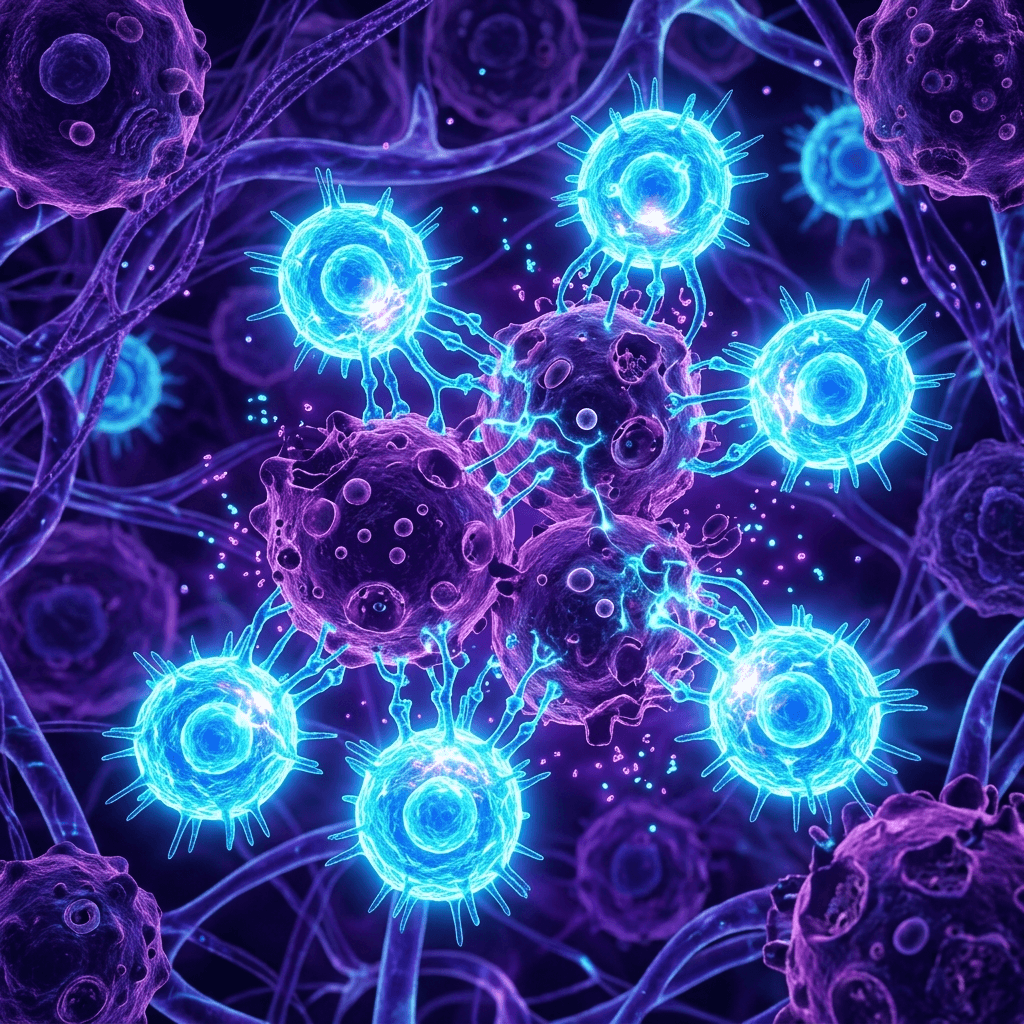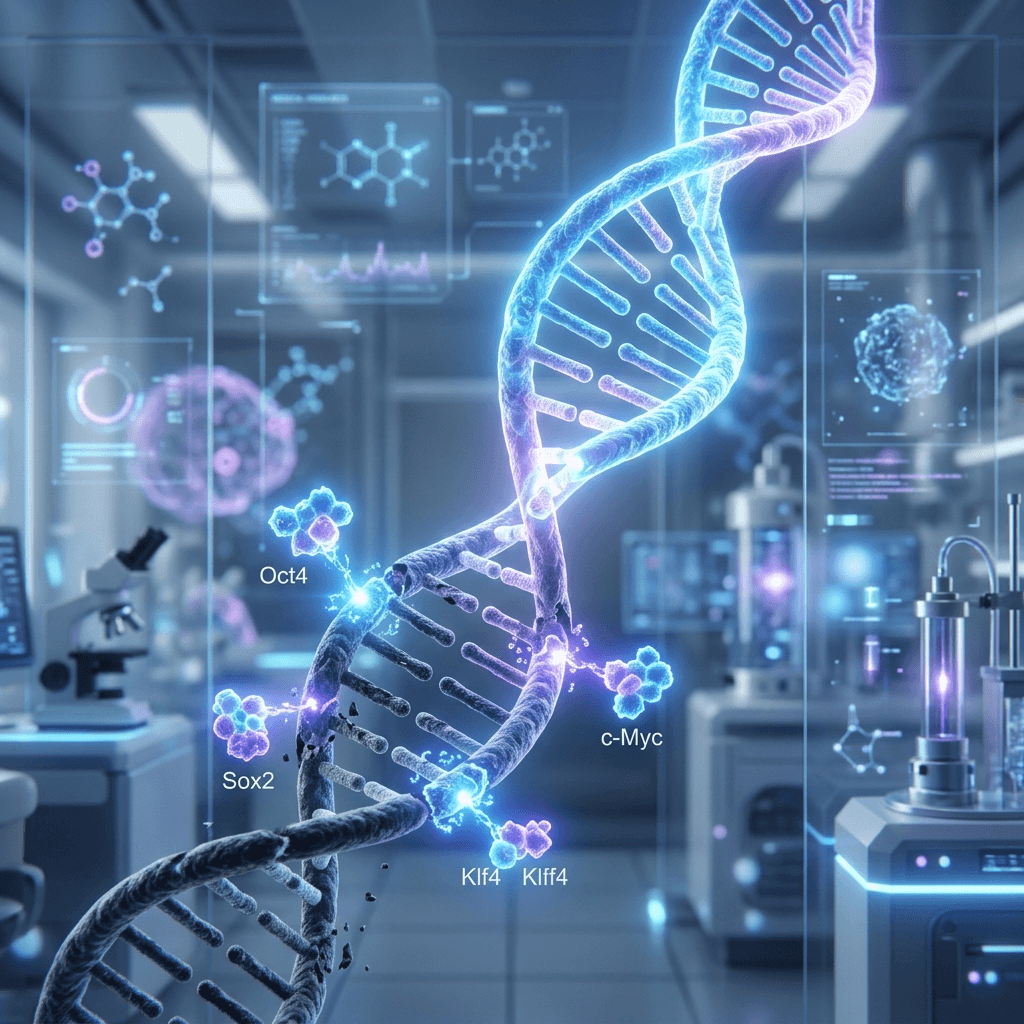
"Epigenetic aging is not a one-way street. The transient activation of Yamanaka transcription factors proves that cells retain a backup copy of their youthful state, which can be chemically or genetically restored."
Key Takeaways
-
1.
Epigenetic Reset: Yamanaka factors (Oct4, Sox2, Klf4, and c-Myc) reset DNA methylation age metrics without reverting cells back to stem cell pluripotency.
-
2.
Partial Reprogramming Strategy: Transient (intermittent) expression avoids teratoma risk, maintaining specialized cell functions while repairing mitochondrial and DNA damage.
-
3.
Translational Horizon: Gene therapies targeting retinal rejuvenation and chemical cocktails that mimic reprogramming factors are transitioning to human trials.
-
4.
Mitochondrial Recovery: Reprogramming clears mitochondrial mutations and restores cellular ATP output to youthful metabolic baselines.
Cellular reprogramming represents the absolute peak of modern longevity biotechnology. By expressing a specific cocktail of transcription factors, researchers have succeeded in rolling back the biological age of cells, restoring mitochondrial efficiency, and reversing tissue degradation in living organisms. For decades, aging was viewed as an accumulation of irreversible damage to the DNA double helix. However, pioneering research over the last two decades has shifted our understanding, revealing that aging is primarily an epigenetic phenomenon—a loss of cellular program integrity. By rewriting this program, we can rejuvenate cells and tissues, opening the door to therapeutic biological age reversal in humans. This biological shift has transformed anti-aging research, converting it from a search for lifestyle modifications into an engineering challenge: how to selectively reprogram our tissues in vivo.
At the heart of cellular reprogramming is the concept that cell identity is plastic. Every somatic cell in the human body contains the exact same genetic instructions. A neuron, a cardiomyocyte, and a dermal fibroblast all share the same DNA sequence. Their distinct structures and behaviors are governed by the epigenome—the complex machinery of methyl groups, acetyl groups, and histone proteins that turn specific genes on or off. As we age, this epigenetic landscape becomes disorganized, leading to cellular identity drift, senescence, and tissue dysfunction. Yamanaka factors offer the biological key to reset this landscape, restoring cells to their optimal, youthful states. They act as molecular keys that open the closed chromatin structures of our genome, allowing the cell's original, youthful programming to be re-expressed.
The Nobel Discovery: Transcription Factors OSKM
In 2006, Dr. Shinya Yamanaka published a groundbreaking study demonstrating that adult mouse fibroblasts could be reprogrammed back to embryonic-like pluripotent stem cells. This was achieved by introducing just four transcription factors: Oct3/4, Sox2, Klf4, and c-Myc, collectively known as the OSKM factors or Yamanaka factors. This discovery shattered the dogma of cellular development, showing that differentiation is not a one-way street. Adult somatic cells could be completely reprogrammed, losing their specialized identity and gaining the ability to divide indefinitely and differentiate into any cell type in the body. Yamanaka's work, which earned him the Nobel Prize in 2012, laid the foundation for the field of regenerative medicine.
Each of the OSKM factors plays a highly specialized role in this process. Oct4 and Sox2 are essential for maintaining cell pluripotency and self-renewal, acting as master regulators of gene expression networks. Klf4 promotes chromatin accessibility, binding to condensed genomic regions and recruiting histone-modifying enzymes to loosen the DNA packaging. c-Myc is a powerful oncogene that drives rapid metabolic changes, switching the cell's metabolism from mitochondrial respiration to rapid glycolysis, which is necessary for cellular division and reprogramming transitions. Together, these four factors act as a biological reset button, unraveling the developmental decisions that cells make as they mature.
However, complete reprogramming presents a major therapeutic challenge: if adult cells in a living organism are completely reprogrammed into pluripotent stem cells, they lose their functional identity. A liver cell that reverts to a stem cell can no longer filter toxins, and a cardiomyocyte can no longer pump blood. Furthermore, continuously expressing Yamanaka factors in vivo triggers the rapid formation of teratomas—disorganized tumors consisting of multiple tissue types. To harness this power for longevity, scientists had to design a method to separate the rejuvenation of the epigenetic clock from the loss of cellular identity. This led to the development of partial, or transient, cellular reprogramming.
Biohacker Pro-Tip: Transient Reprogramming Safety
The safety of partial reprogramming relies entirely on timing. In laboratory models, cycling Yamanaka factor expression for 2 to 4 days rejuvenates the epigenome without reversing cellular differentiation. Continuous expression beyond 6 days must be avoided to prevent stem-cell reversion and tumor risks.
Epigenetic Clocks and the Biology of De-aging
To understand how Yamanaka factors reverse biological age, we must look at epigenetic clocks. Developed by researchers like Dr. Steve Horvath, these clocks measure specific DNA methylation patterns—chemical tags added to DNA molecules that alter gene expression without changing the genetic code. As we age, these methylation patterns change in a predictable, mathematically consistent manner. Epigenetic clocks can determine an individual's biological age (the rate of wear and tear on cells) with incredible precision, often showing a divergence from chronological age (the number of years lived). By assessing methylation at hundreds of specific sites across the genome, Horvath's clock serves as the gold standard for testing whether a longevity intervention has truly rejuvenated human biology.
When cells undergo partial reprogramming, the OSKM transcription factors bind to chromatin, opening up tightly packed DNA regions and recruiting enzymes that remove age-associated methyl groups. This process systematically resets Horvath's biological clock. It resets DNA methylation patterns back to a youthful profile, restores histone modifications, and stabilizes chromatin structure. Remarkably, the cell retains its structural memory: a skin cell remains a skin cell, but its epigenetic signature matches that of a cell decades younger. This indicates that cellular identity is distinct from biological age, and that the instructions for youthful operation remain stored in our genetic code, waiting to be reactivated. This "epigenetic memory" is what makes partial reprogramming a safe and viable therapeutic option.
At the molecular level, this reset is accomplished through chromatin remodeling. Histone proteins, around which DNA is wound, undergo post-translational modifications. Aging is characterized by an increase in repressive histone marks (such as H3K9me3 and H3K27me3) and a loss of active marks (such as H3K4me3). Yamanaka factors recruit histone demethylases and acetyltransferases to dynamically shift these markers back to their youthful distributions. This structural chromatin reorganization re-enables the expression of youthful genes and restores the structural integrity of the nucleus, which typically degrades with advanced age.
Reversing Hallmark Pathology
Chromatin Reorganization
Aging results in the compaction of critical DNA regions, shutting down longevity genes and activating pro-inflammatory pathways. Partial reprogramming relaxes closed chromatin structures, re-enabling the transcription of youthful cell signaling molecules and restoring correct ribosomal activity. This allows the cell to resume normal protein synthesis, correcting translation errors that cause systemic organ decline.
This structural reopening also restores the integrity of the nuclear envelope. In aged cells, the nuclear membrane becomes warped and leaky, leading to chromatin leaks and cell death. OSKM transient expression reconstructs the nuclear pore complex and restores lamin A/C proteins to youthful structures, preventing DNA damage response activation.
Mitochondrial Respiration Reset
Mitochondrial dysfunction is a primary hallmark of aging. Over time, mitochondria accumulate mutations and swell, leaking reactive oxygen species (ROS) and dropping ATP production. Yamanaka factor activation triggers a cellular deep clean, purging damaged mitochondria through mitophagy and reforming the mitochondrial network, restoring ATP output to youthful baselines.
This results in a dramatic restoration of the mitochondrial membrane potential and oxygen consumption rates. With restored ATP production, the cell possesses the energetic currency needed to carry out DNA repair, protein folding, and structural maintenance protocols that had been abandoned due to energy shortages, resolving cellular stress markers.
Sinclair's Information Theory of Aging
To contextualize how reprogramming reverses aging, we must look at Dr. David Sinclair's Information Theory of Aging. According to this theory, aging is not caused by the accumulation of mutations or structural wear, but rather by a loss of epigenetic information. Sinclair compares the genome to a digital CD and the epigenome to the CD reader. Over time, scratches on the CD reader prevent it from reading the digital tracks correctly. The underlying data (the DNA) remains fully intact, but the reader can no longer access it, causing the cell to express incorrect genes and lose its specialized function. Yamanaka factors act as a polisher that removes scratches from the reader, allowing the cell to read the genetic code correctly again.
This theory is supported by observations of DNA double-strand breaks. When DNA breaks occur, chromatin-modifying proteins (such as sirtuins) leave their normal genomic locations to repair the damage. Once the repair is complete, they are supposed to return to their original sites. However, over time, some of these proteins get lost, remaining at the repair sites and causing epigenetic changes. This leads to genomic noise and cellular identity loss. Yamanaka factors recruit these proteins back to their correct locations, restoring the youthful gene expression profiles of tissues in vivo.
In Vivo Breakthroughs: Sinclair and Ocampo Studies
The therapeutic potential of partial reprogramming was first demonstrated in vivo in 2016 by Dr. Alejandro Ocampo and his team at the Salk Institute. Working with progeroid (prematurely aging) mice, the researchers designed a system to intermittently express the OSKM factors (two days of activation followed by five days of rest). The results were staggering: the treatment ameliorated age-associated hallmarks in multiple tissues, including the cardiovascular system, spleen, skin, and kidneys. Crucially, the lifespan of these mice was extended by 30%, and no teratoma formation or cellular identity loss was observed. This provided the first definitive proof that aging is a plastic process that can be reversed in living organisms.
Building on this, Dr. David Sinclair's laboratory at Harvard Medical School published a landmark study in 2020 focusing on the central nervous system. Using an adeno-associated virus (AAV) vector, they delivered three Yamanaka factors (Oct4, Sox2, and Klf4—omitting c-Myc due to its oncogenic potential) into the retinal ganglion cells of mice. This therapy successfully regenerated damaged optic nerves and restored vision in mice with glaucoma and age-related vision loss. The study proved that mammals retain the capacity for complex tissue regeneration, and that reversing epigenetic age can restore lost functional capacity in mature, non-dividing neuronal tissues, showing that age-related degradation can be systematically corrected.
Small Molecule Reprogramming: Chemical Cocktails
While gene therapy using viral vectors is effective, it presents significant regulatory, cost, and safety hurdles for widespread human application. To address this, longevity pharmacologists are researching chemical reprogramming—using cocktails of small-molecule drugs to mimic the effects of Yamanaka factors. These compounds penetrate the cell membrane and bind to specific receptor sites or chromatin-remodeling enzymes, triggering the expression of endogenous pluripotency and rejuvenation pathways. By using chemical screening platforms, researchers can test thousands of drug combinations, identifying cocktails that can reverse biological age in human dermal cells and renal tissues.
These cocktails typically include compounds like Metformin (which activates AMPK and improves glucose control), GSK3 inhibitors (which stabilize beta-catenin), HDAC inhibitors (which increase histone acetylation and open chromatin), and Resveratrol or NAD+ precursors (which activate sirtuin longevity genes). This chemical approach allows for precise dosing, easy termination of the therapy if side effects emerge, and oral delivery, making cellular rejuvenation therapies accessible outside clinical settings. Furthermore, these compounds can target specific tissues, reducing systemic toxicity risks.
Delivery Systems and Clinical Safety
Developing safe delivery systems is the primary challenge in translating reprogramming to human medicine. Researchers are investigating multiple options, including adeno-associated virus (AAV) vectors, lipid nanoparticles (LNPs), and mRNA delivery platforms. AAV vectors offer long-term gene expression, making them ideal for treating chronic conditions like retinal degeneration or osteoarthritis. However, their persistence raises concerns about long-term safety. If Yamanaka factors are expressed for too long, cells could lose their functional identity or trigger tumor growth. This makes AAV delivery require built-in "off switches" (such as doxycycline-inducible promoters) to allow doctors to stop expression if side effects occur.
In contrast, mRNA delivery platforms (similar to those used in modern vaccines) offer transient expression. The mRNA molecules enter the cell and direct the synthesis of Yamanaka factors for a short period (typically 24 to 48 hours) before degrading naturally. This makes mRNA delivery extremely safe, as it prevents over-expression and stem-cell reversion. LNPs can protect the mRNA molecules as they travel through the body, targeting them to specific organs like the liver or lungs. As delivery systems improve, clinical safety profiles are stabilizing, paving the way for phase I human safety trials.
Comparing Modern Longevity Modalities
| Modality | Biological Target | Primary Advantage | Clinical Barrier |
|---|---|---|---|
| Yamanaka Reprogramming | DNA Methylation & Chromatin Structure | Reverses cellular biological age directly | Risk of teratoma / cellular identity loss if over-expressed |
| Senolytics | Apoptotic pathways in senescent cells | Clears systemic chronic inflammaging | Does not rejuvenate the remaining healthy cells |
| Telomerase Therapy | TERT gene & chromosomal ends | Prevents cellular replicative senescence limit | Potential risk of promoting cancer cell division |
| Stem Cell Exosomes | Extracellular vesicles & microRNAs | Triggers rapid tissue healing and recovery | Short-lived effects, highly variable batch quality |
Future Outlook and Ethical Horizons
The transition of cellular reprogramming from mouse models to human therapeutics is accelerating. Companies like Altos Labs, Turn Bio, and Life Biosciences have secured billions of dollars in funding to develop clinical applications. Early focus areas include dermatological rejuvenation (reducing skin biological age and healing chronic wounds), ophthalmology (reversing vision loss), and osteoarthritis (rebuilding cartilage tissues). As these clinical trials progress, the potential to systematically reprogram the entire human body approaches, raising profound questions about lifespan extensions, societal changes, and biological equity.
Ultimately, Yamanaka factors have changed how we conceptualize the aging process. Aging is no longer seen as an inevitable thermodynamic collapse, but rather as an informational error that can be debugged and corrected. By resetting chromatin structures, cleaning mitochondria, and reversing epigenetic clocks, transient cellular reprogramming offers the most promising avenue to extend human healthspan, allowing us to remain biologically young while chronologically advanced. This research signals a future where biological age is a modifiable health metric, redefining the boundaries of human longevity.
Peer-Reviewed Clinical Validations & Extended Deeper Reading:
- The Original iPSC Discovery: Takahashi & Yamanaka (2006). "Induction of pluripotent stem cells from mouse embryonic and adult fibroblast cultures by defined factors". Cell. Demonstrates reprogramming adult somatic cells back to stem cell state. Leer el estudio Clínico
- In Vivo Partial Reprogramming: Ocampo et al. (2016). "In vivo amelioration of age-associated hallmarks by partial cellular reprogramming". Cell. Demonstrates that transient OSKM expression extends the lifespan of progeroid mice. Leer el estudio Clínico
- Optic Nerve Regeneration: Lu et al. (2020). "Reprogramming to recover youthful epigenetic information and restore vision". Nature. Uses Oct4, Sox2, and Klf4 to safely restore vision in aging mice. Leer el estudio Clínico
- Horvath Epigenetic Clock: Horvath (2013). "DNA methylation age of human tissues and cell types". Genome Biology. Introduces the multi-tissue DNA methylation age predictor. Leer el estudio Clínico
- Long-Term Healthspan Extension: Gill et al. (2022). "Transient stimulation of Yamanaka factors rejuvenates human cells". eLife. Proves biological age reversal in old human skin cells. Leer el estudio Clínico