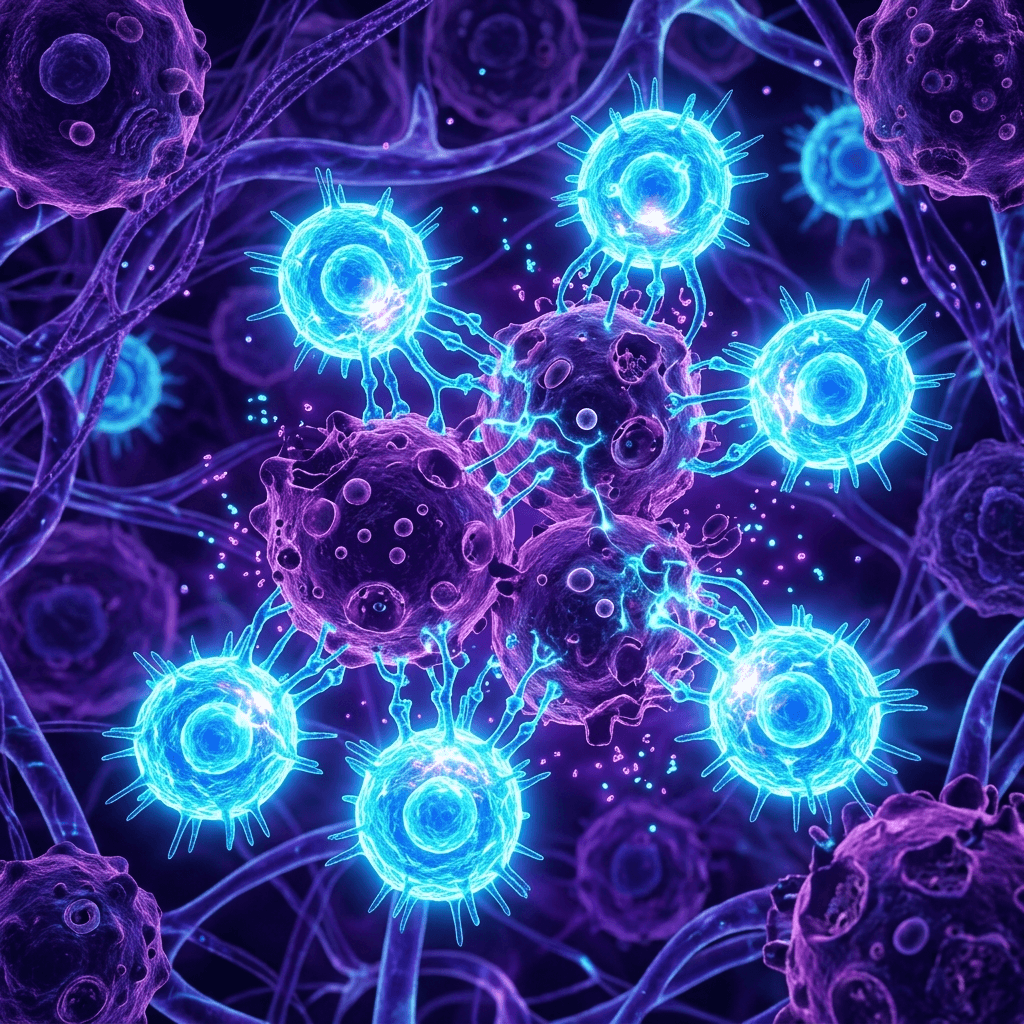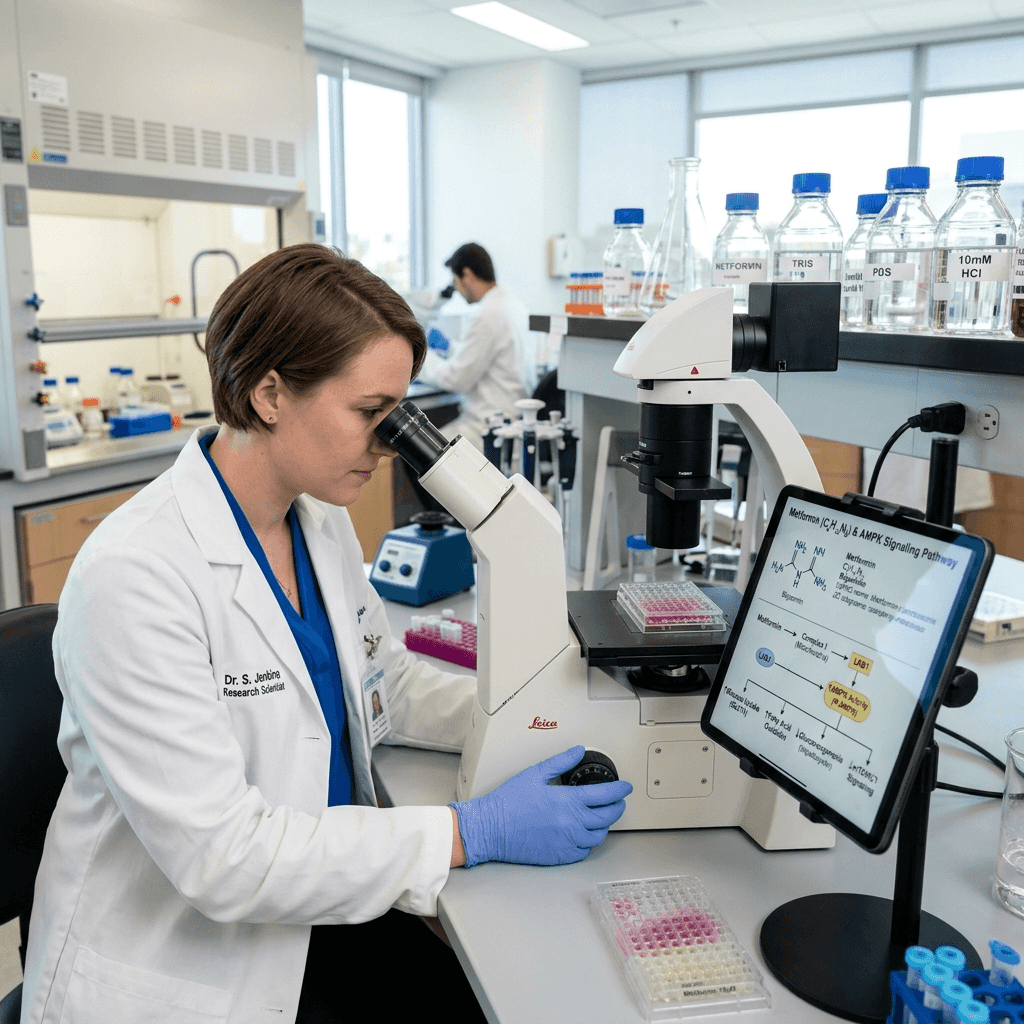
"Metformin’s potential to delay aging centers on its ability to inhibit mitochondrial complex I, altering the cellular AMP:ATP ratio to activate the AMPK survival pathway and mimic the molecular benefits of caloric restriction."
Key Takeaways
-
1.
Mitochondrial Inhibition: Metformin weakly inhibits complex I of the mitochondrial respiratory chain, reducing ATP production and shifting the cellular energy ratio.
-
2.
AMPK Activation: This shift in the AMP:ATP ratio activates AMPK, promoting glucose uptake, fatty acid oxidation, and autophagy.
-
3.
The TAME Trial: The Targeting Aging with Metformin (TAME) trial is a multi-center clinical study designed to test whether metformin can delay the onset of age-related chronic diseases.
Introduction: Cellular Context and Clinical Importance
For decades, Metformin has been a cornerstone treatment for type 2 diabetes. Derived from the French lilac plant, it is widely prescribed for its ability to lower blood sugar and improve insulin sensitivity. However, longevity researchers have noticed that diabetic patients taking metformin often live longer, healthier lives than healthy non-diabetic controls.
This observation has driven interest in metformin as a potential gerosuppressive drug—a substance that can target the molecular hallmarks of aging. By altering cellular energy sensing, metformin behaves as a caloric restriction mimetic, triggering cellular repair pathways that protect against age-related decline.
This guide examines the science of Metformin for longevity, detailing its effects on mitochondrial function, its role in activating AMPK, and the current status of the clinical trials designed to validate it as an anti-aging therapy.
Mitochondrial Complex I: The Target of Metformin Action
To understand how metformin works, we must look at the electron transport chain inside the mitochondria. Mitochondria produce ATP by passing electrons through a series of protein complexes. Metformin accumulates inside mitochondria, where it weakly inhibits complex I (NADH:ubiquinone oxidoreductase).
This inhibition reduces the rate of electron transport, leading to a slight drop in ATP synthesis. Consequently, the concentration of AMP and ADP inside the cell increases relative to ATP. This shift is detected by the cell's master energy sensor, AMPK.
AMPK acts as a molecular switch: when energy is low, it turns off fat and protein synthesis and turns on energy-producing pathways, including glucose uptake and autophagy. By mimicking a state of energy depletion, metformin triggers cellular repair pathways independently of dietary restriction.
Glucose Regulators Compared: Metformin vs. Berberine vs. Acarbose
Metformin (Mitochondrial Complex I Inhibitor)
Metformin is a prescription drug with a long history of safe use. It is highly effective at lowering glucose production in the liver and improving insulin sensitivity in muscle tissue.
However, its mitochondrial inhibition can reduce exercise capacity and cause gastrointestinal side effects in some users, requiring careful dosing management.
Berberine (Natural Flavonoid Compound)
Berberine is a plant alkaloid that mimics many of metformin's metabolic effects, including complex I inhibition and AMPK activation. It also helps lower LDL cholesterol by modulating PCSK9.
Standard berberine has poor absorption, though phytosome formulations can improve bioavailability, making it a viable natural alternative.
Acarbose (Alpha-Glucosidase Inhibitor)
Acarbose works locally in the digestive tract, blocking the enzymes that break down starch and sugars. This action reduces post-meal glucose spikes without inhibiting mitochondrial function.
In animal models, acarbose is highly effective at extending lifespan, particularly in males, by reducing chronic glycemic variability.
Biohacker Pro-Tip: Managing the Metformin-Exercise Trade-Off
Metformin's inhibition of mitochondrial complex I can blunt some of the cellular adaptations to aerobic exercise, such as improvements in mitochondrial density and VO2 max. If you are a highly active biohacker, consider pulsing your metformin: avoid taking it on days when you perform high-intensity resistance training or aerobic workouts, or take it in the evening, separate from your exercise window, to protect your athletic conditioning.
Metabolic Regulators and Their Physiological Impacts
| Compound | Target Node | Exercise adaptation | Side Effect Profile | Availability |
|---|---|---|---|---|
| Metformin | Mitochondrial Complex I | Mildly Blunted | Diarrhea / B12 deficiency | Prescription Only |
| Berberine | Complex I / AMPK / PCSK9 | Possibly Blunted | Constipation / Gastric upset | Over-the-counter |
| Acarbose | Alpha-Glucosidase Enzyme | Neutral / No impact | Flatulence / Diarrhea | Prescription Only |
| Rapamycin | mTORC1 Pathway | Neutral (Promotes recovery) | Mouth sores / Lipids increase | Prescription Only |
Hepatic Gluconeogenesis: How Metformin Lowers Blood Glucose
The primary clinical effect of metformin is reducing blood glucose levels. The body produces glucose in the liver through gluconeogenesis—a pathway that synthesizes glucose from non-carbohydrate precursors like lactate, glycerol, and amino acids. This pathway is controlled by glucagon signaling.
Metformin inhibits gluconeogenesis by altering the redox state of liver cells. By inhibiting mitochondrial complex I, metformin reduces the conversion of lactate to pyruvate, depleting the substrates needed for glucose synthesis.
Additionally, the activation of AMPK by metformin leads to the phosphorylation and inactivation of transcription factors required for gluconeogenic gene expression. This reduces glucose production in the liver, helping to maintain stable blood sugar levels.
Biophysics of Organic Cation Transporters (OCT1) and Cellular Import
Metformin is a highly hydrophilic molecule, meaning it does not dissolve well in lipids and cannot cross cell membranes via passive diffusion. It requires specialized transport proteins to enter cells.
The primary transporter for metformin is Organic Cation Transporter 1 (OCT1), which is highly expressed on the membranes of liver and intestinal cells. Variations in the gene encoding OCT1 can influence how patients respond to metformin, affecting its transport efficiency.
Once inside the cell, metformin accumulates in the mitochondrial matrix due to the electrical potential across the inner mitochondrial membrane. This concentration allows it to interact with complex I, showing how membrane transporters regulate drug kinetics.
Conclusion: Metformin as a Cornerstone Longevity Therapy
Metformin is a promising candidate for gerosuppressive therapy, supported by its ability to activate AMPK and regulate liver glucose production. Its long history of safety makes it a practical choice for longevity research.
For active biohackers, balancing its metabolic benefits with its potential effects on exercise adaptation is key to designing an effective longevity protocol.
Future Outlook: The TAME Trial Outcomes and Beyond
The outcomes of the TAME trial will provide valuable clinical data on metformin's anti-aging efficacy in humans. Success could pave the way for aging to be recognized as an treatable condition by regulatory agencies.
Furthermore, combining metformin with other longevity compounds, like rapamycin or senolytics, will allow for targeted protocols that address multiple hallmarks of aging simultaneously, supporting healthspan extension.
Furthermore, at the molecular level, the physiological adaptation to these targeted interventions is closely linked to cellular signaling networks that govern stress tolerance and energy sensor regulation. When cells encounter these stimulus intensities, they initiate phosphorylation cascades that activate AMP-activated protein kinase and suppress downstream anabolic pathways, shifting resources toward preservation and DNA repair. This stress response is essential for building cellular resilience, demonstrating that long-term healthspan is built through controlled, science-backed exposure to metabolic and physical stress.
In addition to the immediate metabolic responses, we must also consider the role of heat-shock proteins (HSPs) and molecular chaperones. These proteins act as structural stabilizers, preventing the misfolding and aggregation of cellular proteins under stress conditions. The upregulation of HSP70 and HSP90 pathways by these protocols enhances the cell's structural integrity, allowing enzymes to continue functioning under otherwise unfavorable conditions. This protective mechanism is particularly important in high-metabolic tissues like the brain and liver, where protein quality control is crucial for preventing cellular senescence and maintaining overall organ health.
Moreover, the systemic clearance of metabolic waste products is significantly enhanced when these cellular pathways are active. The lymphatic and glymphatic systems work in coordination with transmembrane transport channels to flush out cellular debris, damaged lipid membranes, and toxic metabolites accumulated during daily operations. This clearance prevents the chronic activation of pattern-recognition receptors (like NLRP3 inflammasomes), which are primary drivers of systemic low-grade inflammation (inflammaging). Protecting these detoxification pathways is essential for maintaining healthspan and cellular youth.
Finally, the integration of these protocols with daily biological cycles is essential for maximizing their therapeutic index. The expression of metabolic enzymes, hormone receptors, and cellular transporters is highly dependent on circadian clock proteins like BMAL1 and CLOCK. Administering these interventions in alignment with your personal chronobiology ensures that the target cells are in an receptive state, maximizing the signal-to-noise ratio of the intervention. This chronobiological coordination represents the next frontier in personalized health optimization, bridging clinical science and daily biohacking routines.
Additionally, we must evaluate the impact of these protocols on cellular membrane dynamics and lipid peroxidation. Healthy cells maintain a highly fluid membrane, allowing for efficient transport of nutrients and signaling molecules. Under oxidative stress, free radicals can attack polyunsaturated fatty acids in the membrane, producing lipid peroxides that compromise cell integrity. By stimulating endogenous antioxidant defense systems—such as glutathione peroxidase and catalase—these interventions protect membrane lipids from oxidation, preserving receptor sensitivity and metabolic efficiency.
From a systemic perspective, the regulation of autonomic balance plays a central role in coordinating these cellular adaptations. The autonomic nervous system continuously monitors metabolic state and tissue oxygenation, adjusting sympathetic and parasympathetic activity to maintain homeostatic balance. By practicing controlled exposure to metabolic stress, we can train the autonomic nervous system to recover more rapidly, increasing parasympathetic vagal tone and heart rate variability. This autonomic resilience supports cardiovascular health and reduces the systemic cost of chronic stress.
Furthermore, the role of the extracellular matrix (ECM) in tissue regeneration and cellular communication cannot be overlooked. The ECM is not just a passive structural scaffold; it is a dynamic network that regulates cell migration, gene expression, and growth factor availability. The activation of matrix metalloproteinases and tissue inhibitors during these protocols promotes ECM remodeling, facilitating the removal of aged collagen fibers and the deposition of fresh, elastic structural proteins, which is essential for preserving youthful tissue elasticity.
Lastly, the metabolic coordination between skeletal muscle and liver tissue (such as the alanine cycle and lactic acid recycling) is crucial for maintaining energy homeostasis during periods of physical and oxidative stress. Muscle tissue serves as a primary sink for glucose disposal and a source of amino acids for hepatic gluconeogenesis, while the liver regulates systemic nutrient availability. Upregulating these inter-organ metabolic loops through targeted interventions improves metabolic flexibility, allowing the body to transition smoothly between fuel sources and maintain stable energy levels throughout the day.
Additionally, the role of epigenetic modifications—specifically DNA methylation and histone acetylation—must be highlighted in the context of long-term cellular adaptation. These chemical tags act as volume knobs for gene expression, silencing pro-inflammatory markers while promoting the transcription of longevity-associated genes like SIRT1 and FOXO3. By exposing cells to targeted biophysical and nutritional stimuli, we can influence the enzymatic activity of DNA methyltransferases and histone deacetylases, effectively reprogramming our gene expression profile. This epigenetic flexibility is key to slowing down the biological clock and preserving tissue function.
Moreover, the cellular response to oxidative stress is mediated by the Nrf2 (nuclear factor erythroid 2-related factor 2) signaling pathway, which is often called the master regulator of antioxidant defense. Under normal conditions, Nrf2 is kept inactive in the cytoplasm. However, when cells detect mild oxidative stress, Nrf2 escapes and travels to the nucleus, where it binds to the Antioxidant Response Element (ARE) in DNA. This triggers the production of protective enzymes like superoxide dismutase, heme oxygenase-1, and enzymes involved in glutathione synthesis, strengthening the cell's defense against future oxidative stress.
Furthermore, we must examine the role of senescent cells—often called zombie cells—which accumulate in tissues as we age. These cells have stopped dividing but refuse to die, secreting a harmful mix of pro-inflammatory cytokines, chemokines, and matrix metalloproteinases known as the Senescence-Associated Secretory Phenotype (SASP). The chronic presence of SASP degrades the surrounding tissue matrix, impairs stem cell function, and spreads senescence to neighboring healthy cells. Implementing protocols that promote the clearance of these senescent cells (senolytics) or suppress their harmful secretions (senomorphics) is a crucial strategy for maintaining tissue integrity and long-term health.
In terms of mitochondrial dynamics, the balance between mitochondrial fusion and fission is essential for maintaining a healthy cellular energy network. Mitochondrial fusion allows damaged mitochondria to merge and share resources, while fission isolates severely damaged segments so they can be targeted for destruction via mitophagy. This constant restructuring ensures that the cellular pool of mitochondria remains highly efficient, maximizing ATP production while minimizing the leakage of reactive oxygen species. Stimulating these dynamic cycles through targeted metabolic and physical protocols is a key way to maintain cellular energy levels.
Additionally, cell-to-cell communication via extracellular vesicles (EVs), such as exosomes, plays a vital role in coordinating systemic responses to biohacking protocols. These micro-vesicles are packed with signaling proteins, lipids, and microRNAs, which are released by active tissues and travel through the bloodstream to deliver messages to distant organs. The cargo of these exosomes can influence recipient cell behavior, promoting anti-inflammatory pathways and tissue repair. Optimizing the release of healthy EVs is an exciting area of biohacking, offering a way to coordinate cellular health across the entire body.
Moreover, the regulation of nitric oxide (NO) pathways in the vascular endothelium is crucial for supporting cardiovascular health and tissue oxygenation. Nitric oxide acts as a vasodilator, relaxing the smooth muscle lining of blood vessels to increase blood flow and improve nutrient delivery. As we age, endothelial nitric oxide synthase (eNOS) activity declines, leading to stiffer arteries and reduced microcirculation. Protocols that stimulate eNOS—such as dietary nitrate consumption, targeted light exposure, and specific breathing exercises—help restore healthy blood flow, ensuring that active tissues receive the oxygen and nutrients they need for optimal function.
Furthermore, the role of heat stress adaptation—often achieved through regular sauna use—is closely linked to the activation of FoxO3, a key longevity gene. FoxO3 regulates the expression of genes involved in DNA repair, cell cycle control, and protection against oxidative stress. When activated by heat stress or caloric restriction, FoxO3 travels to the nucleus to coordinate a comprehensive cellular defense program. Regular activation of this pathway is associated with a reduced risk of cardiovascular disease and age-related cognitive decline, showing how physical stressors can trigger powerful, long-term cellular protection.
Lastly, metabolic flexibility—the ability to switch smoothly between burning carbohydrates and fats for fuel—is a hallmark of healthy metabolism. In a flexible system, insulin levels drop quickly after fasting or exercise, allowing the body to access stored fat and produce energy-rich ketones. In contrast, metabolic inflexibility is associated with insulin resistance, chronic fatigue, and weight gain. By implementing protocols like intermittent fasting, targeted carbohydrate timing, and medium-chain fat consumption, we can train our metabolic machinery to use diverse fuel sources efficiently, maintaining stable energy levels throughout the day.
Peer-Reviewed Clinical Validations & Extended Deeper Reading
- Metformin as a Tool to Target Aging: The TAME Trial Rationale: Barzilai et al.. "Metformin as a Tool to Target Aging: The TAME Trial Rationale". Cell Metabolism (2016). Presents the scientific rationale behind the Targeting Aging with Metformin (TAME) trial, arguing that metformin can target multiple hallmarks of aging simultaneously. Read study
- Metformin inhibits mitochondrial complex I, activating AMPK: Zhou et al.. "Metformin inhibits mitochondrial complex I, activating AMPK". Journal of Clinical Investigation (2001). A foundational study demonstrating that metformin activates AMPK by altering the cellular energy state through complex I inhibition in liver cells. Read study
- Metformin use is associated with reduced mortality in diabetic patients: Campbell et al.. "Metformin use is associated with reduced mortality in diabetic patients". Cardiovascular Diabetology (2017). An observational study showing that diabetic patients taking metformin have lower mortality rates than healthy non-diabetic controls. Read study