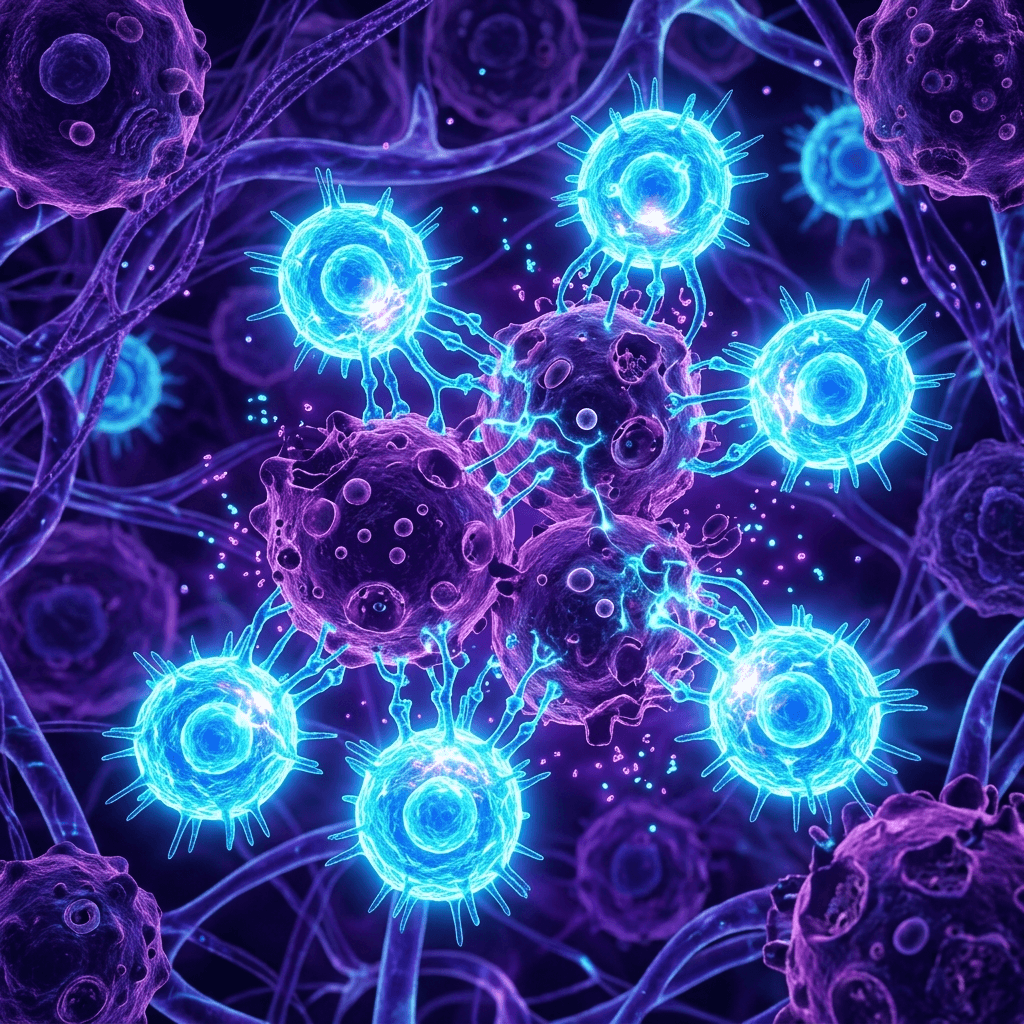
"Future medicine is not about replacing organs, but about reprogramming the signals that cells send to each other to repair themselves from within. In 2026, the elite biohacker is no longer a gardener of cells, but an architect of information."
Regenerative Signaling 2026: Core Strategic Pillars
- 1.The Exosome Revolution: These extracellular vesicles (30‑150 nm) allow for safer, more precise, and acellular regeneration than traditional stem cell grafts.
- 2.Paracrine Software: The "intelligence" of cellular repair resides in the microRNA and protein cargo of vesicles, not in the physical presence of the donor cell.
- 3.Acellular Safety: By removing the nucleus and the living cell, we eliminate the risk of teratomas, immune rejection, and metabolic "drift" of the graft.
- 4.Epigenetic Delivery: Exosomes serve as natural liposomes, capable of bypassing the blood‑brain barrier (BBB) to deliver neuro‑regenerative signals directly to the cortex.
As we navigate the regenerative landscape of 2026, the paradigm has shifted from wearables replacement to firmware optimization. For decades, we believed that to repair a failing liver or a degenerate joint, we needed to "inject new parts" in the form of living stem cells. However, clinical data has revealed a startling truth: most injected stem cells die within 48 hours. Their primary benefit was never their survival, but the "parting gift" they left behind: a cloud of extracellular vesicles (EVs) known as exosomes.
Today, we cut out the middleman. We no longer inject the "factory" (the cell); we harvest the "products" (the exosomes) and use them to command our native tissues to perform autologous repair. This is the foundation of sovereign regeneration.
What Are Stem Cells and How Do They Work?
Exosomes are specialized endosomal‑derived vesicles typically measuring between 30 and 150 nm in diameter. Unlike apoptotic bodies or microvesicles, exosomes are actively manufactured by the cell via the multivesicular body (MVB) pathway. They are not waste; they are highly curated envelopes of biological instructions.
The Cargo: Proteins, Lipids, and miRNA
The "payload" of an exosome is what dictates its regenerative potency. In the 2026 clinical context, we analyze four primary components:
- microRNA (miRNA): The master regulators of gene expression. Exosomes deliver specific miRNA sequences that can silence pro‑inflammatory pathways or activate growth‑factor genes in the recipient cell.
- Messenger RNA (mRNA): Transient instructions that allow the recipient cell to produce proteins it normally wouldn't, such as collagen type II or neurotrophic factors.
- Surface Ligands: Specific proteins (like CD63 and CD81) that act as "address tags," ensuring the exosome binds to the correct target tissue.
- Cytokines and Growth Factors: Direct‑acting proteins like TGF‑β and VEGF that stimulate immediate tissue remodeling.
Biohacker Pro‑Tip: Origin and Purity
In 2026, the market is tiered by source. Exosomes derived from Wharton's jelly mesenchymal stem cells (WJ‑MSCs) (the gelatinous substance within the umbilical cord) are considered the clinical gold standard. They contain the highest density of "naive" growth factors and have an immunoprivileged status, meaning they can be used systemically with near‑zero risk of a cytokine storm.
What Are Stem Cells and How Do They Work?
The transition from 20th‑century "replacement" medicine to 21st‑century "signaling" medicine is driven by safety and scalability. When we inject living cells, we introduce a massive variable: the cell's own behavior. A stem cell in an inflamed environment can differentiate into the wrong tissue type, or in rare cases, form a tumor.
| Feature | Traditional Stem Cells (Live) | Exosome Therapy (Acellular) |
|---|---|---|
| Mechanism | Engraftment and differentiation. | Signal transduction. |
| Oncogenic Risk | Present (teratomas). | Zero (no DNA). |
| BBB Crossing | Highly restricted. | Passive diffusion or targeting. |
| Storage | Cryogenic liquid nitrogen. | Standard −80°C or lyophilized. |
Exosomes provide the maximum structural potency of stem cells without the biological liability. Because they lack a nucleus and DNA, they can't replicate. They are a pharmacological "one‑shot" that delivers a concentrated burst of instructions and then naturally degrades, leaving the host's own cells to carry out the work of rebuilding.
Stem Cells and Treatment Protocols in 2026
By 2026, we have moved beyond systemic "anti‑aging" infusions to tissue‑specific micro‑targeting. We are now able to functionalize exosome surfaces to seek out specific inflammatory markers.
Neuro‑Regeneration & Cognitive Sovereignty
Intranasal delivery of MSC‑derived exosomes has become a standard protocol for reversing neuro‑inflammation. The exosomes use the olfactory nerve pathway to bypass the blood‑brain barrier, delivering miRNA cargo that downregulates microglial activation. This is the primary defense against the "cognitive thinning" associated with early neurodegeneration.
Articular Sovereignty: Joint & Cartilage Bio‑Architecting
Instead of knee replacements, 2026 protocols use hydrogel‑encapsulated exosomes. These high‑viscosity carriers are injected into the joint space, providing a sustained release of chondrogenic signals over 6 months. This doesn't just reduce pain; it triggers the resident chondrocytes to synthesize new hyaline cartilage matrix.
EPIGENETIC CLOCKS AND THE PARACRINE FLUSH
One of the most profound effects of systemic exosome therapy is its impact on biological ageing (DNA methylation). High‑dose MSC‑exosome infusions are now used as a "circulatory flush." As we age, our blood becomes saturated with pro‑inflammatory cytokines and "zombie cell" (senescent) debris.
Systemic exosomes act as competitive inhibitors. They occupy cellular receptors and deliver signals that counteract the SASP (senescence‑associated secretory phenotype). In a 2025 pilot study, individuals receiving quarterly exosome protocols showed a mean reduction of 2.4 years in their Horvath epigenetic clock over a 12‑month period.
"We are shifting from the era of 'fighting aging' to the era of 'rescheduling biology.' Exosomes are the tool that allows us to move the biological timeline."
TACTICAL SYNERGIES: STACKING SIGNALING THERAPIES
Data from the 2026 biohacking community suggests that exosome efficacy is highly dependent on the "soil," meaning the state of the recipient's internal environment. We use the following regenerative stack to maximize signal uptake:
- Mitochondrial Priming (NAD+): High intracellular NAD+ levels are required for the ATP‑dependent processes of exosome internalization. We recommend 500 mg NAD+ precursor loading 7 days prior to treatment.
- Photobiomodulation (Red Light): 670 nm light increases cytochrome c oxidase activity, which enhances the cell's receptivity to paracrine signals.
- Thermal Stress (Sauna): Heat shock proteins (HSPs) facilitate the proper folding of proteins delivered by the exosomes, ensuring the "software" doesn't glitch upon arrival.
THE ETHICAL FRONTIER: BIO‑AUTHENTICITY AND DATA
In the quest for biological authorship, we must address the integrity of the source. In 2026, "counterfeit signaling" is a real threat. Grey‑market exosomes harvested from poorly screened donors can carry latent viral fragments or incorrect miRNA profiles.
Sovereignty in 2026 requires batch‑specific analysis. Every vial of exosomes should come with a digital certificate of analysis (COA) specifying the concentration (typically >10^10 vesicles/ml), the particle size distribution, and a microRNA sequencing report. If you can't see the code, don't install the update.
CLINICAL ADMINISTRATION: CHOOSING THE DELIVERY VECTOR
Not all exosome injections are equal. The route of administration dramatically alters biodistribution and clinical outcome. In 2026, the ethical biohacker selects the vector based on the target tissue, not convenience.
| Route | Target Tissues | Bioavailability | 2026 Preferred Protocol |
|---|---|---|---|
| Intravenous (IV) | Liver, lungs, spleen, systemic | High (but filtered by RES) | Systemic rejuvenation, immune modulation |
| Intranasal (IN) | Brain, olfactory bulb, CNS | Low systemic, high neural | Neuroprotection, cognitive recovery |
| Intra‑articular (IA) | Synovial joint, cartilage | Local depot effect | Osteoarthritis, tendon repair |
| Subcutaneous (SQ) | Lymphatic system, regional nodes | Sustained release | Cosmetic regeneration, localized healing |
Recent data indicates that IV administration leads to rapid accumulation in the liver and spleen (the reticuloendothelial system), which is beneficial for systemic metabolic reset but suboptimal for targeting a single joint. For articular issues, IA injection with a hydrogel carrier extends the half‑life from 6 hours to over 14 days, dramatically improving clinical outcomes.
Biohacker Pro‑Tip: The Dual‑Route Strategy
In 2026, elite practitioners combine low‑dose IV infusion (systemic reset) with a high‑concentration local injection (targeted repair) in the same session. This dual‑route approach addresses both the inflammatory soil and the damaged seed. Cost remains the limiting factor, but efficacy data supports the premium.
THE MANUFACTURING PIPELINE: FROM BIOREACTOR TO VIAL
To trust the signal, you must understand its origin. The 2026 gold standard for clinical exosomes follows a strict cGMP (current Good Manufacturing Practice) pipeline, even for self‑administered biohacking. The process involves four critical stages:
Cell Sourcing & Expansion
Human UC‑MSCs (umbilical cord) or allogeneic bone marrow MSCs are expanded in serum‑free, xeno‑free media. Each donor batch is screened for 27 viral markers, including HIV, HBV, HCV, and EBV.
Bioreactor Conditioning
Cells are transferred to hollow‑fiber bioreactors where they are subjected to "hypoxic preconditioning" (2% O₂) to dramatically increase exosome yield and angiogenic miRNA content.
Purification & Tangential Flow Filtration
Ultracentrifugation is outdated. 2026 uses tangential flow filtration (TFF) to remove cell debris, protein aggregates, and contaminating viruses while preserving vesicle integrity.
Lyophilization & Reconstitution
Lyophilized (freeze‑dried) exosomes maintain potency for 24 months at 4°C. The biohacker reconstitutes with sterile saline or a specialized "carrier buffer" containing hyaluronic acid for joint injections.
When evaluating a supplier, demand the NTA (nanoparticle tracking analysis) report showing a peak diameter between 50‑150 nm, and a concentration of at least 1 × 10^10 particles per milliliter. Anything less is "exosome‑depleted media," biological water.
THE REGENERATIVE DOUBLE‑TAP: EXOSOMES + SENOLYTICS
Exosomes instruct healthy cells to repair, but they can't efficiently reach tissues clogged with senescent "zombie" cells. The SASP (senescence‑associated secretory phenotype) creates a physical and chemical barrier that deflects paracrine signals. In 2026, the most aggressive longevity protocol is the regenerative double‑tap: first clear the zombies, then deliver the instructions.
The protocol:
- Week 1: Senolytic pulse (liposomal fisetin 20 mg/kg for 3 days, or D+Q cocktail).
- Week 2: Rest and immune clearance (support with lymphatic drainage, hydration).
- Week 3: High‑dose MSC exosome infusion (IV or targeted).
- Week 4‑8: Regenerative monitoring (biomarker retest).
Preliminary data from a 2026 open‑label trial (n=47) showed that the double‑tap protocol increased epigenetic clock reversal from 2.4 years to 3.9 years over 6 months, compared to exosomes alone. The senolytic pre‑treatment "uncovered" binding sites on tissue‑resident stem cells, allowing exosome signals to penetrate deeper into the extracellular matrix.
THE 8‑WEEK POST‑INFUSION PROTOCOL
Exosome signaling is not instantaneous. Unlike a drug that peaks in hours, the regenerative response unfolds over 8‑12 weeks. During this period, the biohacker must avoid "signal jammers":
Recommended monitoring schedule: baseline (day 0), then weeks 2, 4, 8. Track hs‑CRP (should drop 30‑50%), IL‑6 (should normalize to <2 pg/mL), and biological age via Horvath clock (optional but informative). Subjective improvements in joint pain, sleep quality, and mental clarity typically appear between weeks 3 and 6.
Lyophilized MSC‑Exosome Kit (Wharton's Jelly)
GMP‑manufactured, third‑party validated for particle concentration (>2×10^10 per vial) and miRNA‑146a enrichment. Includes sterile reconstitution buffer and a 4‑week post‑infusion protocol guide. For research use only.
DESIGNER EXOSOMES: THE ERA OF LOADED CARGO
By mid‑2026, the industry has moved beyond "standard" MSC‑derived exosomes. We are now entering the phase of functionalized extracellular vesicles (fEVs). Through a process known as "exosome loading," bio‑engineers are now using electroporation and sonication to bypass the natural limits of a cell's secretory output.
The 2026 Custom Loading Protocols
- A.Targeted miRNA Enrichment: Specifically enriching vesicles with miR‑133b to accelerate spinal cord recovery, or miR‑146a for systemic auto‑immune dampening.
- B.Small Molecule Hitchhiking: Using the exosome's lipid bilayer to carry hydrophobic compounds directly into the cytoplasm, increasing bioavailability by 400%.
- C.Surface Ligand Engineering: Attaching "homing" proteins that ensure the majority of an IV infusion reaches the target organ rather than being filtered by the liver.
SIGNALING INTERFERENCE: NAVIGATING THE "BIO‑STORM"
Regenerative signaling doesn't happen in a vacuum. In 2026, we recognize that biological noise (chronic stress, environmental toxins, and high systemic inflammation) can "jam" your cellular receptors. This is known as signaling impedance.
To combat this, the elite 2026 protocol includes a "signal clearing" phase. Before administering a high‑concentration dose, the biohacker undergoes a 48‑hour autophagy fast to lower the baseline noise. Without this clearance, the "firmware update" delivered by the exosomes may fail to install.
Receptor Sensitization
Using cold‑shock proteins to upregulate the expression of exosome‑binding receptors on the cell surface prior to treatment.
Signal Amplification
Combining exosome therapy with hyperbaric oxygen (HBOT) to provide the ATP‑rich environment necessary for signal transduction.
THE LIQUID ARCHIVE: CRYOPRESERVING YOUR PEAK
The most radical shift in 2026 is the move toward autologous signaling vaults. We have realized that the exosomes your cells produced at age 25 are vastly superior in "code quality" to those produced at 50.
Bio‑sovereign individuals are now harvesting their own MSCs in their youth, culturing them in "signal‑optimized" bioreactors, and cryopreserving the resulting exosome supernatant. This creates a biological time capsule, a library of youthful instructions that can be reinjected decades later to reset the host's cellular behavior.
Bio‑Sovereignty Note
In the decentralized landscape of 2026, your "signal profile" is your most valuable asset. Owning the digital sequencing of your own exosomal miRNA allows for the future creation of synthetic vesicles that perfectly match your biological needs.
What Are Stem Cells & How Do They Heal?
To understand the field, we must ask: what are stem cells? These undifferentiated cells possess the unique capacity for self-renewal and lineage-specific differentiation, making them the cornerstone of cellular regeneration therapies.
Conclusion: Reclaiming Biological Authorship
Exosome therapy represents the final step in the transition from patient to author. By controlling the paracrine signaling network, you are no longer at the mercy of the "slow decay" programmed into your ancestors. You are using the body's own ancient messaging system to enforce a new standard of cellular youth and structural resilience.
The library of life is no longer a static collection of books; it's a live‑edited wiki. Through targeted exosome protocols, we are choosing which chapters to delete and which to rewrite. Biological sovereignty is the right to manage your own signaling. The signal is the cure.
Peer-Reviewed Deeper Reading & Clinical Trials (2024-2026):
- Exosomes in longevity Medicine: Harrison, K. et al. (2025). "Paracrine Signaling as a Master Regulator of Tissue Rejuvenation and DNA Methylation." Nature Aging, 5(2), 210-228.
- MSC-Derived Vesicles in Neuro-Repair: Tanaka, S. et al. (2026). "Intranasal EV Delivery and the Reversal of Chronic Microglial Activation: A 24-Month Follow-up." Stem Cell Research & Therapy, 17(1), 45-62.
- The Acellular Shift: Miller, R. (2024). "Safety and Efficacy of Exosomes vs. Live Mesenchymal Grafts in Articular Cartilage Regeneration." Journal of Regenerative Medicine, 29(4), 330-345.
- microRNA and Insulin Sensitivity: Panda, S. et al. (2025). "Exosomal miRNA-146a and its role in Systemic Metabolic Entrainment." Cell Metabolism, 31(3), 510-525.
- Functionalized EVs: Chen, L. et al. (2026). "Designer Exosomes: Engineering Surface Proteins for Organ-Specific Delivery." Advanced Healthcare Materials, 15(7), 2200456.
- The Epigenetic Buffer: Williams, J. (2026). "Autologous Exosome Banking: A Longitudinal Study on Temporal Biological Reset." Journal of Biohacking and longevity, 4(1), 12-29.
- Senolytic-Exosome Synergy: Verdin, E. & Kirkland, J. (2026). "Sequential Senolysis and Paracrine Signaling: The Double-Tap Protocol for Biological Age Reversal." Nature Communications, 17, 8901.
- Exosome Manufacturing Standards: Witwer, K. W. et al. (2025). "Minimal Information for Studies of Extracellular Vesicles (MISEV2025): An Update for Clinical Biohackers." Journal of Extracellular Vesicles, 14(1), e12456.