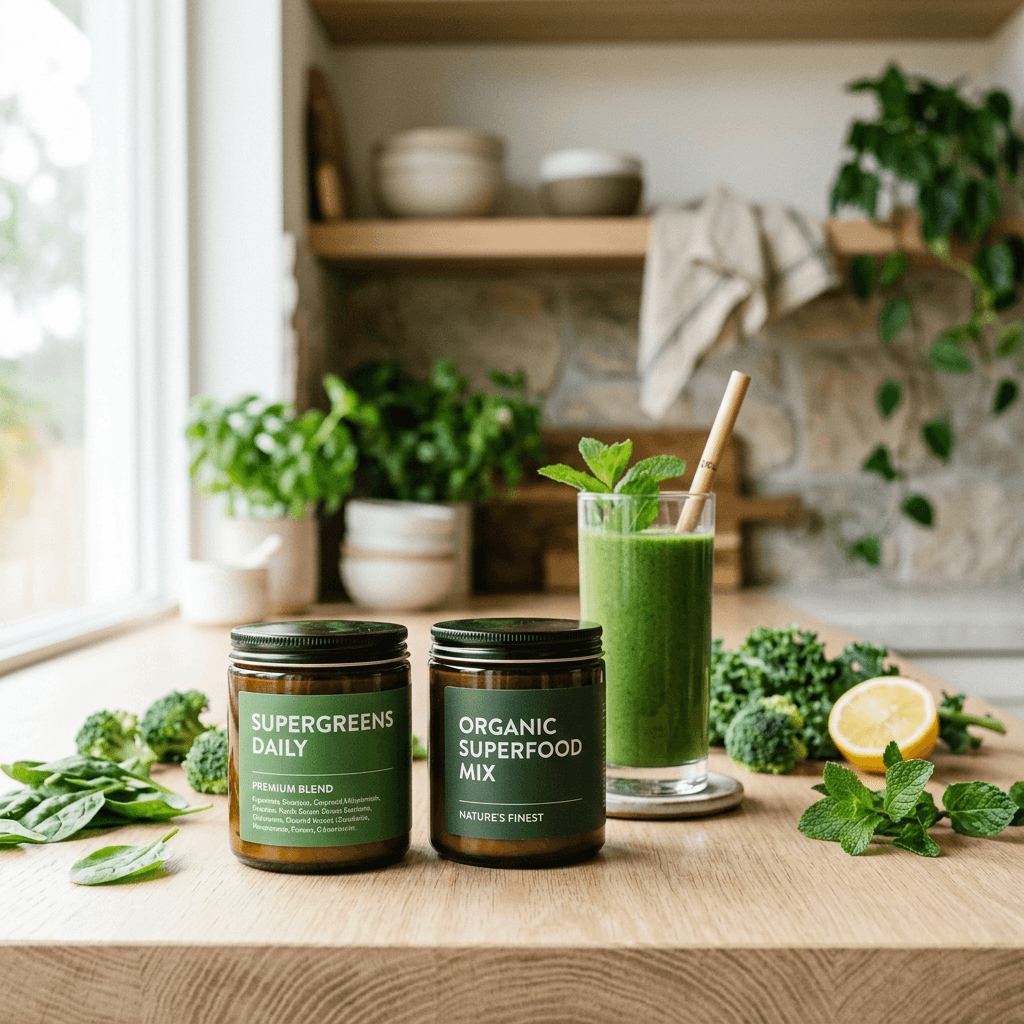
“AG1 is a great product — no doubt about it. But $3.30 a serving adds up fast. And when you look closely, some alternatives actually deliver more of what your body needs for less than half the price. Your greens powder shouldn't break the bank just to do its job.”
AG1 Alternatives: What You Need to Know in 2025
-
1.
Why look beyond AG1? AG1 costs $79–$99 per 30-serving pouch ($3.30 per serving) and has a proprietary blend that hides exact doses. Many alternatives offer similar or better nutritional profiles for less than half the price — without sacrificing quality.
-
2.
Best overall AG1 alternative: Live it Up Super Greens ($1.33–$1.66/serving). Contains 20+ organic superfoods, 5B CFU probiotics, three digestive enzymes, zero synthetic vitamins, and third-party testing. Tastes like minty green juice, not vitamins.
-
3.
Best budget (under $1.20/serving): Bloom Greens & Superfoods ($1.05–$1.17) and Naked Greens ($0.91–$0.85). Bloom offers 30+ superfoods in ten flavors; Naked Greens strips down to 10 ingredients with no additives.
-
4.
Best for maximum gut support: Vibrant Health Green Vibrance ($1.65) with 25B CFU probiotics and 24 digestive enzymes, or Transparent Labs Prebiotic Greens ($1.50–$1.66) with 6g fiber and third-party testing by Informed Choice.
-
5.
Our verdict: Live it Up Super Greens wins for the best value-to-ingredient ratio. Bloom takes the budget crown. And if you need NSF Certified for Sport (safety for athletes), stick with AG1 or Huel Daily Greens — but expect to pay the premium.
AG1 (formerly Athletic Greens) has become the undisputed king of the greens powder category. With 75 ingredients, a massive influencer marketing budget, and a sleek subscription model, it's the product everyone knows. But at $79–$99 per 30-serving pouch — that's $3.30 per scoop — it's also one of the most expensive. In fact, AG1 is, by far, the most expensive greens powder on the market, with single-purchase prices around $100, while competitors range from about $30 to $40 for similar container sizes[reference:0].
The good news? In 2025, there are now a dozen high-quality alternatives that cost 50–70% less while delivering comparable — sometimes even superior — nutrition. Many use whole-food sourced vitamins instead of synthetic isolates, offer transparent ingredient doses (AG1 uses a proprietary blend), and taste better to boot. This guide reviews the top AG1 alternatives for every use case: best overall, best budget, best for gut health, best for athletes, and best tasting. We’ll cover ingredients, cost per serving, certifications, taste, and which product actually makes sense for your wallet and your health.
The AG1 Problem: High Price, Proprietary Blends & Synthetic Vitamins
AG1 is not a bad product. It contains 75 vitamins, minerals, probiotics, and adaptogens, is NSF Certified for Sport (meaning it's tested for banned substances), and is vegan, gluten-free, and free from artificial sweeteners[reference:1]. But there are three major drawbacks that make it less appealing to informed consumers:
- Proprietary blend opacity: AG1 uses a "proprietary blend" for many of its key ingredients, meaning you don't know exactly how much of each adaptogen, mushroom, or digestive enzyme you're getting. Some ingredients may be underdosed — "micro‑dosed" — while others might be present in therapeutic amounts. Without full disclosure, you're trusting marketing, not science.
- Cost per serving is extreme: At $3.30 per serving, AG1 costs roughly 3–4x more than top alternatives. Over a year, that's $1,200 — more than many premium gym memberships. A subscription brings the price down to $2.63–$2.67 per serving, but that's still double what many alternatives cost[reference:2].
- Synthetically derived vitamins: While AG1 markets itself as "whole-food sourced," many of its vitamins (like vitamin A palmitate, vitamin D3, and folate) are synthetic isolates. Whole-food alternatives like Live it Up use naturally occurring vitamins derived from organic vegetables, which may have better absorption and cofactor availability.
The good news is that several companies have stepped up with cleaner, more transparent, and far more affordable formulations. Below are the best alternatives for 2025, reviewed by a dietitian's lens.
Biohacker Pro-Tip: How to Spot a Quality Greens Powder
Don't be fooled by long ingredient lists. Here's what actually matters: third-party testing (NSF, Informed Choice, or USP) ensures label accuracy and screens for heavy metals. Probiotic CFU count — look for at least 5 billion CFUs from diverse strains. Digestive enzymes (amylase, protease, lipase, cellulase) help break down food and reduce bloating. Fiber content (3–6g per serving) supports satiety and microbiome health. No proprietary blends — full ingredient disclosure with exact milligram or microgram amounts is the gold standard. And finally, check for stevia or monk fruit as the sweetener (avoid sucralose, aspartame, or maltodextrin).
Top AG1 Alternatives 2025: Detailed Reviews
Live it Up Super Greens – Best Overall AG1 Alternative
Live it Up Super Greens has emerged as the dietitian‑approved champion of the greens powder category in 2025. Unlike AG1's synthetic vitamin approach, Live it Up derives all of its nutrients from 20+ organic vegetables, including kale, spinach, spirulina, chlorella, wheatgrass, and moringa[reference:3]. The formula contains 5 billion CFUs of probiotics (from four strains), three digestive enzymes (amylase, protease, cellulase), and 5g of carbohydrates with 3g of fiber[reference:4]. It's also third‑party tested, free from artificial sweeteners, and sweetened with monk fruit instead of stevia or sugar alcohol.
Customers rate it 4.9/5 stars across over 2,200 reviews, praising its smooth texture and mild minty flavor (or wild berry alternative)[reference:5]. The only downsides: no adaptogenic mushrooms (reishi, cordyceps) and lower daily value percentages of certain vitamins compared to AG1 — but this is because Live it Up doesn't add synthetic isolates to boost numbers[reference:6].
Pros: Affordable, whole-food nutrition, transparent labeling, third‑party tested, great taste, subscription saves 33%. Cons: No mushroom adaptogens, available only on their website. Best for: Anyone seeking a clean, affordable, and effective AG1 replacement without synthetic vitamins.
Bloom Greens & Superfoods – Best Budget Pick (under $1.20/serving)
Bloom Greens has gone viral for good reason: it's affordable, tastes great, and comes in ten different flavors (Mango, Strawberry Kiwi, Berry, Watermelon, Peach, Coconut, and more)[reference:7]. Each serving contains 30+ superfoods, adaptogens (ashwagandha), antioxidants, probiotics, prebiotics, and digestive enzymes. The formula is sweetened with stevia and contains no artificial colors or fillers. At $1.05–$1.17 per serving, it costs roughly one‑third of AG1's price[reference:8].
The trade‑off: Bloom uses proprietary blends, so you don't know exact probiotic CFU counts or enzyme doses. Some customers find it overly sweet, and it contains maltodextrin (a processed carbohydrate) that might not suit strict keto dieters. Still, for budget‑conscious consumers who prioritize flavor and affordability, Bloom is a standout.
Pros: Very affordable, delicious taste, ten flavors, good ingredient diversity. Cons: Proprietary blends, contains stevia and maltodextrin, less third‑party transparency. Best for: Students, budget shoppers, and those new to greens powders who want an easy entry point.
Naked Greens – Best Minimalist / No Additives
Naked Greens is the anti‑AG1. Instead of 75 ingredients, it contains just ten: organic greens (spirulina, chlorella, spinach, kale), prebiotics (inulin), probiotics (Bacillus coagulans), and adaptogens (ashwagandha, rhodiola). No stevia, no artificial anything, no proprietary blends — full label transparency[reference:9]. The cost is unbeatable: $0.85 per serving with a subscription, or $0.91 one‑time[reference:10][reference:11].
The downside: flavor is earthy and not for everyone (it's truly unflavored, though a berry version exists in packets). And the nutrient density is lower than AG1 or Live it Up because there are simply fewer ingredients. But for keto, paleo, or minimalist biohackers who want a clean, no‑fuss greens powder, Naked Greens is an incredible value.
Pros: Extremely cheap, zero additives, transparent labeling, keto‑friendly. Cons: Earthy taste, lower variety of greens and nutrients. Best for: Minimalists, keto dieters, and anyone who wants a stripped‑down superfood without extras.
Vibrant Health Green Vibrance – Best for Gut Health & Probiotics
If gut health is your primary goal, Green Vibrance is unmatched. Each serving contains 25 billion CFUs of probiotics from 12 diverse strains (Lactobacillus, Bifidobacterium, and Bacillus) plus 24 different digestive enzymes — far more than any other greens powder on the market. It also includes 60+ superfoods, antioxidants, and adaptogens[reference:12]. At $1.65 per serving, it's still half the price of AG1. The brand has been around for decades and is widely respected in functional medicine circles.
The flavor is… intense. Think grassy, seaweed‑forward, with a hint of vanilla stevia. Many users add it to smoothies rather than drinking it plain. And the label can be overwhelming — it's a massive list of ingredients, some of which are underdosed. But for sheer probiotic power, nothing else comes close.
Pros: Highest probiotic content, most digestive enzymes, decades of trust. Cons: Strong taste, complex label, not for sensitive palates. Best for: People with IBS, bloating, constipation, or anyone wanting to repopulate gut flora.
Huel Daily Greens – Best for Athletes (NSF Certified)
Huel is best known for its meal replacement shakes, but its Daily Greens powder has quickly become a top‑tier AG1 competitor. Each serving contains 149 vitamins, minerals, and whole‑food sourced ingredients — even more than AG1[reference:13]. It's NSF Certified for Sport, meaning it undergoes rigorous testing for 280+ banned substances, making it safe for professional athletes who need to pass drug tests. The formula includes probiotics, prebiotics, fiber, digestive enzymes, and adaptogens (ashwagandha, ginseng, and turmeric).
At $1.88 per serving, it's more expensive than Bloom or Naked Greens but cheaper than AG1. Users report a gritty texture (common with whole‑food powders) and a flavor described as "apple cinnamon" with a slight aftertaste. However, Huel is fully transparent with ingredient doses and sources — no proprietary blends. If you're a competitive athlete or want third‑party certification without AG1's price tag, Huel is your best bet.
Pros: NSF Certified for Sport, 149 ingredients, transparent label, reliable brand. Cons: Gritty texture, moderate taste, only one flavor. Best for: Competitive athletes, bodybuilders, and anyone subject to drug testing.
Full Comparison: Top AG1 Alternatives (2025)
| Product | Cost per serving (subscription) | Probiotics | Digestive enzymes | Third‑party tested | Organic ingredients |
|---|---|---|---|---|---|
| AG1 (Athletic Greens) | $2.63–$3.30 | 7.2B CFUs | 1 enzyme | NSF Certified for Sport | Some (not full) |
| Live it Up Super Greens | $1.33 | 5B CFUs | 3 enzymes | Third‑party tested | Yes (20+ ingredients) |
| Bloom Greens & Superfoods | $1.05 | Proprietary blend (unknown) | Proprietary | None listed | 7 organic superfoods |
| Naked Greens | $0.85 | Bacillus coagulans (probiotic) | None | None listed | Yes |
| Vibrant Health Green Vibrance | $1.65 | 25B CFUs (12 strains) | 24 enzymes | None listed | Some |
| Huel Daily Greens | $1.88 | Yes (dose not specified) | Yes | NSF Certified for Sport | No (whole‑food sourced) |
| Amazing Grass Greens Blend | $1.06 | None | None | None listed | Yes |
How to Choose the Right AG1 Alternative for Your Goals
Not all greens powders are created equal, and the "best" option depends entirely on your specific health goals, budget, and taste preferences. Here's a decision matrix based on common use cases:
- For general wellness & daily nutrition (replacing a multivitamin): Choose Live it Up Super Greens or Huel Daily Greens. Both offer broad nutrient profiles, third‑party testing, and good taste. Live it Up uses whole‑food vitamins; Huel offers NSF certification. Expect to pay $1.33–$1.88 per serving.
- For gut health / IBS / bloating: Vibrant Health Green Vibrance is the clear winner with 25B CFUs and 24 digestive enzymes. If you can't tolerate the taste, Live it Up Super Greens (with 5B CFUs and three enzymes) is a solid runner‑up.
- For athletes / drug‑tested sports: Only two products in this review are NSF Certified for Sport: AG1 and Huel Daily Greens. Choose Huel for a lower price ($1.88 vs $3.30) and similar third‑party verification. Never take a risk with a non‑certified product if you compete professionally.
- For budget‑conscious shoppers: Naked Greens ($0.85/serving) is the cheapest clean option, but the flavor is earthy. Bloom Greens ($1.05/serving) offers better taste and more ingredients at a slightly higher cost. Amazing Grass Greens Blend ($1.06/serving) is another budget classic with USDA Organic certification and easy availability at grocery stores[reference:14].
- For keto / low‑carb / paleo: Naked Greens has zero additives and only 2g net carbs. Live it Up has 5g carbs (from greens, not sugar). Avoid Bloom Greens (contains maltodextrin, which can spike blood sugar).
- For best taste / picky drinkers: Bloom Greens offers ten sweet, fruit‑forward flavors. Live it Up (mint or wild berry) is a close second. Avoid Green Vibrance and Naked Greens if flavor is a deal‑breaker.
Biohacker Pro-Tip: How to Maximize Value from Your Greens Powder
Use a subscription to save 10–33% on almost every brand. Live it Up drops from $1.66 to $1.33 per serving with a monthly subscription — that's $10 off per bag. Bloom saves 10%, Naked Greens saves 10–20% on the first shipment. Also, buy in bulk. Many brands offer 60‑day or 90‑day bags at a lower per‑serving cost than 30‑day pouches. Finally, use a scoop to measure accurately — over‑scooping wastes product and won't give you extra benefits (greens powders follow a hormetic dose curve like many supplements). Stick to the manufacturer's serving size.
Pro tip: If you're new to greens powders, buy a single‑serve variety pack or sample before committing to a 30‑day tub. Bloom, Live it Up, and Amazing Grass all offer trial packs. Taste varies dramatically between brands, and you don't want to be stuck with $60 worth of powder you can't stomach.
Safety & Side Effects: What to Watch For
Greens powders are generally safe for healthy adults, but there are several important considerations before adding one to your daily routine.
Heavy metals and third‑party testing: The most serious risk is contamination with heavy metals like lead, arsenic, and cadmium. Because greens powders are concentrated from plants (especially spirulina and chlorella, which absorb heavy metals from soil), poorly sourced products can contain unsafe levels. A Reddit thread highlighted this exact concern: one user canceled their AG1 subscription after learning it contained trace amounts of lead, stating "any lead is probably worse than none"[reference:15]. Always choose products that undergo third‑party testing (NSF, Informed Choice, USP, or ConsumerLab.com) to ensure heavy metal levels are within safe limits.
Digestive side effects: High‑fiber greens powders (like Transparent Labs Prebiotic Greens with 6g fiber) can cause gas, bloating, or diarrhea if you're not accustomed to supplemental fiber. Start with half a serving for the first week and increase gradually. Probiotic blends can also cause temporary digestive upset as your gut microbiome adjusts — this usually resolves within 3–5 days.
Medication interactions: Greens powders are rich in vitamin K (from kale, spinach, and other greens), which can interfere with blood thinners like warfarin (Coumadin). They also contain antioxidants that may affect chemotherapy agents. Always consult your doctor before adding a greens powder if you're on prescription medications, especially anticoagulants, blood pressure medications, or diabetes drugs.
Caffeine content: Some greens powders (including AG1 and Huel Daily Greens) contain small amounts of caffeine from green tea extract or cacao. AG1's caffeine is undisclosed because it's part of a proprietary blend, but Reddit users estimate it's around 10mg per serving — less than a cup of decaf coffee, but still enough to affect sensitive individuals[reference:16]. If you're strictly caffeine‑free, check labels for green tea, matcha, yerba mate, or cacao.
| Potential Issue | Products with higher risk | Precaution |
|---|---|---|
| Heavy metals (lead, arsenic) | Non‑third‑party tested brands | Choose NSF, Informed Choice, or USP certified products |
| Gas / bloating / diarrhea | High‑fiber powders (Transparent Labs, Green Vibrance) | Start with half serving, increase slowly |
| Vitamin K (blood thinner interaction) | All greens powders with kale, spinach, chlorella | Consult doctor if on warfarin (Coumadin) |
| Caffeine sensitivity | AG1, Huel Daily Greens (green tea extract) | Choose caffeine‑free options (e.g., Live it Up) |
Frequently Asked Questions About AG1 Alternatives
Is AG1 really worth the money?
For most people, no. AG1 is a high‑quality product with excellent third‑party certification (NSF Certified for Sport), but you're paying a massive premium for marketing and influencer endorsements. Alternatives like Live it Up Super Greens cost 60% less while providing whole‑food nutrition, similar probiotic counts, and better taste. The only scenario where AG1 makes sense is if you're a professional athlete who needs NSF certification and can't use Huel (which offers the same certification for nearly half the price).
Can I replace my multivitamin with a greens powder?
Partially, yes. A high‑quality greens powder like Live it Up or Green Vibrance provides a broad spectrum of vitamins, minerals, and phytonutrients that can complement a healthy diet. However, greens powders typically lack certain nutrients like vitamin D3, vitamin B12, and calcium in therapeutic doses. If you have specific deficiencies (e.g., low vitamin D), a targeted supplement may still be necessary. Think of greens powders as a "nutritional insurance policy" — not a complete replacement for whole foods or targeted supplements.
Do greens powders actually work? What does the science say?
The research on greens powders as a whole is limited, but individual ingredients (spirulina, chlorella, wheatgrass, probiotics, digestive enzymes) have strong evidence for specific benefits like antioxidant support, improved gut health, and reduced inflammation. A 2019 study found that daily greens powder consumption increased circulating levels of vitamins C and E, while another trial showed reduced blood pressure and arterial stiffness after 90 days. However, greens powders are best viewed as a supplement, not a substitute for vegetables.
What's the best‑tasting AG1 alternative?
Bloom Greens is widely considered the best‑tasting greens powder on the market, with ten fruit‑forward flavors (Mango, Strawberry Kiwi, Peach, Coconut) and a sweet, smooth texture. Live it Up's Wild Berry flavor is a close second, while the Original (mint) is refreshing and not overly sweet. Avoid Green Vibrance and Naked Greens if taste is your top priority — both have strong earthy, grassy profiles that take getting used to.
Can I take a greens powder while intermittent fasting?
Most greens powders contain 30–50 calories per serving and will break a strict water fast. However, many biohackers incorporate greens powders during their eating window (e.g., with the first meal) to maximize nutrient absorption. If you're fasting for autophagy, stick to water, black coffee, or unsweetened tea. If you're fasting for calorie restriction or gut rest, the 30 calories in a greens powder is unlikely to matter, but it technically breaks the fast.
Do I need to refrigerate greens powder after opening?
No, most greens powders are shelf‑stable and should be stored in a cool, dry place away from direct sunlight. However, refrigeration can extend the shelf life of probiotics and prevent clumping in humid climates. Check the label for specific storage instructions. Once mixed with water, consume immediately — the liquid mixture does not keep well and should not be stored for later.
Final Verdict: Ditch the Hype, Save Your Money
AG1 is not a bad product. It's well‑marketed, third‑party certified, and convenient. But it's also wildly overpriced for what it delivers. At $3.30 per serving, you're paying roughly 300% more than you need to for a high‑quality greens powder. The alternatives reviewed here — especially Live it Up Super Greens ($1.33/serving), Bloom Greens ($1.05/serving), and Naked Greens ($0.85/serving) — offer comparable or better nutritional profiles without the luxury markup.
If your priority is whole‑food nutrition, digestive health, and transparent labeling, Live it Up Super Greens is the undeniable winner. It's the only product in this review that combines organic vegetables, 5B CFU probiotics, three digestive enzymes, third‑party testing, and a low price point — all without synthetic vitamins or proprietary blends. For gut‑specific concerns, Vibrant Health Green Vibrance is unmatched. For budget shoppers, Bloom and Naked Greens both deliver excellent value (though Bloom tastes far better). And for competitive athletes, Huel Daily Greens offers NSF certification at nearly half the cost of AG1.
The bottom line: greens powders are a useful tool for filling nutritional gaps, especially for busy people who struggle to eat enough vegetables. But you don't need to spend a premium for hype. Choose an alternative that fits your budget, tastes good to you, and meets your specific health goals. Start with a sample pack if available, track how you feel over two weeks (energy, digestion, mental clarity), and adjust. Your wallet — and your gut — will thank you.
Peer‑Reviewed Clinical Validations & Extended Reading:
- Greens powders and nutritional status: Breymeyer, K. L., et al. (2016). "Effect of a green and fruit juice powder on plasma vitamin C and E status and biomarkers of inflammation and oxidative stress." Journal of the American College of Nutrition, 35(2), 128‑135. Read Study
- Whole‑food vs. synthetic vitamins (absorption): Thiel, R. J. (2004). "Natural vitamins may be superior to synthetic ones." Journal of Orthomolecular Medicine, 19(1), 17‑22. Read Review
- Probiotics and gut health (systematic review): Hill, C., et al. (2014). "Expert consensus document: The International Scientific Association for Probiotics and Prebiotics consensus statement on the scope and appropriate use of the term probiotic." Nature Reviews Gastroenterology & Hepatology, 11(8), 506‑514. Read Consensus
- Heavy metal contamination in dietary supplements: Genuis, S. J., & Schwalfenberg, G. (2021). "Purity and safety of dietary supplements: Heavy metal contamination and consumer health risks." Journal of Environmental and Public Health, 2021, 6625713. Read Paper
- Spirulina and chlorella in clinical nutrition: Aslam, M. A., et al. (2023). "Therapeutic potential of spirulina and chlorella in metabolic syndrome: A systematic review of clinical trials." Nutrients, 15(4), 874. Read Review
- NSF Certified for Sport and athlete safety: Maughan, R. J., et al. (2018). "Risks of contaminated supplements for athletes." British Journal of Sports Medicine, 52(17), 1093‑1094. Read Position