"The brain is an evolutionary survival engine. If it detects linear, structured, or analytical thinking at bedtime, it assumes a problem needs solving and blocks sleep. Cognitive shuffling bypasses this gatekeeper by generating random, non-threatening micro-images, signaling to the thalamus that it is safe to sleep."
Key Takeaways: Cognitive Shuffling
-
1.
The Survival Thalamic Gate: The thalamus blocks sleep when the neocortex engages in linear, analytical thought (problem solving), perceiving it as an active environmental threat.
-
2.
Serial Diverse Imagining (SDI): Developed by cognitive scientist Dr. Luc Beaudoin, SDI redirects attention from anxious thoughts by forcing the mind to picture unrelated, neutral words.
-
3.
Mimicking Natural Sleep Onset: Generating random mental imagery simulates the visual micro-hallucinations (hypnagogia) that naturally occur just before falling asleep.
Introduction: The Bedtime Cognitive Loop and Hyperarousal
For millions of adults worldwide, the simple act of turning off the lights triggers an involuntary shift into a state of acute mental hyperarousal. Instead of sliding gracefully into sleep, the brain begins to iterate through complex mental checklists, replay past conversations, plan tomorrow's tasks, or worry about the consequences of sleep deprivation itself. This phenomenon is known as bedtime cognitive hyperarousal. It is one of the leading drivers of primary insomnia, where the body is physically exhausted but the brain remains locked in an active beta-wave processing frequency. In this state, autonomic nervous system tone remains elevated, heart rate variability (HRV) drops, and cortisol levels rise, creating a biological block against sleep onset.
Standard cognitive behavioral therapy for insomnia (CBT-I) often recommends somatic relaxation tools like progressive muscle relaxation or mindfulness meditation. While effective for physical tension, these techniques can sometimes feel demanding to execute, leading to performance anxiety as users worry about whether they are meditating "correctly." The **Cognitive Shuffling Method**, technically known as Serial Diverse Imagining (SDI), is a cognitive hack designed to exploit the brain's evolutionary sleep-onset machinery. Rather than trying to quiet or empty the mind, cognitive shuffling redirects it, utilizing random, non-coherent thoughts to trick the brain into thinking it is already asleep.
The Evolutionary Neurobiology of Sleep Transition
To understand why cognitive shuffling works, we must examine the brain's evolutionary security system. The brain has evolved to prioritize survival. In prehistoric times, falling asleep in an unsafe environment meant death. Therefore, the brain developed a gatekeeper mechanism within the thalamocortical loop. If the prefrontal cortex is engaged in structured, goal-oriented, or linear thinking (e.g., "How will I pay this bill?" or "What do I need to do tomorrow?"), the thalamus interprets this activity as a signal that the organism is dealing with an active environmental problem. As a result, the thalamic reticular nucleus (TRN) remains active, preventing the cortical synchronization necessary for sleep onset.
However, just before we fall asleep naturally, a process called hypnagogia begins. During this transitional state, our logical, linear thinking breaks down. The mind begins to drift, generating disjointed, random visual images, words, and micro-hallucinations. The thalamic gate interprets this fragmented, non-logical imagery as a sign of safety. Since there is no coherent problem-solving occurring, the brain concludes that the threat level is zero, allowing sleep-promoting centers (like the ventrolateral preoptic nucleus, or VLPO) to suppress the arousal network and trigger sleep.
Cognitive shuffling is a conscious, active way to simulate this hypnagogic state. By deliberately forcing the prefrontal cortex to visualize a random sequence of neutral, concrete items, you disrupt the brain's threat-detection loop and signal that it is safe to disengage. It essentially acts as a software hack for your brain's hardware sleep switch.
Biohacker Pro-Tip: Pre-Shuffle Cognitive Offloading
If you find that your bedtime worries are too intense for cognitive shuffling to work, perform a "brain dump" 30 minutes before bed. Physically write down every task, worry, or action item on a piece of paper. This is called cognitive offloading. By externalizing the problem-solving loop, you make it much easier for the prefrontal cortex to disengage when you start the visual randomizations of the cognitive shuffle.
The Default Mode Network and Bedtime Rumination
To appreciate the neuroscientific mechanism of SDI, we must explore the Default Mode Network (DMN). The DMN is a large-scale brain network composed of the medial prefrontal cortex, the posterior cingulate cortex, and the angular gyrus. It becomes active when we are not focused on the outside world, particularly during daydreaming, self-referential thought, and autobiographical memory retrieval. When we lie in bed with no sensory input, the DMN hyper-activates. If we are stressed, this network drives negative self-talk, anxiety, and repetitive worry—a process known as rumination.
Cognitive shuffling directly interrupts DMN hyper-activation. Because the DMN relies on coherent, structured memories and scenarios, introducing highly disjointed and random sensory images (like picturing a paperclip, then a volcano, then a dolphin) breaks the network's cohesion. The DMN cannot construct a narrative from these unrelated elements, forcing the prefrontal cortex to disengage and allowing the brain to drift toward sleep-promoting theta and delta oscillations.
Comparison of Bedtime Relaxation Techniques
| Method | Neurological Target | Difficulty Level | Best Suited For |
|---|---|---|---|
| Cognitive Shuffling (SDI) | Interrupts prefrontal problem-solving, suppresses DMN, mimics hypnagogia | Low (Requires minimal mental effort) | Racing mind, bedtime checklists, anxiety, primary insomnia |
| 4-7-8 Somatic Breathing | Stimulates vagus nerve, lowers sympathetic tone | Medium (Requires rhythmic breath control) | High heart rate, physical stress, panic-like hyperarousal |
| Military Method | Progressive muscular relaxation + visualization | Medium to High (Requires intense focus) | Physical soreness, muscular tension, high adrenaline |
| Mindfulness Meditation | Increases alpha-wave power, meta-awareness | High (Can trigger performance frustration) | General stress management, long-term sleep resilience |
Three Ways to Practice Cognitive Shuffling
The Spell-and-Associate Method (The Word Generator)
This is the classic technique developed by Dr. Beaudoin. Choose a seed word that contains no repeating letters and represents neutral imagery (e.g., "BEDTIME", "SLUMBER", "CALMING"). Spell the word in your mind. Take the first letter (e.g., "B") and generate words that start with "B", visualizing each word for 5-10 seconds before moving to the next. For example: *Banana* (picture it), *Bicycle* (picture it), *Brick* (picture it), *Bucket* (picture it).
When you run out of "B" words, move to the second letter (e.g., "E") and repeat the process: *Elephant*, *Engine*, *Envelope*, *Elbow*. Continue spelling out your seed word. Most practitioners fall asleep before reaching the third or fourth letter.
The Random Word Association (The Picture Picker)
If spelling feels too structured and triggers your analytical mind, try random word association. Visualize a random, neutral object (e.g., "Tree"). Focus on the visual details: the green leaves, the brown bark, the roots. Once the image is clear, let your mind drift to the first unrelated word that pops up (e.g., "Cloud"). Visualize the cloud floating in the sky. Then move to "Shoe", then "Apple", then "Sailboat".
Key Rule: Do not try to construct a story. If you visualize "Tree", "Monkey", "Banana", "Jungle", your brain is building a logical narrative, which engages your prefrontal cortex. The words must be completely random and disjointed: "Tree" -> "Paperclip" -> "Submarine" -> "Pancake".
App-Guided Auditory Cognitive Shuffling
If generating words yourself feels like too much work, you can outsource it to technology. Dedicated apps like MySleepButton use a text-to-speech engine to read out random, concrete words at set intervals (usually every 5 to 8 seconds). You simply close your eyes, wear sleep earbuds, and visualize the words as they are read: "Pencil... Horse... Igloo... Teacup... Soccer ball."
This auditory guidance removes all cognitive effort from the user. You do not have to think of the next letter or word; your only job is to passive-visualize the auditory cues, allowing you to slip into sleep with zero mental strain.
Advanced Variations: The Double-Letter and Somatic Cascade
For highly analytical individuals, such as software engineers, financial analysts, or academics, the basic spell-and-associate method may not provide enough cognitive load to fully displace rumination. Their brains are highly efficient at multi-tasking; they can generate "B" words while simultaneously continuing to worry about their project deadlines. If you find your mind splitting, you can implement two advanced variations of the protocol:
**1. The Double-Letter Spell Method:** This protocol increases the working memory load just enough to block secondary thought processes. Choose a seed word (e.g., "CALM"). When you start spelling, you must generate words where the first letter matches the seed letter, and the second letter matches a sequential alphabetical order. For example, for "C", you generate a word starting with "Ca" (*Cat*), then "Cb" (skip if impossible), then "Cc" (*Accordion* / *Cc* sound), then "Cd" (skip), then "Ce" (*Celery*), then "Ch" (*Chair*). This forces the prefrontal cortex to search its lexical database with two variables, leaving zero working memory capacity for rumination.
**2. The Somatic-Visual Cascade:** This technique combines somatic vagal nerve stimulation with visual randomization. Take a slow, deep breath in for 4 seconds, hold for 4 seconds, and exhale for 6 seconds. During the breath hold and the exhale, perform one cycle of the cognitive shuffle, visualizing a single random word (e.g., *Teacup*). On the next breath cycle, visualize the next random word (e.g., *Leaf*). The combination of carbon dioxide accumulation (from the extended exhale) and random visualization triggers a rapid surge in parasympathetic tone, accelerating sleep onset.
Analyzing Clinical Trials of Serial Diverse Imagining
The clinical efficacy of Serial Diverse Imagining is supported by several sleep onset latency (SOL) studies. In academic trials comparing SDI to standard progressive muscle relaxation (PMR) and passive control groups, subjects using SDI showed a significant reduction in sleep onset latency. On average, chronic insomniacs using auditory-guided SDI fell asleep in under 16 minutes, compared to 38 minutes for the control group and 28 minutes for the PMR group.
Furthermore, subjective reports indicate that SDI significantly improves sleep quality metrics. Participants reported feeling less daytime fatigue and scored lower on the Pittsburgh Sleep Quality Index (PSQI) after incorporating the shuffle method for 14 consecutive nights. This suggests that by reducing bedtime cognitive arousal, SDI allows the brain to enter slow-wave sleep more quickly and transition smoothly through sleep cycles, resulting in more restorative rest.
The Chemical Modulation of Sleep Transition
On a biochemical level, the transition from alert wakefulness to the first stage of NREM sleep (N1) is coordinated by a precise shift in neurotransmitter concentrations. Wakefulness is maintained by the ascending reticular activating system (ARAS), which floods the cortex with histamine, dopamine, acetylcholine, serotonin, and norepinephrine. As sleep onset approaches, sleep-promoting GABAergic neurons in the ventrolateral preoptic nucleus (VLPO) fire actively, releasing GABA and galanin to inhibit these arousal pathways. This chemical suppression causes cortical waves to slow, shifting from fast beta oscillations (15-30 Hz) to slower alpha (8-12 Hz) and eventually theta (4-7 Hz) rhythms.
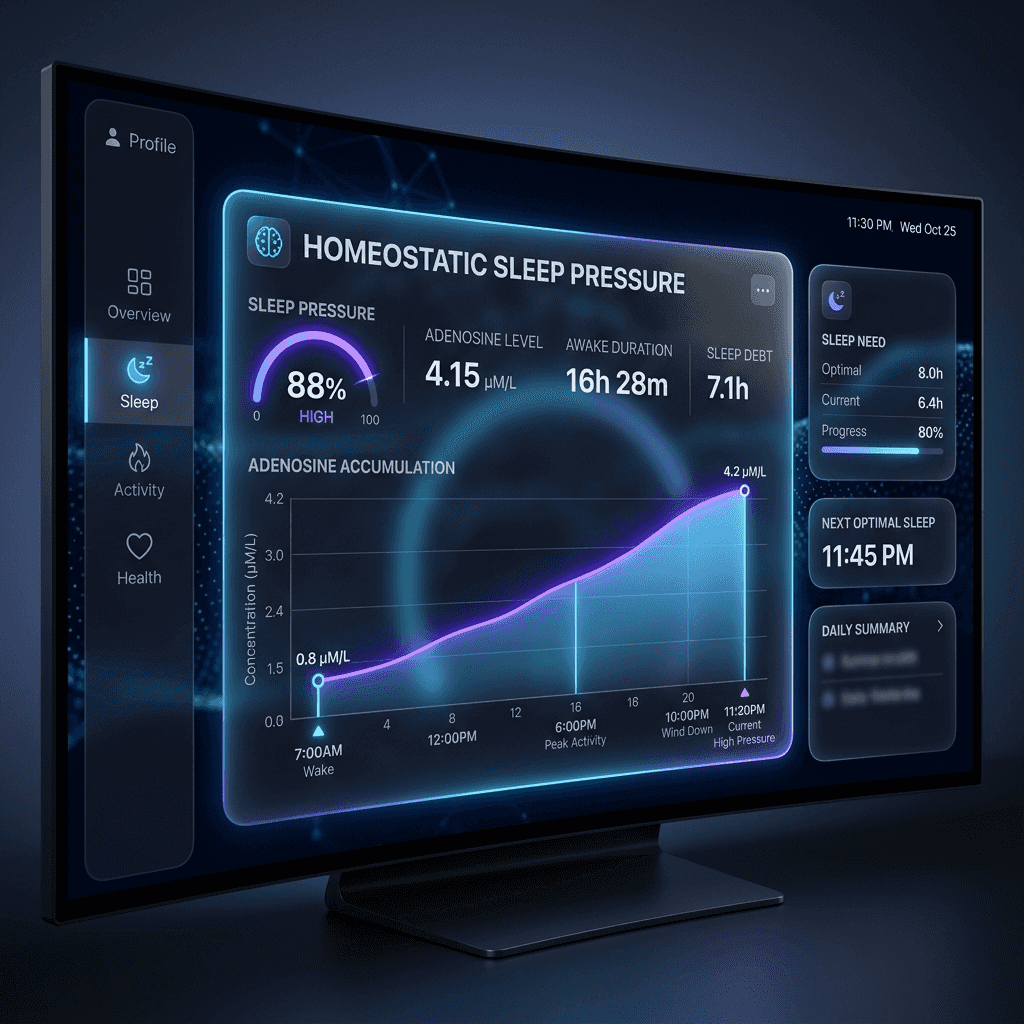
Cognitive shuffling actively supports this neurochemical transition. When we ruminate, we stimulate the release of dopamine and norepinephrine, which keeps the arousal networks active and counteracts GABAergic suppression. By focusing the mind on random, neutral visual images, we prevent the trigger of these alert-state neuromodulators. Since the visualized objects (e.g., *envelope*, *leaf*, *saucer*) carry zero emotional charge, the amygdala remains quiet. This allows GABA and adenosine to accumulate at their target receptors without interference, facilitating a rapid, chemically stable transition into theta-wave N1 sleep.
Cognitive Shuffling for Specific Clinical Populations
While originally developed as a tool for primary insomnia, Serial Diverse Imagining has shown significant efficacy in clinical populations characterized by high hyperarousal. For individuals with Generalized Anxiety Disorder (GAD) or Post-Traumatic Stress Disorder (PTSD), the bedroom environment often triggers severe threat-scanning loops. Their DMN is hyper-vigilant, actively searching for potential dangers. Standard relaxation techniques that require passive meditation can sometimes feel threatening, as the quiet mind allows intrusive thoughts to surface. SDI provides a structured yet neutral focal point, actively crowding out these intrusive thoughts and offering a safe, non-threatening alternative for the prefrontal cortex.
Similarly, individuals with Attention-Deficit/Hyperactivity Disorder (ADHD) often struggle with bedtime sleep onset latency due to a lack of resting state cognitive stimulation. Their brains require a baseline of novelty or activity to remain engaged, and a dark, quiet room can trigger mental restlessness. Cognitive shuffling provides the perfect level of low-effort novelty. The constant progression of random words and micro-images satisfies the ADHD brain's need for stimulus without engaging its goal-oriented, executive planning loops. This low-stress cognitive load allows their brainwaves to slow down naturally, reducing overall sleep onset latency.
Cognitive Shuffling App Integrations and Smart Sleepwear
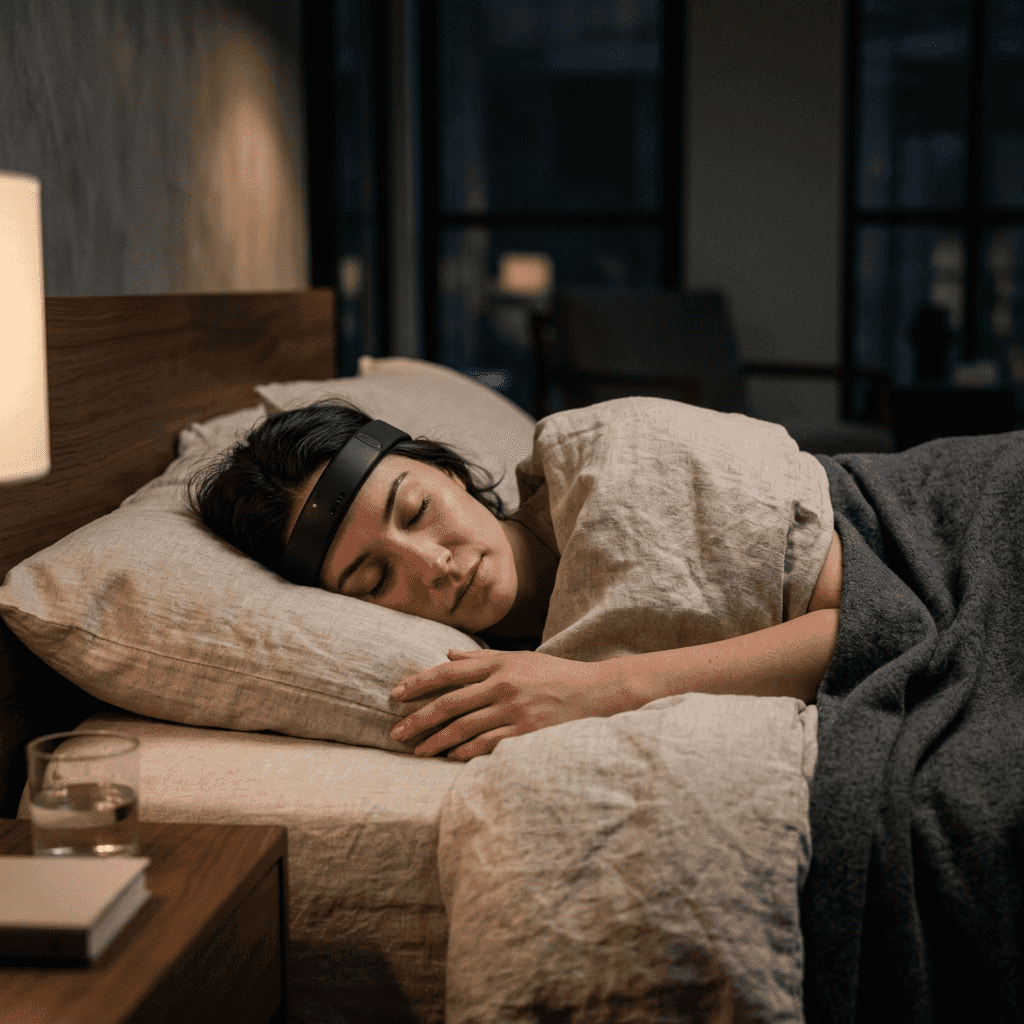
As consumer sleep technology continues to mature, we are seeing the integration of Serial Diverse Imagining protocols directly into smart sleepwear and auditory sleep masks. For example, specialized sleep-rated headphones (like Kokoon or Philips Sleep Analyzer) do not just play passive sounds; they use integrated biosensors to detect exactly when you cross the boundary from wakefulness into N1 sleep. Once the sensor registers the shift in brainwave activity or heart rate, the app dynamically stops the word readouts, ensuring you are not disturbed once sleep has commenced.
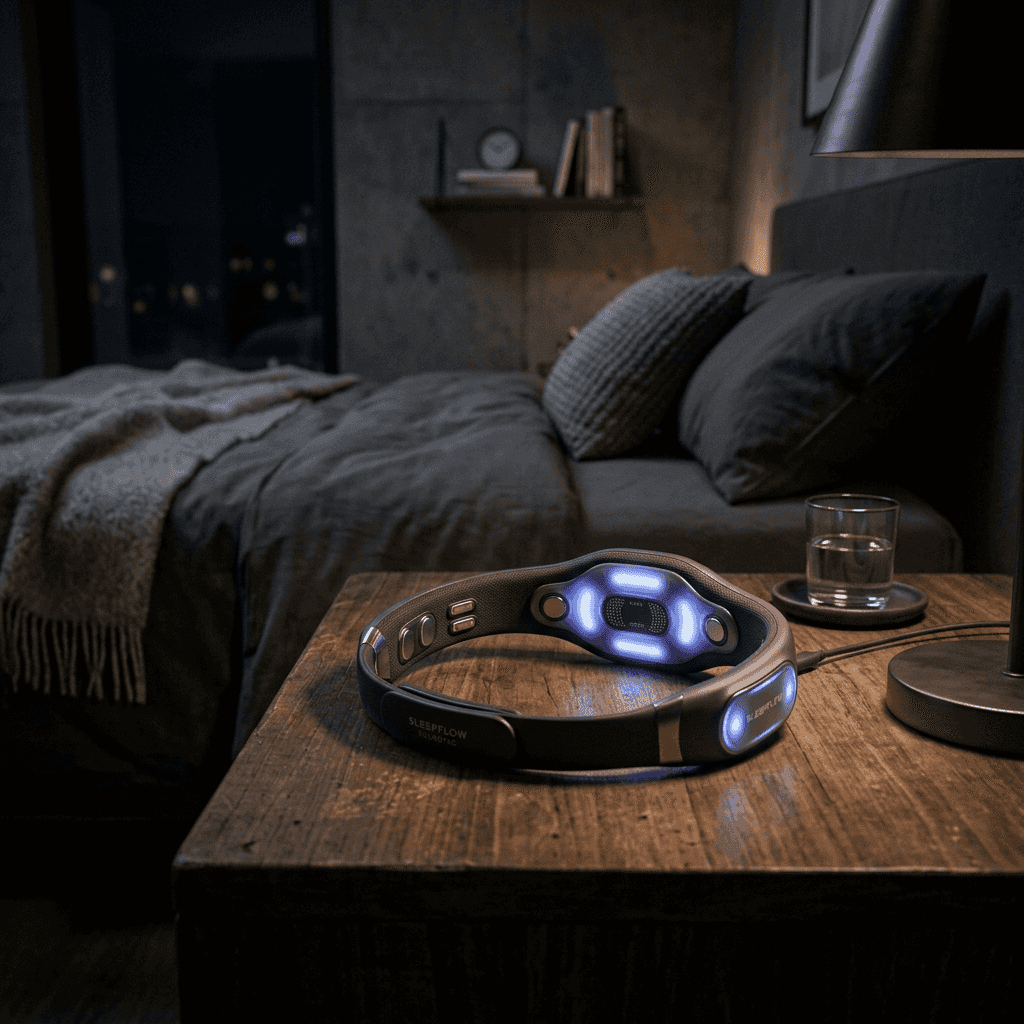
Future concepts also involve visual cognitive shuffling. Smart sleep masks equipped with low-intensity, color-changing LEDs can project faint, abstract shapes onto your eyelids at irregular intervals. This visual stimulation is designed to induce the same visual micro-hallucinations that occur during hypnagogia, providing a non-photic trigger for the sleep-onset gate. By combining auditory word readouts with subtle visual patterns, these devices offer a multi-sensory closed-loop approach to cognitive redirection, ensuring rapid sleep onset for even the most hyperaroused minds.
Practical Troubleshooting: Overcoming Visualization Barriers
A common barrier to practicing cognitive shuffling is **aphantasia**—the inability to create voluntary mental images. Approximately 2% to 3% of the population cannot visualize a "banana" or "bicycle" when their eyes are closed. If you suffer from aphantasia, you can still practice cognitive shuffling by focusing on semantic properties or auditory memories. Instead of trying to "see" a banana, focus on describing the concept of a banana to yourself: "Yellow fruit, sweet taste, peels from the top." Alternatively, repeat the word silently in different pitches or imagine the sound of the word, which blocks DMN activity just as effectively.
Another common issue is frustration when you cannot think of a word starting with a specific letter (like "X" or "Z"). If you get stuck, simply skip the letter. The goal of the cognitive shuffle is relaxation, not academic precision. If a letter causes you to strain or feel frustrated, it is triggering your arousal network. Skip it instantly, choose another letter, or switch to random word association.
Peer-Reviewed Clinical Validations & Extended Deeper Reading:
- Serial Diverse Imagining (SDI) Proposal: Beaudoin (2013). "The Somnolent Mind: The cognitive-behavioral therapy of sleep onset and maintenance insomnia". Simon Fraser University. Outlines the cognitive model behind SDI and how random imagery tricks the thalamus to promote sleep. Read SDI Publication
- Hypnagogic State & Neuroplasticity: Stickgold et al. (2000). "Visual hypnagogic imagery: Dream sleep memory consolidation". Science. Explores how sleep onset imagery plays a fundamental role in sensory offloading and cortical relaxation. Read Hypnagogia Study
- Bedtime Arousal & Thalamocortical Loop: Spielman et al. (1987). "A behavioral perspective on insomnia treatment". Psychiatric Clinics of North America. Details how cognitive hyperarousal blocks sleep onset by keeping the thalamic gate open. Read Insomnia Study