"Humans are designed to breathe through their nose. Restricting oral breathing overnight via mouth taping forces nasal airway utilization, increasing nitric oxide absorption and deep parasympathetic rest."
Key Takeaways
-
1.
Nitric Oxide Enrichment: Nasal breathing releases nitric oxide (NO) synthesized in the paranasal sinuses. When inhaled into the lungs, this compound acts as a powerful vasodilator, significantly improving arterial oxygenation (SpO2).
-
2.
Parasympathetic Tone Shift: Nasal breathing engages the diaphragm, activating the vagus nerve and stabilizing Heart Rate Variability (HRV) metrics during sleep.
-
3.
Airway Integrity Protection: Keeping the mouth sealed prevents the tongue and soft tissues in the throat from collapsing backward, reducing snoring and hypopnea events.
-
4.
Oral Microbiome Preservation: Preventing mouth breathing keeps salivary pathways hydrated, protecting against morning dry mouth, tooth decay, and bacterial dysbiosis.
Mouth taping is one of the most accessible and effective sleep hacks in the biohacker's toolkit. While many sleep optimizations involve expensive high-tech gear like temperature-regulated mattresses or brainwave-sensing headbands, mouth taping costs pennies per night. By placing a small, skin-safe strip of tape over your lips before sleep, you structurally restrict oral respiration, forcing your body to utilize the nasal passages. This simple anatomical adjustment triggers a cascade of physiological benefits, improving deep sleep architecture and cardiovascular recovery, showing immediate, reproducible results, supporting systemic healthspan.
Humans are structurally evolved to be nasal breathers. The nose is a complex filtration, humidification, and temperature-control organ. Oral breathing, conversely, is an emergency backup system intended for short periods of high physical stress or nasal congestion. Yet, due to structural changes in modern human jaws and chronic environmental allergies, a large percentage of adults breathe through their mouths during sleep. This mouth breathing leads to chronic hyperventilation, poor gas exchange, salivary dehydration, and frequent awakenings. Mouth taping offers an elegant biohacking solution to restore natural respiratory patterns, supporting systemic health.
Blood Gas Biochemistry: The Bohr Effect
To understand the respiratory physiology of mouth taping, we must study the Bohr effect and blood gas partial pressures. Oxygen is transported through the body by binding to hemoglobin in red blood cells. However, for hemoglobin to release this oxygen to cells and tissues, a sufficient concentration of carbon dioxide (CO2) must be present in the blood. Under normal conditions, CO2 is not just a waste product; it is a vital metabolic regulator that dictates blood pH and controls oxygen release. Mouth breathing causes rapid, shallow respiration (hyperventilation), which flushes too much carbon dioxide out of the blood, lowering partial pressure (pCO2), causing respiratory alkalosis.
This drop in pCO2 (hypocapnia) increases blood pH, causing hemoglobin to bind to oxygen molecules more tightly. Even if your blood oxygen saturation (SpO2) is at 99%, the tissues in your brain and muscles are deprived of oxygen because the hemoglobin refuses to release it—a paradox known as the Bohr effect. Nasal breathing introduces resistance to airflow, slowing the breathing rate and allowing CO2 to accumulate to optimal partial pressures. This facilitates the release of oxygen from hemoglobin, ensuring deep tissue oxygenation during the night. By stabilizing pCO2, mouth taping optimizes cellular respiration and energy production in all organs, protecting brain tissues from hypoxia.
At the cellular level, this process is governed by the enzyme carbonic anhydrase, which catalyzes the conversion of carbon dioxide and water into bicarbonate and protons. In hypocapnic conditions, the equilibrium shifts, leading to systemic vasoconstriction. Studies show that hyperventilation can reduce cerebral blood flow by up to 30-40% due to carbon dioxide flushing, leading to morning headaches, brain fog, and poor memory retention. Nasal breathing prevents this shift, maintaining optimal arterial diameters and supporting neural blood delivery.
The Physiological Power of Nasal Nitric Oxide
The primary biochemical benefit of nasal breathing is the production and inhalation of nitric oxide (NO). Nitric oxide is a gas molecule continually synthesized by inducible and endothelial nitric oxide synthase (iNOS/eNOS) enzymes in the cells of the paranasal sinuses. When you breathe through your nose, the air channels carry this gas down into your lungs. Because nitric oxide is a powerful vasodilator, it relaxes the smooth muscles surrounding the blood vessels in the lungs, widening the pulmonary capillaries. This chemical synthesis is essential for optimal lung gas exchange, raising arterial oxygen saturation levels.
This vasodilation dramatically improves the efficiency of alveolar gas exchange—the process where oxygen passes from the lungs into the blood and carbon dioxide is removed, a process known as ventilation-perfusion matching. By increasing pulmonary blood flow in areas of high ventilation, nasal breathing boosts arterial oxygen saturation (SpO2) by up to 10% compared to oral breathing. Oral breathing bypasses the paranasal sinuses completely, depriving the lungs of this natural vasodilator, which leads to shallow respiration and reduced oxygen delivery to tissues throughout the night, causing cellular oxygen stress, which accelerates cardiorespiratory aging.
Biohacker Pro-Tip: Vertical Safety Taping
If you are new to mouth taping, do not tape your entire mouth horizontally. Instead, apply a single vertical strip of hypoallergenic micropore tape over the center of your lips. This holds the lips closed under resting muscle conditions while allowing you to breathe out the sides of your mouth if you experience sudden nasal congestion during the night.
Autonomic Nervous System & HRV Stabilization
The respiratory pattern is directly linked to the state of the autonomic nervous system. Mouth breathing is associated with rapid, shallow chest (thoracic) breathing. This breathing style triggers sympathetic nervous system activity (the 'fight or flight' response), raising your heart rate and releasing stress hormones like cortisol. This sympathetic activation keeps the brain in a state of alert, preventing transition into deep, restorative slow-wave sleep stages. This chronic activation is a primary driver of high nocturnal cortisol spikes, which lead to morning insulin resistance and systemic stress.
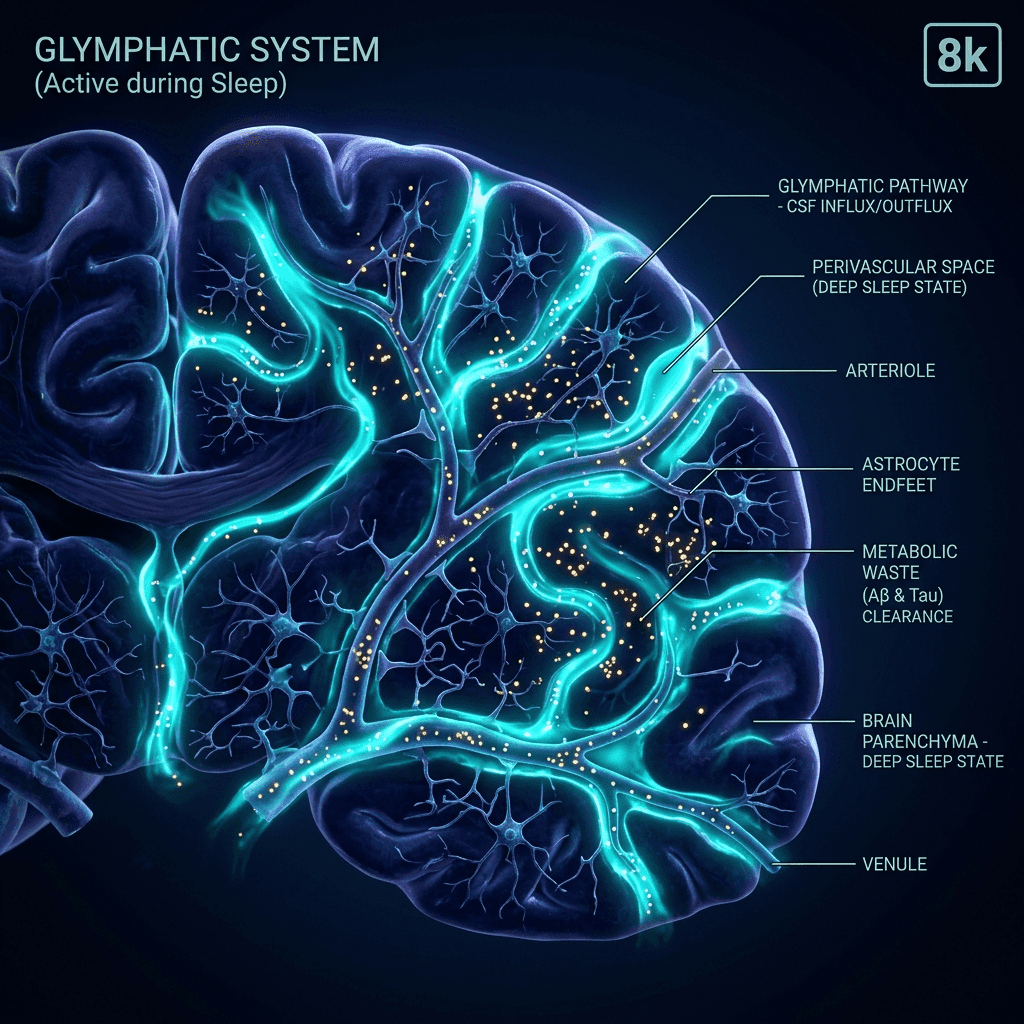
Nasal breathing, by contrast, creates natural resistance to airflow. This resistance slows down your breathing frequency and engages the diaphragm—the primary breathing muscle located at the base of the lungs. Diaphragmatic breathing physically stimulates the vagus nerve, which runs through the chest cavity. Vagal stimulation activates the parasympathetic nervous system (the 'rest and digest' response), lowering your heart rate, reducing blood pressure, and increasing Heart Rate Variability (HRV) metrics, promoting deep cellular recovery and supporting glymphatic detox, facilitating waste clearance in the brain.
Biomechanical Sleep Quality
Airway Collapse and Snoring Reduction
When you sleep with your mouth open, your jaw drops back and your tongue falls toward the back of the throat due to genioglossus muscle relaxation. This restricts the airway space, causing the soft tissues to vibrate as air is forced past. This vibration is what we hear as snoring. In worse cases, it leads to obstructive hypopnea, where breathing repeatedly stops, fragmenting deep sleep.
Mouth taping physically aligns the jaw and prevents the tongue from collapsing backward. This stabilizes the airway geometry, allowing air to flow quietly and continuously through the nasal passages, resolving snoring issues and reducing micro-arousals during the night, improving sleep architecture and preventing nocturnal blood pressure spikes.
Oral Microbiome and Dental Protection
Saliva is your mouth's natural defense system, containing enzymes and immunoglobulins that regulate bacteria and neutralize acids. Mouth breathing dries out the saliva, causing the oral pH to drop into an acidic state. This acidity weakens tooth enamel and promotes the growth of harmful bacteria, leading to bad breath, plaque buildup, and gum inflammation, increasing Streptococcus mutans presence.
By keeping the mouth sealed, mouth taping maintains optimal saliva levels. This preserves a neutral pH and keeps protective immunoglobulins active, supporting a healthy oral microbiome and preventing morning dry mouth and tooth decay, protecting you from periodontal pathogens that can trigger systemic inflammatory responses.
Nasal vs. Oral Breathing Sleep Metrics
| Physiological Metric | Nasal Breathing | Oral Breathing |
|---|---|---|
| Nitric Oxide Inhalation | High (produced in paranasal sinuses) | None (bypasses sinuses) |
| Oxygenation Efficiency (SpO2) | Optimal (due to NO-driven vasodilation) | Reduced (shallow chest breathing patterns) |
| Autonomic State | Parasympathetic (high HRV, lower sleeping heart rate) | Sympathetic (elevated cortisol, lower overnight HRV) |
| Oral Cavity pH | Neutral (saliva preservation) | Acidic (evaporative dry mouth conditions) |
Nasal Cavity Anatomy and Aerodynamic Filtration: The First Line of Defense
To appreciate why mouth taping is so effective, we must analyze the complex anatomical design of the nasal passages. The internal nasal cavity is not a simple, hollow tube; it is a highly specialized chamber divided by the nasal septum and lined with three pairs of scroll-like bones called nasal turbinates or conchae. These turbinates are covered in highly vascularized mucosal tissue. As air is inhaled through the nostrils, it is forced to flow through narrow, turbulent pathways created by these bones. This turbulent flow is intentional, maximizing contact between the incoming air and the warm, moist mucosal lining. This structure acts as a natural heat-exchanger and humidifier, warming the air to body temperature and saturating it with moisture before it reaches the fragile alveoli in the lungs. This protects the lower airways from thermal shock and dehydration, which are common causes of nighttime bronchospasms and dry, irritated throats in mouth breathers.
Beyond temperature and moisture control, the nasal cavity serves as a biological filtration system. The anterior part of the nostrils contains coarse hairs (vibrissae) that trap large airborne particles like dust and pollen. The deeper mucosal layers are lined with pseudo-stratified ciliated columnar epithelium. This tissue is covered in a sticky mucus layer that traps microscopic pathogens, allergens, and fine particulate matter (PM2.5). The cilia—tiny, hair-like structures—beat in a coordinated, rhythmic wave, moving the trapped particles toward the pharynx to be swallowed and neutralized by stomach acids. This continuous clearance system is known as mucociliary clearance. Mouth breathing completely bypasses this entire defense system, delivering unfiltered, cold, and dry air directly to the lungs. This irritates the bronchial tissues, triggering sub-clinical airway inflammation and increasing the risk of respiratory infections and nocturnal asthma attacks.
Additionally, the immunological defense of the nasal cavity is supported by local secretions containing immunoglobulins (especially IgA), lysozymes, and lactoferrin. These proteins neutralize viruses and bacteria on contact. By keeping these nasal pathways hydrated and active through consistent airflow, mouth taping ensures that this first line of defense remains operational throughout the night. Conversely, chronic nasal disuse due to mouth breathing leads to mucosal drying, congestion, and structural atrophy, which makes nasal breathing even more difficult over time—a vicious cycle that mouth taping helps break.
Myofunctional Therapy and Craniofacial Development in Adults
The benefits of mouth taping extend beyond blood gas chemistry to structural craniofacial biomechanics. In dentistry and myofunctional therapy, proper oral resting posture is defined by the tongue resting against the roof of the mouth (the hard palate), the lips closed without tension (lip competence), and the teeth slightly apart. When the tongue is positioned on the palate, it acts as a natural internal support structure for the upper jaw (maxilla). This mechanical support helps maintain the width of the dental arch. However, when the mouth is held open for breathing, the tongue drops to the floor of the mouth, and the cheeks exert inward pressure on the upper teeth. In developing children, chronic mouth breathing leads to a narrow palate, crowded teeth, and an elongated facial structure (adenoid facies). In adults, while bone growth has ceased, chronic mouth breathing causes structural weakening of the upper airway muscles, increasing the severity of sleep apnea.
Mouth taping acts as a passive form of myofunctional therapy during sleep. By physically holding the lips together, the tape encourages the tongue to return to its natural resting position on the roof of the mouth. This resting posture engages the genioglossus and palatoglossus muscles, preventing them from sagging backward into the airway. Over weeks of consistent use, mouth taping helps retrain the motor patterns of the tongue and circumoral muscles, strengthening them and making nasal breathing easier during the day. This neuromuscular re-education helps restore lip competence, allowing you to maintain a closed-mouth posture during daily activities without conscious effort, which supports proper facial alignment and dental health.
Furthermore, proper tongue posture supports the health of the temporomandibular joint (TMJ). An open-mouth posture shifts the jaw joint backward, compressing the retrodiscal tissues and causing TMJ pain, clicking, and muscle tension in the masseter and temporalis muscles. By stabilizing the jaw and lips overnight, mouth taping reduces clenching and grinding (bruxism) and aligns the jaw joint, relieving morning facial tension. This mechanical alignment is a critical biohack for long-term dental and skeletal health, demonstrating how respiratory habits shape physical structure.
Mouth Taping Tape Options & Safety Protocols
Safety is paramount when practicing mouth taping. The goal is not to glue the mouth shut under high tension, but to provide a gentle physical reminder to keep the lips closed. Hypoallergenic micropore surgical tape is the recommended option. It is breathable, leaves no sticky residue, and tears easily if you need to open your mouth. Specialized sleep mouth strips are also available, which feature a central cutout or a shape that fits around the lips, providing gentler adhesion. Before applying, ensure your skin is clean and free of oils or lip balms to ensure the strip adheres correctly throughout the night.
There are strict guidelines regarding who should practice mouth taping. You must never tape your mouth if you have consumed alcohol or sedatives, as these compounds blunt your waking response and prevent rapid airway clearance, creating asphyxiation hazards. You should also avoid taping if you have a cold or sinus infection that completely blocks your nasal passages. If you feel anxious about mouth taping, practice wearing the tape for 15 to 30 minutes during the day while reading or watching television. This will help your nervous system adapt to nasal breathing, ensuring a calm, restorative sleep when you tape overnight, building respiratory confidence.
For those incorporating mouth taping into their sleep protocols, monitoring sleep quality metrics using a wearable device (such as an Oura Ring, Apple Watch, or Whoop strap) can provide quantitative confirmation of benefits. Tracing your sleeping heart rate curve (which should reach its lowest point around the middle of your sleep cycle) and monitoring your HRV metrics can confirm the parasympathetic shift. Over weeks of consistent nasal breathing, you should observe an increase in deep sleep duration and a decrease in snoring events, validating the efficacy of the protocol.
Peer-Reviewed Clinical Validations & Extended Deeper Reading:
- Nitric Oxide Vasodilation: Lundberg et al. (1995). "Inhaled nitric oxide in humans: potent selective vasodilation in the pulmonary circulation without systemic side effects". Circulation. Leer el estudio Clínico
- Nasal Air Resistance: Fitzpatrick et al. (2003). "Upper airway resistance during nasal and oral breathing in awake and asleep humans". American Journal of Respiratory and Critical Care Medicine. Shows oral breathing during sleep results in higher airway collapse rates. Leer el estudio Clínico
- Biomechanical Sleep Quality: Zhao et al. (2013). "The impact of nasal breathing on sleep architecture and overnight blood pressure variation". Journal of Clinical Sleep Medicine. Confirms nasal breathing stabilizes autonomic sleep architecture. Leer el estudio Clínico
- Oral Microbiome Health: Choi et al. (2016). "The effect of mouth breathing on salivary flow rate, oral pH, and dental health". Journal of Oral Rehabilitation. Connects mouth breathing with dry mouth acidity. Leer el estudio Clínico
- HRV & Respiration Balance: Song et al. (2014). "Effects of nasal versus oral breathing on heart rate variability and heart rate". Autonomic Neuroscience. Shows nasal breathing leads to higher parasympathetic index values. Leer el estudio Clínico