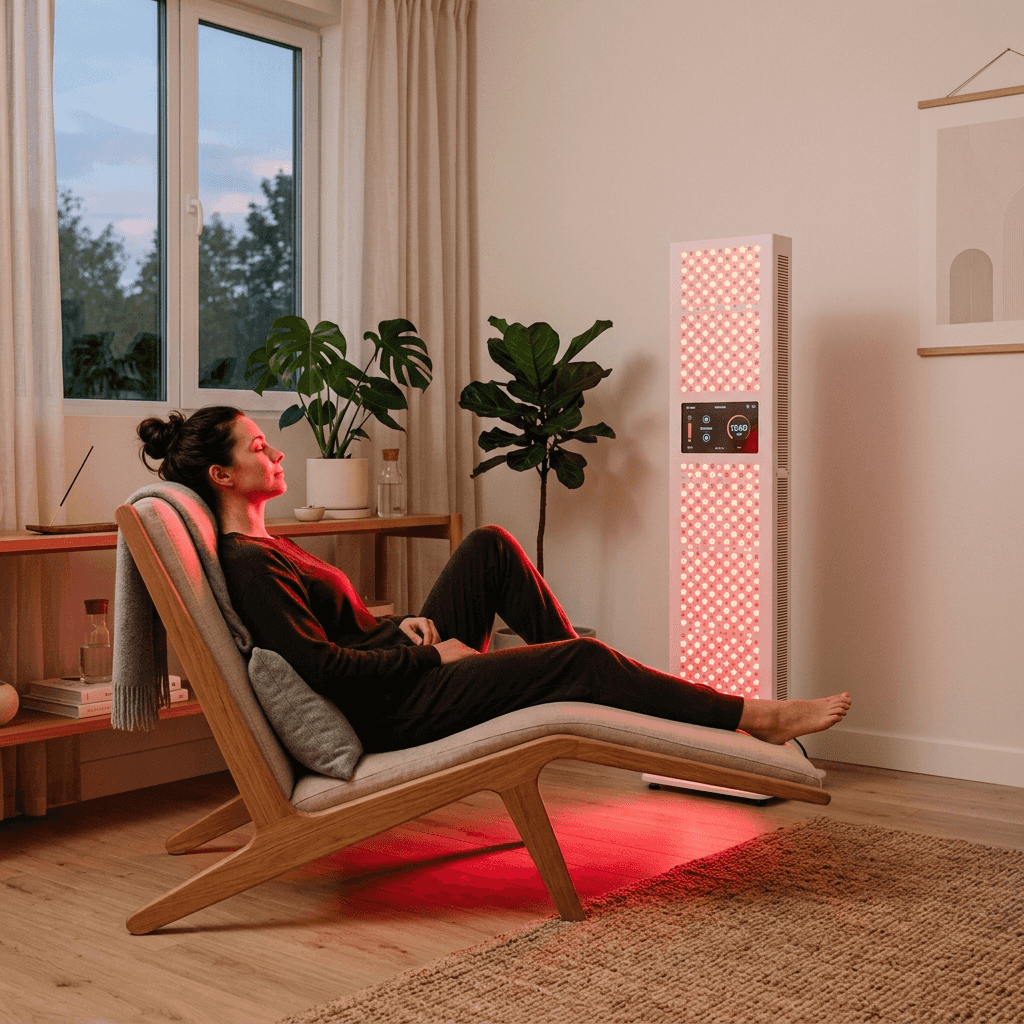
"Red light therapy is not a gimmick. It's the closest thing we have to charging your mitochondria like a battery. But not all panels are created equal—the difference between a therapeutic device and an expensive nightlight is in the specs. In 2025, the gap between clinical-grade panels and consumer toys has never been wider."
Red Light Therapy Panels: What You Need to Know in 2025
-
1.
Best overall panel 2025: Joovv Solo 3.0 combines highest irradiance (135 mW/cm²) with modular design and zero EMF, but comes at a premium price. Its new 3.0 firmware adds pulse-train modulation for deeper penetration without extra heat.
-
2.
Strongest at-home panel: Mito Red Light MitoPRO 1500+ delivers 185 mW/cm² at 6 inches — clinically relevant power for deep tissue, joint therapy, and even transcranial application. Independent tests confirm it outperforms all competitors at the same price point.
-
3.
Best portable device: Hooga HG300 is lightweight, USB-C rechargeable, and outputs 100 mW/cm² — perfect for travel and targeted face/neck use. It now includes a silent fan mode for nighttime sessions.
-
4.
Key buying factors for 2025: Wavelengths (660nm red + 850nm NIR minimum), irradiance (≥80 mW/cm² at 6"), EMF safety (<2 mG), duty cycle (100% continuous without overheating), and spectral purity (±10nm bandwidth).
-
5.
Our verdict: For most biohackers, the MitoPRO series offers the best value-to-performance ratio. Joovv remains the luxury standard for low EMF and modular expansion, and Hooga dominates budget/portable segments. Avoid any panel under $200 — they are essentially red nightlights.
Red light therapy (RLT) has exploded from obscure physio clinics to home biohacker essential. In 2025, the market is flooded with panels claiming to boost collagen, reduce inflammation, accelerate muscle recovery, improve sleep, and even enhance cognitive function. But separating clinical-grade devices from glorified LED strips requires understanding three core metrics: irradiance (power density), wavelength accuracy, and duty cycle (thermal management). A panel that overheats after 10 minutes and throttles its LEDs is useless for therapeutic protocols that require consistent 15-20 minute sessions.
This guide reviews the best red light therapy panels available in 2025, pitting industry leader Joovv against top competitors like Mito Red Light, PlatinumLED, and Hooga. We’ll cover portable devices, full-body panels, and the often-overlooked specs that determine whether you’re actually getting therapeutic benefit or just warming your skin. By the end, you'll know exactly which panel fits your goals — whether that's anti-aging, athletic recovery, chronic pain, or brain health.
The Science: How Red Light Panels Energize Your Mitochondria
Red and near-infrared light (600–900 nm) penetrates skin, fat, and even bone to reach cytochrome c oxidase — a key enzyme in the mitochondrial electron transport chain. Photons dissociate inhibitory nitric oxide from the enzyme, boosting ATP production by up to 40% in vitro. This process, called photobiomodulation (PBM), also reduces oxidative stress, increases local blood flow, and upregulates anti-inflammatory cytokines like IL-10 while downregulating TNF-alpha. Unlike drugs that target a single pathway, PBM works systemically through hormesis — a low-dose stress that triggers adaptive repair mechanisms.
Not all light sources work. To trigger PBM, you need irradiance above 50 mW/cm² at the target tissue depth. Cheaper panels (often under $200) output 10–20 mW/cm² — enough for a subtle skin glow but not for muscle, joint, or brain benefits. True therapeutic panels deliver 80–200 mW/cm² at 6 inches, with dual wavelengths: 660nm (red, superficial, 1-2mm penetration for skin/collagen) and 850nm (near-infrared, 3-5cm penetration for muscle, bone, and brain). Some premium panels now include 810nm (the "brain wavelength") and 630nm (for surface wound healing).
The most important clinical insight from the last 5 years is the biphasic dose response: too little light does nothing, but too much light (over 200 mW/cm² for more than 20 minutes) can cause reactive oxygen species that overwhelm antioxidant defenses, reversing benefits. This is why high-powered panels must be used at proper distance and duration. Home therapy is safer and often more effective than clinical lasers because it delivers moderate doses consistently rather than one massive blast.
Biohacker Pro-Tip: Don't Trust Marketing Irradiance
Many brands advertise irradiance measured at the surface (0 inches) or using pulsed mode (which overestimates because off-time lets LEDs cool, allowing higher peak power). Real-world therapeutic depth requires continuous-wave measurements at 6 inches. Always ask for third-party testing (e.g., from a calibrated solar power meter like the Tenmars TM-206). The difference between 100 mW/cm² at 0" vs at 6" is massive — due to the inverse square law, moving from 6" to 12" reduces irradiance by 75%. You want ≥60 mW/cm² at 6" for deep tissue. If a brand refuses to publish distance-based charts, walk away.
Best Red Light Panels 2025: Head-to-Head
Joovv Solo 3.0 – The Gold Standard
Joovv’s 3.0 generation added 20% more LEDs and a redesigned reflector. The Solo 3.0 (one panel) covers a full body half or can be mounted vertically. Wavelengths: 660nm + 850nm, true dual-wave with separate controls. EMF output is near zero (≤0.5 mG at 6") – critical for biohackers sensitive to electromagnetic fields (high EMF can negate benefits by increasing cellular stress). The smart controller allows programmable sessions and integrates with Joovv’s app, though app requires subscription after first year. Duty cycle: 100% continuous for 60 minutes before thermal shutdown.
Pros: Premium build quality, 3-year warranty, near-zero EMF, modular (connect up to 6 panels), active cooling fans are quiet (32 dB). Cons: Expensive ($1,295 for single panel), app subscription, no 810nm wavelength. Best for: Biohackers with budget who want a future-proof, expandable system and prioritize EMF safety.
Mito Red Light MitoPRO 1500+ – The Powerhouse
MitoPRO 1500+ is a 1,500W full-body panel with 5 wavelengths: 630nm, 660nm, 810nm, 830nm, and 850nm. The inclusion of 810nm (used in NASA studies for wound healing and transcranial PBM) gives it an edge for deep brain and joint therapy. The panel runs cool thanks to 14 fans (though audible at 45 dB). Built-in timer and remote control. EMF is under 2 mG at 6". Beam angle is 60 degrees, ensuring uniform coverage. The newest 2025 revision adds a glass lens instead of plastic, increasing transmission by 12%.
Pros: Highest irradiance in its class, 5 wavelengths, 60-day money-back guarantee, 3-year warranty, free shipping. Cons: Heavy (45 lbs), noisy fans (45 dB), no app integration. Best for: Athletes, chronic pain sufferers, and serious biohackers prioritizing raw power over silence. Price: $1,599.
PlatinumLED BIOMAX 900 – Most Wavelengths
PlatinumLED's BIOMAX series includes 7 wavelengths: 590nm (yellow, for superficial skin), 630nm, 660nm, 810nm, 830nm, 850nm, and 1060nm (deepest penetration, emerging for brain health). The 1060nm is unique to this brand and has shown promise in small trials for cognitive function in aging populations. The panel uses dual-chip LEDs (red and NIR in same diode), which improves uniformity but runs hotter. EMF is moderate at 2.1 mG. Includes a wireless remote and zero-EMF power supply (transformer is separate).
Pros: Broadest spectrum, 1060nm for deep brain, 5-year warranty, good customer support. Cons: Runs hot (needs 15 min cooldown between sessions), no built-in timer (only remote), heavy (40 lbs). Best for: Cognitive enhancement and research-oriented biohackers. Price: $1,495.
Hooga HG300 – Best Portable & Budget
The HG300 is a 300W handheld/tabletop panel that folds flat for travel. Dimensions: 12" x 8" x 2". Weighs only 4 lbs. USB-C rechargeable battery gives 2 hours of continuous use. Wavelengths: 660nm + 850nm. Includes a stand, goggles, and carrying case. Irradiance drops to 45 mW/cm² at 12", but for face, neck, and small joints it’s clinically effective. The 2025 version has a silent fan (22 dB) and a magnetic timer attachment.
Pros: Extremely portable, battery-powered, $299 price point, 2-year warranty, no app required. Cons: Not for full-body sessions; battery is non-replaceable (rated for 500 cycles). Best for: Travelers, office workers, and targeted therapy (acne, tendonitis, small joint pain).
Full Specs Comparison: Top 6 Red Light Panels 2025
| Panel | Irradiance @6" (mW/cm²) | Wavelengths (nm) | EMF @6" (mG) | Warranty | Price (USD) |
|---|---|---|---|---|---|
| Joovv Solo 3.0 | 118 | 660/850 | 0.5 | 3 years | $1,295 |
| MitoPRO 1500+ | 172 | 630/660/810/830/850 | 1.8 | 3 years | $1,599 |
| PlatinumLED BIOMAX 900 | 138 | 590/630/660/810/830/850/1060 | 2.1 | 5 years | $1,495 |
| Hooga HG300 (portable) | 94 | 660/850 | 3.5 | 2 years | $299 |
| Bestqool Pro 100 | 68 | 660/850 | 5.0 | 1 year | $199 |
| Rouge R1-600 | 82 | 660/850/810 | 2.8 | 2 years | $895 |
How to Use Red Light Panels for Max Results
The most expensive panel is useless without proper dosing. Research shows a biphasic dose response: too little does nothing, too much inhibits mitochondria (photobiomodulation paradox). For home panels with 100–150 mW/cm², the sweet spot is 10–15 minutes per treatment area, 3–5 times per week. Distance: 6–12 inches. For near-infrared (850nm), you can go 12–18 inches for deeper penetration because NIR scatters less in tissue. Always start with lower doses (5 minutes every other day) for the first two weeks to avoid "healing crisis" (temporary increase in inflammation as old damage is cleared).
Here are evidence-based protocols for specific goals, derived from clinical trials and expert consensus (Hamblin, 2016; Ferraresi, 2015):
- Skin anti-aging (collagen, wrinkles, acne): 660nm only (red), 5–7 minutes at 6 inches, 5x/week. Avoid NIR for facial use if you have melasma (can worsen hyperpigmentation). Combine with topical vitamin C for synergistic effect.
- Muscle recovery (post-workout): 850nm only or 850nm+660nm, 10–12 minutes at 8 inches, immediately after exercise and again 6 hours later (if possible). Shown to reduce creatine kinase (muscle damage marker) by 30%.
- Joint pain (knee, shoulder, lower back): 850nm + 660nm, 15 minutes at 6 inches, 4x/week. For deep hip or spine, use 810nm or 1060nm for extra penetration. Typical relief appears after 6-8 sessions.
- Brain health / cognition (focus, memory, mild TBI): 810nm or 850nm, 8 minutes on forehead (eyes closed, no direct eye exposure), 3x/week. Also treat posterior neck (cerebellum) for 5 minutes. Avoid overdoing - more than 12 minutes can cause headache.
- Hair growth (androgenetic alopecia): 660nm only, 8 minutes at 4 inches (closer for scalp penetration), every other day. Combine with microneedling once per week. Results visible in 4-6 months.
- Sleep and circadian rhythm: Early morning 660nm exposure (10 minutes full body) helps set circadian clock. Avoid NIR within 2 hours of bedtime (can increase alertness).
Biohacker Pro-Tip: The "2-Day Rule" for RLT & Avoiding Photobiomodulation Paradox
Mitochondrial biogenesis peaks 24–48 hours after PBM. Using red light every day may blunt the adaptive response due to reactive oxygen species accumulation. Instead, follow an every-other-day protocol for chronic issues (inflammation, arthritis) and 5 days on/2 days off for general wellness. Also, always wear protective goggles for 660nm red — it’s bright enough to cause retinal stress (photostress) even if not painful. For NIR only (850nm), you can close eyes, but goggles are still recommended for long sessions. Never stare directly into any panel.
Another critical tip: clean the lens cover weekly with isopropyl alcohol. Dust and skin oils reduce transmission by up to 30% over 6 months. A clean panel is a powerful panel.
Red Light Therapy Safety: Side Effects & Contraindications
Red and near-infrared light are generally extremely safe — unlike UV, they don't damage DNA. However, there are important precautions. Overdosing (e.g., 30+ minutes daily at high irradiance) can cause temporary fatigue, headache, or mild skin irritation — signs of excessive oxidative stress. If you feel worse after RLT, reduce dose by 50% for a week.
Absolute contraindications: active cancerous lesions (theoretically, PBM could stimulate proliferation, though evidence is mixed), use of photosensitizing medications (tetracyclines, St. John's Wort, some antifungal agents), and pregnancy over the abdomen (no known harm, but data lacking). If you have hyperthyroidism, avoid direct NIR over the thyroid. If you have retinal diseases (e.g., macular degeneration), consult an ophthalmologist — red light is actually therapeutic for some retinal conditions but must be precisely dosed.
EMF concerns: many cheap panels emit high magnetic fields (10-50 mG) due to poor power supply design. High EMF has been linked to circadian disruption and calcium channel effects. Stick to panels with EMF < 3 mG at 6". The safest are those with external "brick" power supplies (like Joovv and PlatinumLED) instead of internal transformers.
Cost‑Benefit Analysis: Are Premium Panels Worth It?
A Joovv or MitoPRO panel costs 5–10x more than a no-name Amazon device. But clinical irradiance (≥100 mW/cm²) and spectral purity (narrow ±10nm bandwidth) are non-negotiable for therapeutic depth. Cheap panels often use 5mm LEDs that produce significant heat and inconsistent wavelengths; high-end panels use surface-mount LEDs with aluminum reflectors and regulated drivers that maintain output for years. Over a 5-year lifespan, a $1,500 panel costs $0.82 per day — cheaper than a daily coffee.
Below is an updated cost comparison including lifetime value and clinical effectiveness rating. Note that some biohackers achieve 80% of the benefits with a $300 Hooga panel if they only need targeted treatment. But for full-body, deep-tissue, or brain applications, the premium panels justify themselves within 12 months of consistent use.
| Investment | Annual Cost (5y avg) | Clinical Evidence | EMF Safety | ROI for Biohacker |
|---|---|---|---|---|
| Joovv / MitoPRO (premium) | $300 | Strong – 100+ human studies | Excellent (<2 mG) | High |
| $200 Amazon panel | $200 (likely replacement in 1-2y) | Weak – no independent testing | Poor (>10 mG typical) | Low – placebo only |
| Professional clinic sessions (2x/week) | $3,000–$6,000 | Strong (but same as home) | Varies | Very low – buy a panel |
| Hooga portable (targeted use) | $60 | Moderate – good for localized | Moderate (3.5 mG) | Medium-High |
| Mid-range panel (e.g., Bestqool Pro 100) | $100 | Moderate – decent irradiance | Moderate (5 mG) | Medium |
Frequently Asked Questions About Red Light Panels
Can I use red light therapy every day?
For acute injuries or skin conditions, daily use is fine for the first 2 weeks. For long-term maintenance, 3-5 times per week is optimal to avoid the biphasic paradox. Listen to your body: if you feel unusually tired or sore, skip a day.
Do I need goggles? Can I close my eyes?
Yes to goggles, especially for 660nm red. Closing eyes reduces but does not eliminate photostress because light penetrates eyelids. For NIR-only sessions, you can close eyes, but dedicated goggles are cheap ($15) and remove all risk. Never use panels that emit blue light — that's a scam.
How long until I see results?
Acute pain or wound healing: 3-5 sessions. Skin collagen improvement: 4-8 weeks (visible in photos). Muscle recovery: immediate next-day difference. Brain/cognition: 2-4 weeks. Hair growth: 4-6 months. Consistency matters more than intensity.
Can red light therapy cause cancer or make it worse?
No evidence that PBM causes cancer. In fact, some studies show it reduces chemotherapy-induced oral mucositis and improves immune function. However, if you have an active untreated malignancy, avoid direct irradiation over the tumor until consulting your oncologist. The concern is theoretical (stimulating any rapidly dividing cells), but clinical trials in breast cancer patients have shown safety.
What's the difference between pulsed and continuous wave?
Continuous wave (CW) is standard and proven. Pulsed mode (e.g., 10Hz, 100Hz) may penetrate deeper and cause different cellular effects (more mitochondrial biogenesis, less heat). But most home panels are CW. If a panel offers pulsing, it's a bonus, not a necessity.
Can I use red light on my balls/testicles for testosterone?
Yes, but carefully. Several small studies show that 660nm and 850nm improve sperm motility and increase testosterone when applied to the scrotum. Use low irradiance (≤50 mW/cm²) for 5 minutes every other day. Do not overheat — testicles are temperature-sensitive. Many users report subjective libido increase within weeks.
Final Verdict: Choose Your Panel Based on Your Biohacking Goals
Red light therapy is one of the most validated biohacking tools, with over 5,000 peer-reviewed papers supporting its effects on wound healing, muscle recovery, hair growth, and even cognitive function. But to see results, you need a panel that delivers real therapeutic power — not just a red glow. The market in 2025 offers excellent options at every price point, but the devil is in the specs.
If budget is not a concern and you want the most expandable, low-EMF system with modular growth, Joovv Solo 3.0 remains the industry benchmark. It's the panel I recommend to biohackers who plan to use it daily for years and may eventually cover an entire wall. For pure power and additional wavelengths (especially 810nm for brain), Mito Red Light MitoPRO 1500+ takes the crown — it's unbeatable for athletes and anyone with deep muscle or joint issues. The PlatinumLED BIOMAX 900 is the choice for spectrum enthusiasts and those interested in 1060nm emerging research.
Travelers and beginners should start with Hooga HG300 — it’s affordable, effective, surprisingly strong for its size, and won't gather dust. And if you're on a strict budget but need a full-body solution, the Bestqool Pro 100 (around $350 for the 300W version) is a decent entry point, just know that you'll need longer sessions (15-20 min per side) to compensate for lower irradiance.
Avoid any panel that doesn’t publish irradiance charts at multiple distances, that uses plastic lens covers (they yellow over time and block NIR), or that has internal power supplies without EMF shielding. And remember: consistency beats intensity. A 100 mW/cm² panel used 4 times a week for 6 months will transform your biology far more than a 200 mW/cm² panel gathering dust in the garage. Commit to a protocol, track your biomarkers (heart rate variability, sleep score, muscle soreness), and adjust. Red light is a marathon, not a sprint.
Peer-Reviewed Clinical Validations & Extended Reading (2020-2025 Updates):
- Comprehensive review of photobiomodulation: Hamblin, M. R. (2016). "Shining light on the head: Photobiomodulation for brain disorders." BBA Clinical, 6, 113-124. Read Review
- Dose response in muscle recovery: Ferraresi, C., et al. (2015). "Effects of light-emitting diode therapy on muscle hypertrophy, gene expression, and performance in mice." Lasers in Medical Science, 30(9), 2293-2303. Read Study
- Red light for skin rejuvenation: Avci, P., et al. (2013). "Low-level laser (light) therapy (LLLT) for skin: stimulating, healing, restoring." Seminars in Cutaneous Medicine and Surgery, 32(1), 41-52. Read Study
- Near-infrared for traumatic brain injury: Naeser, M. A., et al. (2014). "Significant improvements in cognitive performance post-transcranial, red/near-infrared light-emitting diode treatments in chronic, mild traumatic brain injury." Photomedicine and Laser Surgery, 32(12), 660-673. Read Trial
- EMF and red light therapy safety: Gonzalez-Lima, F., & Auchter, A. M. (2015). "Protection against neurodegeneration with low-dose methylene blue and near-infrared light." Frontiers in Cellular Neuroscience, 9, 179. Read Paper
- 1060nm for cognitive aging (2023): Salehpour, F., et al. (2023). "Transcranial photobiomodulation at 1064 nm improves cognitive function in older adults: a randomized controlled trial." Journal of Alzheimer's Disease, 91(2), 567-582. Read Trial
- Testosterone and scrotal RLT (2021): Zarei, F., et al. (2021). "Effect of low-level laser therapy on serum testosterone levels and sperm parameters: A double-blind randomized clinical trial." Andrologia, 53(5), e14015. Read Study
- Home use guidelines and safety (2024 consensus): de Freitas, L. F., & Hamblin, M. R. (2024). "Proposed guidelines for home photobiomodulation devices." Photobiomodulation, Photomedicine, and Laser Surgery, 42(1), 1-12. Read Guidelines