"The skin is a formidable barrier, not just to pathogens, but to accurate, continuous biometric data. In 2026, the next generation of wearables isn't worn on the body; it's embedded within it. Subcutaneous bio-sensors represent the final frontier of the Quantified Self, offering a direct, unfiltered line to the body's internal chemistry, 24 hours a day, 365 days a year."
Subcutaneous Bio-Sensors: 2026 Core Pillars for Internal Monitoring
-
1.
Beyond the Skin Barrier: Subcutaneous sensors reside in the interstitial fluid just below the skin, bypassing issues of sweat, motion artifact, and optical interference that plague surface-based wearables. They provide a direct window into the body's internal milieu.
-
2.
Long-Term Continuous Monitoring: Unlike transdermal patches that last days or a CGM that lasts 10-14 days, next-generation subcutaneous sensors are designed for months or even years of continuous, maintenance-free operation, providing unparalleled longitudinal data.
-
3.
Multi-Analyte Sensing Platforms: While glucose monitoring was the first "killer app," 2026 sensors are expanding to continuously track a wide panel of biomarkers, including lactate, ketones, oxygen, pH, cortisol, and even specific drugs and hormones.
-
4.
Fluorescence-Based Sensing: Advanced implants use a tiny, biocompatible fluorescent polymer that reversibly binds to the target analyte. An external optical reader worn over the implant excites the polymer and measures the emitted light, providing a non-electrical, highly stable signal.
-
5.
The Sovereignty Paradox: Subcutaneous sensors offer the deepest level of physiological insight but also raise the most profound questions about data privacy, bodily autonomy, and the long-term implications of living with an always-on, internal surveillance system.
The history of wearable technology has been a progressive journey inward, moving from bulky external devices to sleek, skin-tight form factors. We've strapped sensors to our wrists, slipped them onto our fingers, adhered them to our chests, and even woven them into our clothing. Each iteration has brought us closer to the body, reducing the distance between sensor and biology, improving signal fidelity, and minimizing the friction of daily wear. But in 2026, the most significant frontier in biometric monitoring is not about getting closer to the skin; it's about moving Under It. The rise of the Subcutaneous Bio-Sensor, a tiny, biocompatible device implanted just beneath the dermis, represents a paradigm shift in the Quantified Self movement. It promises a level of continuous, accurate, and effortless physiological insight that no external wearable, no matter how advanced, can match.
For decades, implantable sensors were the exclusive domain of acute medical necessity: pacemakers for the heart, neurostimulators for the brain, and continuous glucose monitors (CGMs) for insulin-dependent diabetics. The idea of a healthy, asymptomatic individual voluntarily having a sensor implanted for the purposes of "wellness," "optimization," or "longevity" was relegated to the fringes of Biohacking and body modification. But in 2026, the technological landscape has shifted. Miniaturization, advanced biomaterials that resist the foreign body response, ultra-low-power electronics, and a growing cultural acceptance of body augmentation are converging to make elective subcutaneous sensing a tangible, albeit still elite, reality. This definitive treatise will explore the science that makes long-term implantation possible, compare the leading sensing modalities, audit the current and emerging devices (from next-gen CGMs to experimental multi-analyte platforms), and grapple with the profound personal, ethical, and societal implications of living with a silent, internal sentinel constantly broadcasting the secrets of your internal chemistry.
WHY GO UNDER THE SKIN? THE LIMITATIONS OF SURFACE SENSING
To appreciate the transformative potential of subcutaneous sensors, one must first understand the inherent, and often insurmountable, limitations of all surface-based biometric devices, whether they are worn on the wrist, finger, or as a patch. The skin, our largest organ, is an evolutionary masterpiece designed to be a formidable barrier, protecting our internal environment from the chaos of the outside world. For a sensor seeking a clean, stable biological signal, the skin is a major source of Noise, Artifact, and Drift.
| Challenge for Surface Sensors | Underlying Cause | How Subcutaneous Sensors Solve It |
|---|---|---|
| Motion Artifact | Relative movement between sensor and skin during activity or sleep. | Sensor is anchored in tissue; no relative motion. |
| Optical Interference | Ambient light leaking into PPG sensor; variations in skin pigmentation. | Sensor is shielded from external light; tissue optical properties are stable. |
| Sweat and Hydration Artifacts | Changes in skin impedance and optical coupling due to sweat and moisture. | Sensor operates in a stable interstitial fluid environment. |
| Temperature Fluctuations | Skin temperature varies dramatically with ambient conditions and vasomotor tone. | Subcutaneous temperature is tightly regulated and stable. |
| Lag Time (for analytes like glucose) | Time delay for analyte to diffuse from blood to interstitial fluid, and then through the epidermis to a surface sensor. | Minimized diffusion distance; direct access to interstitial fluid. |
| Foreign Body Response (FBR) | The body encapsulates any foreign material with a fibrotic capsule, starving sensor of analytes. | Advanced biomaterials and geometry minimize FBR, maintaining analyte flux. |
The most sophisticated optical heart rate sensor on a smartwatch is still fundamentally trying to "see" blood flow through layers of skin, fat, and connective tissue, a signal that is easily corrupted by a wrist flex or a shift in the watch's position. A sweat-sensing patch provides a snapshot of electrolyte loss but is useless when the wearer isn't sweating and is confounded by evaporation and contamination. In contrast, a subcutaneous sensor resides directly in the Interstitial Fluid (ISF), the clear, watery liquid that bathes every cell in the body. The ISF is in rapid equilibrium with the blood, containing a rich and dynamic cocktail of glucose, lactate, electrolytes, hormones, and other biomarkers. By placing the sensor directly in this internal milieu, we bypass the skin's optical and electrical barriers, eliminate motion artifact, and gain direct, continuous access to the body's internal chemistry with a fidelity and stability that no external device can achieve.
THE TECHNOLOGY: FLUORESCENCE, ENZYMES, AND APTAMERS
Building a sensor that can survive and function accurately for months or years inside the harsh, dynamic environment of the human body is an extraordinary engineering challenge. The sensor must be tiny, biocompatible, resistant to the foreign body response, and require minimal power. In 2026, three primary sensing modalities are competing to become the standard for long-term subcutaneous monitoring.
Fluorescence-Based Sensing (The Eversense Model)
This is the technology powering the Eversense CGM, the first and only long-term (6-12 month) implantable glucose sensor approved for human use. The sensor is a tiny cylinder, about the size of a large grain of rice, implanted subcutaneously in the upper arm. It contains a small amount of a biocompatible hydrogel embedded with a fluorescent dye. This dye is engineered to be sensitive to glucose. When glucose molecules in the interstitial fluid diffuse into the hydrogel and bind to the dye, they alter the dye's fluorescent properties. Specifically, when illuminated by a specific wavelength of light from an external transmitter worn over the implant, the dye emits a different wavelength of fluorescent light. The intensity of this emitted light is precisely proportional to the concentration of glucose in the surrounding fluid. This optical signal is detected by the external transmitter and converted into a glucose reading. The beauty of this approach is that the implant itself contains No Electronics and No Battery. it's a purely passive, chemical-optical sensor, powered and interrogated entirely by the external reader. This dramatically increases its longevity and safety profile. The same fluorescence-based platform is being actively developed for other analytes, including lactate, ketones, and oxygen.
Enzymatic Electrochemical Sensors (The Dexcom/Libre Legacy)
This is the technology behind traditional, transdermal CGMs (Dexcom G7, Abbott Libre 3). A tiny, flexible wire is inserted a few millimeters under the skin. On the surface of this wire is an enzyme, typically Glucose Oxidase, which catalyzes the oxidation of glucose, producing hydrogen peroxide (H₂O₂) as a byproduct. The H₂O₂ is then electrochemically detected by the sensor, generating a small electrical current proportional to the glucose concentration. While this is a mature and accurate technology, its primary limitation for long-term implantation is the Foreign Body Response (FBR). The body recognizes the implanted wire and its active enzyme as foreign. Over time, immune cells (macrophages, foreign body giant cells) encapsulate the sensor in a dense, avascular layer of fibrotic tissue. This fibrous capsule impedes the diffusion of glucose to the sensor surface, causing the signal to drift and eventually fail, typically within 7-14 days. Extending the functional lifespan of enzymatic electrochemical sensors requires advanced biomaterial coatings (e.g., "tissue-integrating" or "angiogenic" coatings) that promote the growth of blood vessels right up to the sensor surface, maintaining analyte flux and delaying encapsulation. Research in this area is intense, with the goal of creating a multi-month or multi-year electrochemical sensor.
Aptamer-Based Sensors
Aptamers are short, single-stranded DNA or RNA molecules that are artificially selected to bind to a specific target molecule (e.g., a protein, hormone, or drug) with high affinity and specificity. They are sometimes described as "chemical antibodies." Aptamers offer several advantages over enzymes for long-term sensing. They are more stable, less immunogenic, and can be synthesized to target a virtually unlimited range of analytes, including those for which no stable enzyme exists (e.g., cortisol, cytokines, specific drugs). In an aptamer-based sensor, the aptamer is attached to an electrode surface. When the target molecule binds, the aptamer undergoes a conformational change that alters the electron transfer properties at the electrode surface, generating a measurable electrical signal. Aptamer-based subcutaneous sensors are a highly active area of research and are considered a leading candidate for the next generation of multi-analyte implantable platforms.
Comparison of Subcutaneous Sensing Technologies
Fluorescence (Optical)
Passive implant (no battery). Longest lifespan (6-12+ months). Requires external optical reader. Currently only for glucose.
Enzymatic Electrochemical
Mature technology, high accuracy. Limited by Foreign Body Response (FBR). Lifespan 7-14 days (current), longer with advanced coatings.
Aptamer-Based
Highly versatile, can target many analytes. More stable than enzymes. Still in research/early commercial phase.
CURRENT AND EMERGING DEVICES: FROM GLUCOSE TO THE MULTI-OME
The subcutaneous sensor market in 2026 is dominated by glucose monitoring, driven by the massive and growing population of individuals with diabetes. However, the lessons learned and the platforms developed are rapidly being adapted for a wider range of analytes and use cases.
Eversense E3 / Eversense 365
The pioneer of long-term implantable sensing. The E3 model provides up to 6 months of continuous glucose monitoring from a single, rice-sized implant. The next-generation Eversense 365, approved in 2025, extends this to a full year. The implant is inserted in a simple in-office procedure. The user wears a removable, rechargeable transmitter over the implant. This is the gold standard for long-term subcutaneous monitoring and a blueprint for future devices.
Best for: Individuals with diabetes seeking freedom from frequent sensor changes.
Profusa / Lumee Oxygen Platform
Profusa has developed a unique, injectable, tissue-integrating biosensor. It consists of a flexible, hair-like "smart hydrogel" that is injected under the skin. The hydrogel integrates with the surrounding capillaries and contains fluorescent dyes sensitive to specific analytes. An external optical reader measures the signal. The first application is continuous tissue oxygen monitoring (Lumee Oxygen), which is critical for wound healing, peripheral artery disease, and athletic recovery. The platform is being expanded to glucose, lactate, and other metabolites.
Best for: Wound care, vascular health, and future multi-analyte sensing.
Indigo / Continuous Ketone Monitor (CKM)
As ketogenic diets and exogenous ketones become mainstream, the demand for continuous ketone monitoring is exploding. Several companies are developing subcutaneous sensors for beta-hydroxybutyrate (BHB), the primary ketone body. These devices use enzymatic electrochemical or aptamer-based platforms. A continuous ketone monitor (CKM) provides real-time feedback on the depth of ketosis, allowing users to fine-tune their diet, fasting, and supplement protocols for optimal metabolic and cognitive benefits.
Best for: Keto dieters, fasters, and those using exogenous ketones for performance.
Experimental Multi-Analyte Platforms
The holy grail is a single, subcutaneous implant capable of continuously monitoring a panel of key biomarkers: glucose, lactate, ketones, oxygen, pH, and even hormones like cortisol. Several research groups and startups are developing such platforms using arrays of aptamer-coated electrodes or multi-plexed fluorescent dyes. The DARPA-funded "Biochronicity" program and various academic labs are making rapid progress. A consumer-available "lab-under-the-skin" is likely within the 5-10 year horizon.
Best for: The ultimate quantified self; full metabolic and health monitoring.
THE IMPLANTATION AND MAINTENANCE EXPERIENCE
For the elective biohacker, the decision to get a subcutaneous sensor is not trivial. It involves a minor medical procedure, a commitment to wearing an external reader or transmitter, and a new relationship with a piece of internal wearables. Understanding the practical realities is essential.
THE PROCEDURE: QUICK, MINIMALLY INVASIVE
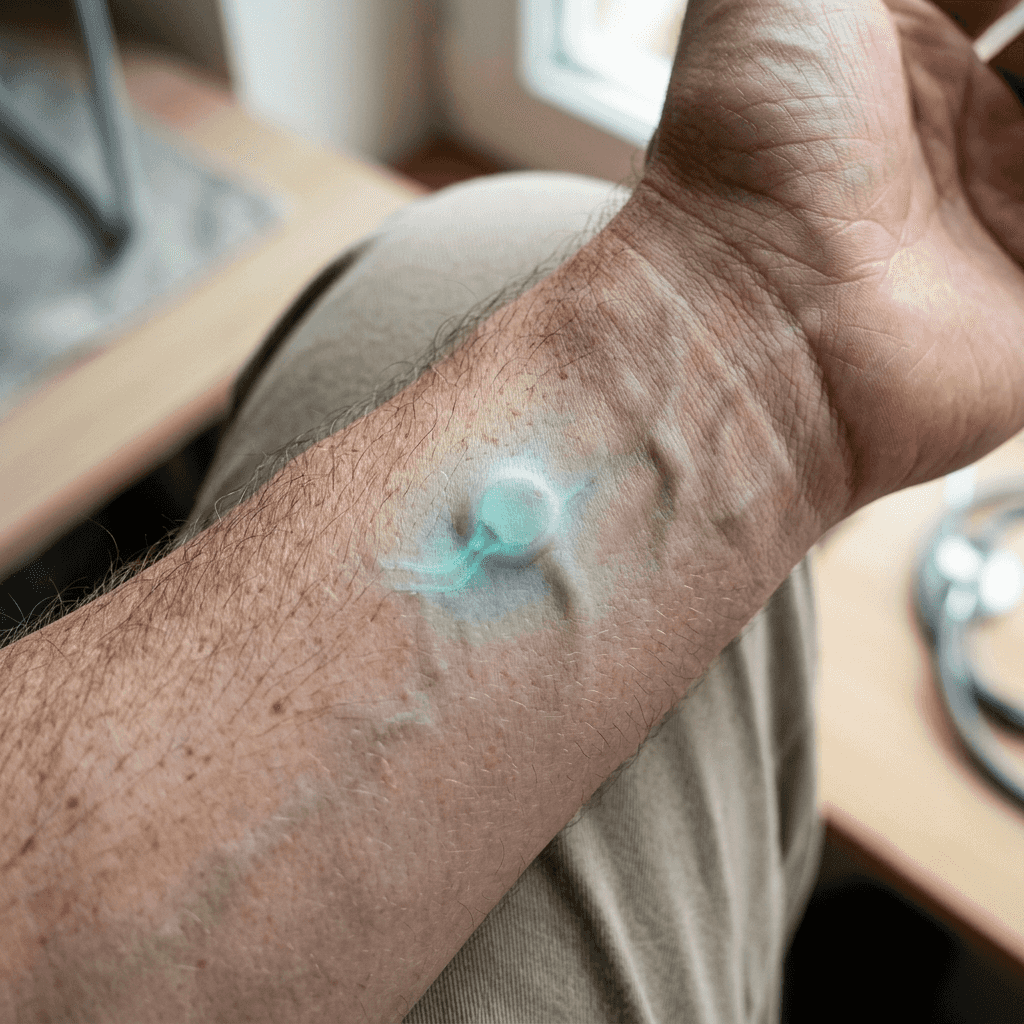
For devices like the Eversense, the implantation is a quick (5-10 minute) in-office procedure performed by a trained healthcare professional. Local anesthetic is used to numb the skin on the upper arm. A small incision (about 5-8mm) is made, and a specialized inserter places the sensor just beneath the dermis. The incision is closed with sterile strips or a single suture. There is minimal downtime, and normal activities can usually be resumed immediately, with some restriction on strenuous exercise for a few days. The implant is not visible and is generally not palpable. Removal is a similarly quick procedure.
THE EXTERNAL READER: THE NECESSARY COMPANION
A key distinction of most current long-term subcutaneous sensors is that they are Passive. They don't contain a battery or a Bluetooth radio. They rely on an external device (a transmitter or reader) worn directly over the implant site. This external device powers the sensor (via light or inductive coupling), interrogates it, and transmits the data wirelessly to a smartphone. For the Eversense, the transmitter is a flat, rechargeable disc held in place with an adhesive patch. This means the user is not entirely free of an external wearable; they have simply traded a transdermal sensor wire for an external transmitter patch. The advantage is that the transmitter can be removed for showering or swimming, and the sensor itself remains in place for months. The next frontier is the development of a fully Active Implantable Sensor with an integrated, long-life battery and Bluetooth radio, eliminating the need for an external reader. This is a more complex engineering challenge but would provide a truly seamless, "set-and-forget" experience.
Biohacker Pro-Tip: Calibration and Accuracy
All continuous sensors, whether subcutaneous or transdermal, require periodic calibration with a finger-stick blood glucose measurement. This is because the sensor measures glucose in the interstitial fluid, not directly in the blood. While the ISF glucose concentration tracks blood glucose closely, there is a physiological lag time of 5-10 minutes. Calibration aligns the sensor's ISF reading with the blood glucose value. The Eversense, due to its stability, requires only once-daily calibration after an initial warm-up period. Future sensors aim for "factory calibration," requiring no user calibration at all.
THE SOVEREIGNTY PARADOX: PRIVACY, sleep, AND BODILY AUTONOMY
The transition from external wearables to internal implants represents a profound leap in intimacy with technology. It also raises a host of complex ethical, legal, and personal questions that the 2026 biohacker must confront.
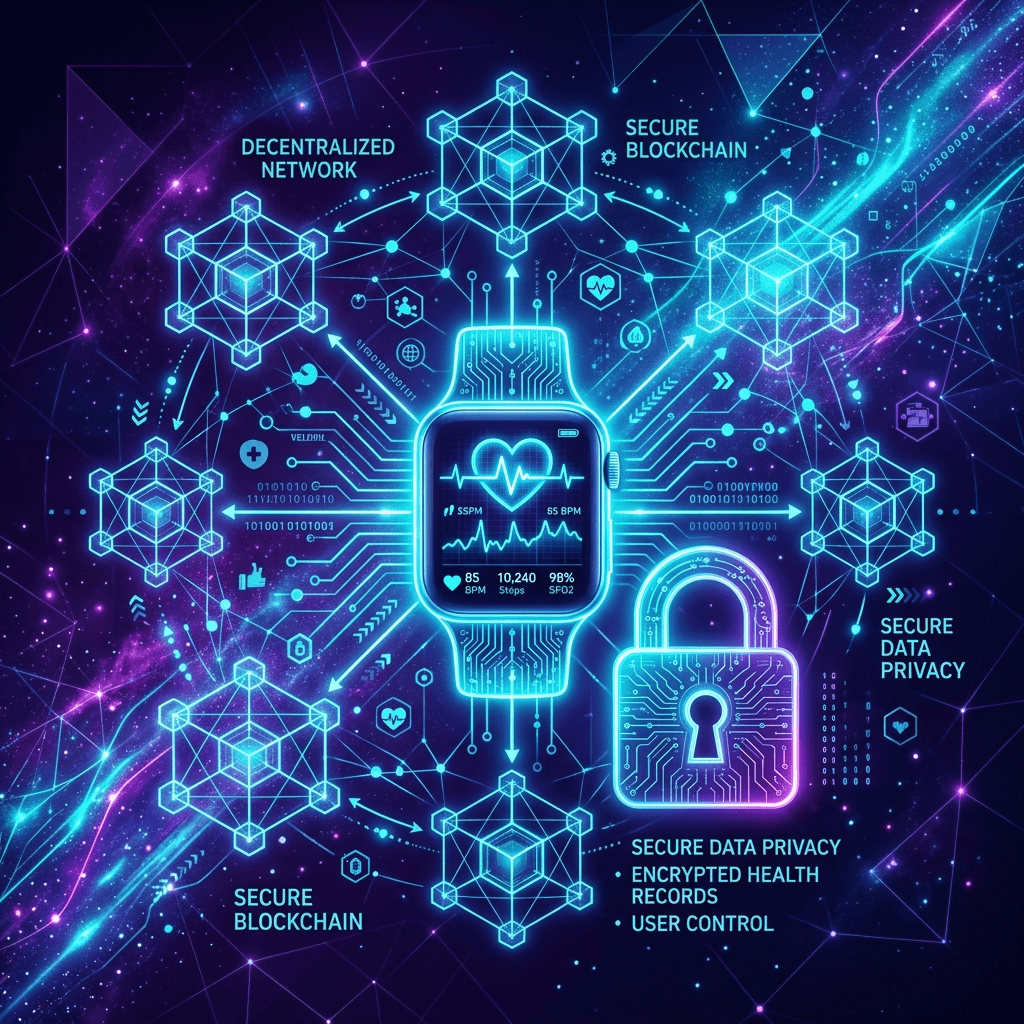
- Data Privacy and sleep: An implantable sensor that continuously monitors your internal chemistry generates a data stream of unparalleled sensitivity. This data could reveal not just your metabolic health, but your stress levels, your alcohol consumption, your menstrual cycle, and potentially even the early onset of disease. Who owns this data? How is it encrypted and stored? Could it be subpoenaed by law enforcement or used against you by an insurance company? The sleep of the wireless link between the implant and the external reader is a critical vulnerability.
- Bodily Autonomy and Coercion: Could an employer, an insurer, or even a government mandate the implantation of a biometric sensor? While this may seem dystopian, we are already seeing the normalization of continuous monitoring through workplace wellness programs and the use of ankle monitors for parolees. The line between voluntary optimization and coerced surveillance is thin and easily crossed.
- The Foreign Body and Identity: Living with a permanent or long-term internal device alters one's relationship with one's own body. For some, it's an empowering act of self-augmentation and optimization. For others, it may be a source of anxiety or a feeling of being "cyborg." The psychological and existential dimensions of elective implantation are real and should not be underestimated.
- Right to Repair and End-of-Life: What happens when the sensor's battery dies (if it has one), or when the company that manufactured it goes bankrupt and stops supporting the software? Can the device be safely explanted? Is the data exportable to an open standard? These are practical questions of digital and biological sovereignty that must be addressed before implantation.
The Subcutaneous Sovereignty Checklist
Before electing to get a subcutaneous sensor, demand clear answers from the manufacturer:
- Is my raw data encrypted end-to-end, and who holds the decryption keys?
- Can I export my complete historical data in a standard, non-proprietary format?
- What is the procedure for safe removal, and who is qualified to perform it?
- What is the long-term support plan for the device and its software?
- Is the device's firmware updateable, and what is the sleep audit process for updates?
THE FUTURE: THE INVISIBLE, EFFORTLESS QUANTIFIED SELF
Looking beyond 2026, the trajectory of subcutaneous sensing points toward a future where full, continuous internal monitoring is as ubiquitous and unremarkable as wearing a smartwatch is today. The sensors will become smaller, smarter, and longer-lasting. They will monitor a wider panel of analytes, providing a real-time, molecular-level dashboard of our health. The data will seamlessly integrate with AI health coaches, providing personalized, predictive insights and autonomous interventions (e.g., a closed-loop system that automatically adjusts insulin, administers a precise dose of a longevity drug, or recommends a specific meal based on your current metabolic state).
The ultimate expression of this technology may be the Injectable Bio-Sensor, a tiny, wireless device the size of a grain of sand that is injected under the skin with a standard needle. This device would contain a micro-battery, a sensor array, and a low-power radio, transmitting its data passively to a nearby smartphone or home hub. Such devices are already in advanced research stages. The vision is one of Effortless, Invisible, and Continuous Self-Knowledge. We will no longer "take a measurement"; we will simply "be measured." Our internal state will be as accessible and transparent as the time of day. This promises unprecedented opportunities for preventive medicine, personalized optimization, and extending healthspan. It also demands an unprecedented level of vigilance and advocacy for our own data privacy and bodily sovereignty. The future of the Quantified Self is not on our wrist; it's quietly, persistently, and intimately whispering from just beneath our skin.
Conclusion: Embracing the Internal Frontier
Subcutaneous bio-sensors represent the logical and inevitable evolution of the Quantified Self movement. They solve the fundamental problems of signal noise, motion artifact, and user friction that have always limited surface-based wearables. By moving the sensor directly into the body's internal milieu, we gain a direct, stable, and continuous window into our own physiology, unlocking a level of insight and potential for optimization that was previously the stuff of science fiction. In 2026, this technology is no longer confined to the realm of medical necessity; it's a tangible, albeit still niche, option for the dedicated biohacker seeking the deepest possible understanding of their own biology.
However, this internal frontier comes with profound responsibilities. The decision to accept an implant is a decision to enter a new relationship with technology, one that is more intimate, more permanent, and more fraught with questions of privacy, sleep, and autonomy. The 2026 biohacker who chooses this path must do so with eyes wide open, demanding transparency, data sovereignty, and a clear understanding of the long-term implications. The future of wearables is not just getting smaller; it's going deeper. And as we venture into this new territory, we must ensure that the quest for self-knowledge doesn't come at the cost of our own freedom and self-determination. The body is the ultimate sanctuary, and what we allow to reside within it must be chosen with the utmost care and wisdom.
Peer-Reviewed Clinical Validations & Extended Foundational Reading:
- Eversense Long-Term Implantable CGM (Clinical Trial): Kropff, J., Choudhary, P., Neupane, S., et al. (2017). "Accuracy and longevity of an Implantable Continuous Glucose Sensor in the PRECISE Trial." Diabetes Technology & Therapeutics, 19(2), 83-91. Read Clinical Trial
- Foreign Body Response and Sensor Biocompatibility (Review): Anderson, J. M., Rodriguez, A., & Chang, D. T. (2008). "Foreign body reaction to biomaterials." Seminars in Immunology, 20(2), 86-100. Read Review
- Fluorescence-Based Continuous Sensing (Profusa Lumee): Wisniewski, N. A., Nichols, S. P., Gamsey, S. J., et al. (2017). "Tissue-Integrating Oxygen Sensors: Continuous, Long-Term Monitoring of Tissue Oxygen." Science Translational Medicine, 9(382). Read Study
- Aptamer-Based Electrochemical Sensors (Review): Schoukroun-Barnes, L. R., Macazo, F. C., Gutierrez, B., et al. (2016). "Reagentless, Structure-Switching Electrochemical Aptamer-Based Sensors." Annual Review of Analytical Chemistry, 9, 163-181. Read Review
- Continuous Ketone Monitoring (Review): Nguyen, K. T., Xu, N. Y., Zhang, J. Y., et al. (2022). "Continuous Ketone Monitoring: A New Paradigm for Physiologic Monitoring." Journal of Diabetes Science and Technology, 16(3), 589-595. Read Review
- Ethics of Implantable Sensors: Mittelstadt, B. D., & Floridi, L. (2016). "The Ethics of Big Data: Current and Foreseeable Issues in Biomedical Contexts." Science and Engineering Ethics, 22(2), 303-341. Read Ethical Analysis